
Iran nuclear talks: Gharibabadi warns against war
 4 Min Read
During ongoing Iran nuclear talks in Geneva, Kazem Gharibabadi warned that Iran will not initiate war but will defend its sovereignty while reaffirming its right to peaceful nuclear energy.
-
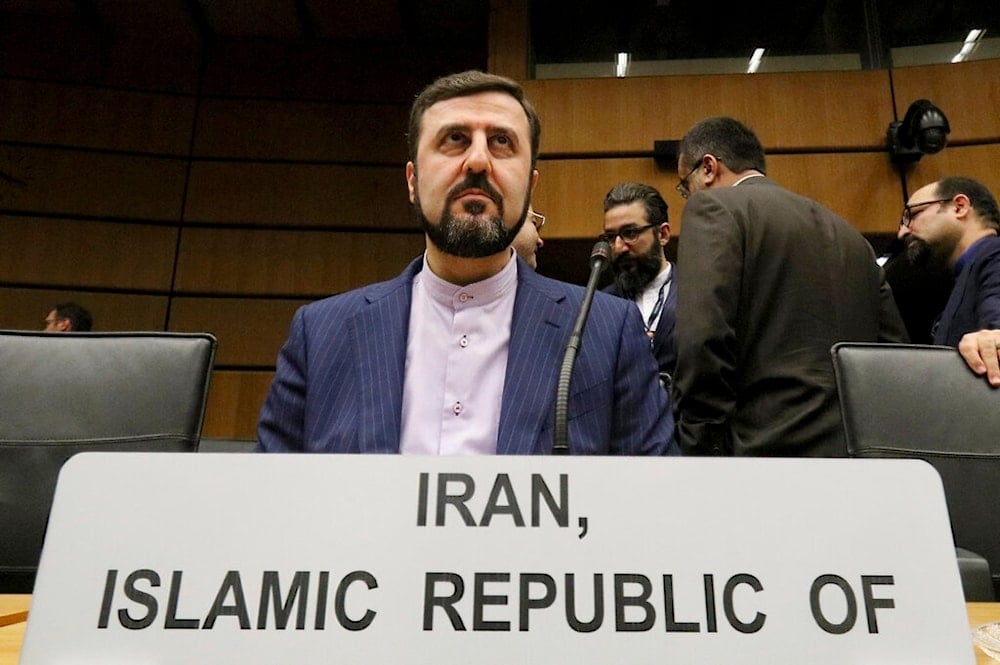
Iran’s Deputy Foreign Minister Kazem Gharibabadi, Nov. 21, 2019 (AP)
Iran nuclear talks remain at the center of rising US-Iran tensions, as Tehran reiterates both its commitment to diplomacy and its readiness to defend its sovereignty.
Speaking at the United Nations, Iran’s Deputy Foreign Minister Kazem Gharibabadi stressed that while Iran does not seek confrontation, it will firmly respond to any aggression.
Iran will not initiate war, Gharibabadi says
Iran’s Deputy Foreign Minister, Kazem Gharibabadi, said Monday that “Iran will not be the initiator of any war, but it will strongly defend its sovereignty,” adding, “Enemies may be able to start a war against Iran, but they will not be able to end it.”
Gharibabadi noted that “the consequences of a war against Iran would not be limited to the two parties involved.”
Speaking during a Human Rights meeting at the United Nations headquarters, he said that “Iran’s enemies were defeated in their aggression, so they sought to pave the way for another military attack by stirring chaos and unrest and hijacking peaceful protests.”
He stressed that “Iran and the Iranian people will firmly stand against any conspiracy.”
Iran’s right to peaceful nuclear energy is non-negotiable
Reaffirming Iran’s nuclear energy rights, Gharibabadi stated that the Islamic Republic of Iran’s right to peaceful nuclear energy is inherent, non-negotiable, and guaranteed under international law. He emphasized that this right cannot be arbitrarily suspended or denied.
The remarks come amid ongoing Iran nuclear talks and renewed debate over Iran-US negotiations concerning a potential nuclear agreement.
Iran reiterated its commitment to diplomacy and dialogue as the primary path toward de-escalation and sustainable security. Officials noted that the ongoing Geneva nuclear talks, which will continue next Thursday, present a new opportunity to address differences and build trust.
Tehran stressed that progress in the Iran nuclear talks depends on negotiations being conducted on the basis of mutual respect, fair treatment, and the non-selective application of international standards.
US signals readiness for new round of talks
On Tuesday, a senior US official told Axios that the United States is prepared to hold another round of talks with Iran next Thursday in Geneva “if it receives a detailed Iranian proposal for a nuclear agreement within the next 48 hours.”
As diplomatic engagement resumes in Geneva, the trajectory of the Iran nuclear talks may prove pivotal in determining whether tensions ease or escalate in the coming weeks.
Regional military escalation and US threats against Iran
The region is currently witnessing an unprecedented military buildup, alongside speculation about the possibility of carrying out an attack against Tehran. The broader regional military escalation in the Middle East has intensified tensions across several fronts, increasing diplomatic and security sensitivities.
On Friday, Iran’s Mission to the United Nations warned that recent statements by US President Donald Trump indicate a real risk of military aggression against Iran that could trigger catastrophic consequences across the region.
In a letter obtained by RIA Novosti, the mission said the current build-up of US military assets and equipment, combined with “belligerent” rhetoric from Washington, should not be dismissed as mere political messaging.
The letter stated that such remarks "signal a real risk of military aggression, the consequences of which would be catastrophic for the region and would constitute a grave threat to international peace and security."
Iran's allies, including the Islamic Resistance in Lebanon - Hezbollah and Russia, warned that any aggression on Iran would escalate into a large-scale regional conflict.
Read More: Iran Army to defend territorial integrity 'to last breath': Chief


