
Iran rejects claims over Strait of Hormuz management
 3 Min Read
Iran rejects reports about external involvement in managing the Strait of Hormuz, saying future arrangements will be decided by Iran and Oman.
-
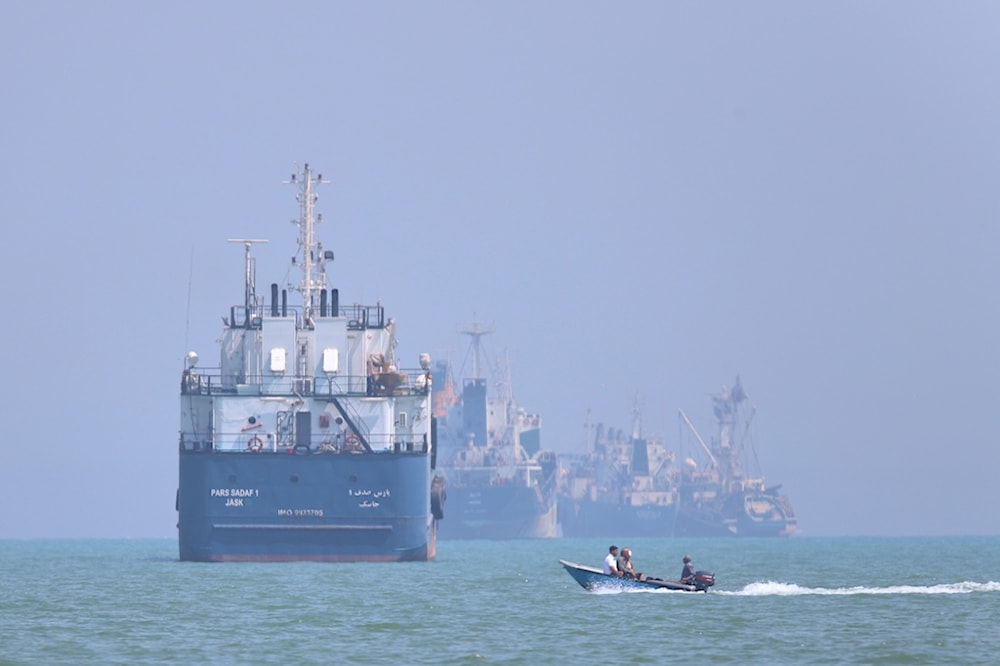
A small motorboat passes anchored vessels in the Strait of Hormuz off Bandar Abbas, Iran, Thursday, June 11, 2026 (AP)
Iran has rejected claims regarding the future management of the Strait of Hormuz, saying any decisions concerning the strategic waterway will be made solely by Iran and Oman as the two coastal states.
A source familiar with the matter told Iran’s Tasnim news agency on Saturday that reports published by Axios regarding the Strait of Hormuz were inaccurate, stressing that the waterway falls only within the internal and territorial waters of Iran and Oman.
The source said that any decision related to the administration of the strait would be taken by the two countries, adding that future arrangements would be determined in accordance with Article 5 of the Islamabad Memorandum of Understanding.
Iran outlines role in future Strait of Hormuz arrangements
According to the source cited by Tasnim, the fifth article of the memorandum assigns Iran responsibility for determining future arrangements related to the Strait of Hormuz through dialogue with Oman.
The comments come amid increased attention on the strategic waterway, which serves as a key route for global energy shipments.
The Iranian source also said Qatar’s participation in discussions comes within the framework of its role as a mediator and as part of efforts to exchange views between Iran and other countries in the region.
The source emphasized that Qatar’s involvement does not mean it has a role in decisions concerning the management of the Strait of Hormuz.
Ship movements through Hormuz Strait
Maritime traffic through the Strait of Hormuz came to a near standstill on Thursday after the United States violated the ceasefire and resumed the aggression against Iran for the second consecutive day, rapidly unraveling the fragile truce currently in place.
Tracking data showed that most visible ship movements in the world's most critical energy chokepoint were concentrated along an Iran-approved route near the northern side of the waterway, while the US-backed shipping lane remained largely inactive. Among large vessels, only a US-sanctioned large crude carrier departing the Gulf and an Iranian-flagged container ship were observed transiting the strait.
Several ships crossed the waterway on Wednesday with their transponders switched off. An Indian-flagged very large crude carrier that had previously abandoned an attempt to transit the Strait of Hormuz appeared in the Gulf of Oman on Thursday, indicating it likely completed the crossing overnight. A UAE-operated bulk carrier followed a similar pattern, emerging off the coast of Fujairah on Thursday, according to vessel tracking data compiled by Bloomberg.
As the US aggression continues, an increasing number of oil tankers appear to be transiting the Strait of Hormuz without broadcasting their positions in an effort to reduce the risk of attack by Iranian forces. Following three attacks on major oil and gas tankers earlier this week, the practice is believed to have resumed, although confirmation of these untracked voyages typically takes several days to emerge.


