
Iran reviewing US response to its proposal; no nuclear talks: Baghaei
 4 Min Read
Iran’s Foreign Ministry says its 14-point proposal aims only to end the war, denying nuclear talks and rejecting claims about commitments to demine the Strait of Hormuz.
-
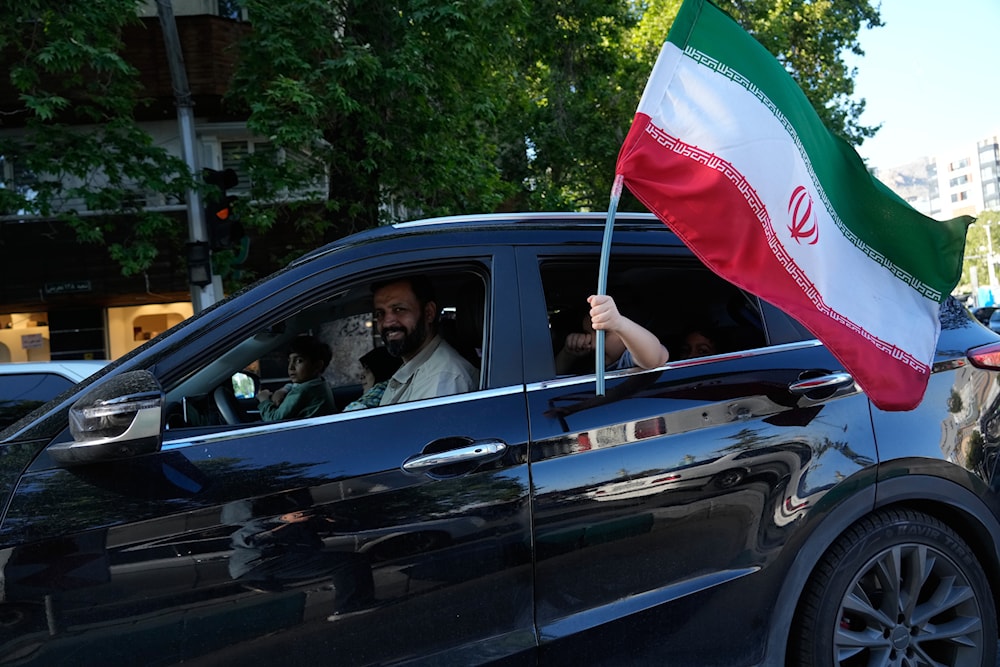
A child holds an Iranian flag through the window of a vehicle in northern Tehran, Iran, Friday, May 1, 2026 (AP)
Tehran’s proposed plan to end the war is exclusively conditional on ending the war, Iran’s Foreign Ministry spokesperson Esmaeil Baghaei said on Sunday, dismissing circulating media reports of nuclear talks and commitments to demine the Strait of Hormuz.
Speaking to Iranian state television, Baghaei stressed that “some of the issues being raised relate to the record of previous negotiations with the United States,” adding that Iran’s 14-point plan primarily focuses on ending the war and denying any other circulating information.
He also confirmed that “at this stage, we have no nuclear negotiations,” underlining that the proposal does not include any nuclear-related topics.
According to Baghaei, the United States has delivered its response to the Iranian proposal “to the Pakistani side,” and Tehran is currently reviewing it. “The US viewpoint regarding Tehran’s proposal is under study, and the Iranian response will be presented after reaching a final conclusion,” he stated.
“We are currently studying the US response to the Iranian 14-point initiative,” he said, emphasizing that “our plan is based on formulating an understanding to stop the war, and the mechanism for its implementation will be discussed within 30 days.”
The Iranian spokesperson further rejected claims that Iran had committed to demining the Strait of Hormuz, describing such reports as “mere media fantasies.”
Baghaei also asserted that “we have never negotiated under the pressure of deadlines or ultimatums,” asserting that “the guarantee of any agreement is Iran’s strength."
Iran submits 14-point proposal, Trump skeptical of accepting it
Earlier, in Washington, US President Donald Trump said he was reviewing a new Iranian proposal aimed at ending the war, while expressing doubt that it would lead to an agreement.
Speaking to reporters before boarding Air Force One, Trump said, “I’ll let you know about it later,” adding that officials were expected to provide him with the exact wording of the proposal.
Shortly afterward, he wrote on Truth Social that he “can’t imagine that it would be acceptable,” claiming that Iran “has not yet paid a big enough price for what they have done to Humanity, and the World, over the last 47 years.”
Iranian media outlets Tasnim News Agency and Fars News Agency reported that Tehran had submitted a 14-point proposal through Pakistan in response to a nine-point US plan, with Islamabad continuing to serve as a mediator between the two sides.
Although Trump had rejected an earlier Iranian proposal that week, discussions continued, and a three-week ceasefire remained in place.
Iranian media outlet Fars News Agency said Tehran’s proposal presents a “clear roadmap” to end an “imposed war” and asserts Iran’s “red lines” within the framework of any potential agreement.
According to the sources, the US proposal outlined a two-month ceasefire, while Iran argued that all key issues should be addressed within 30 days, emphasizing the need for a comprehensive settlement rather than an extended temporary truce.
The Iranian proposal reportedly included demands for guarantees against future military action, the withdrawal of US forces from areas near Iran, the lifting of a maritime blockade, the unfreezing of Iranian assets, and compensation payments.
It also called for an end to hostilities across all fronts, including Lebanon, as well as the establishment of a new framework for managing the Strait of Hormuz.


