
Iran’s Armed Forces vow to fight on until 'enemies are defeated'
 4 Min Read
Iran’s military leadership says it will maintain its stance against Washington and its allies, citing national demands and the defense of Iranian rights.
-
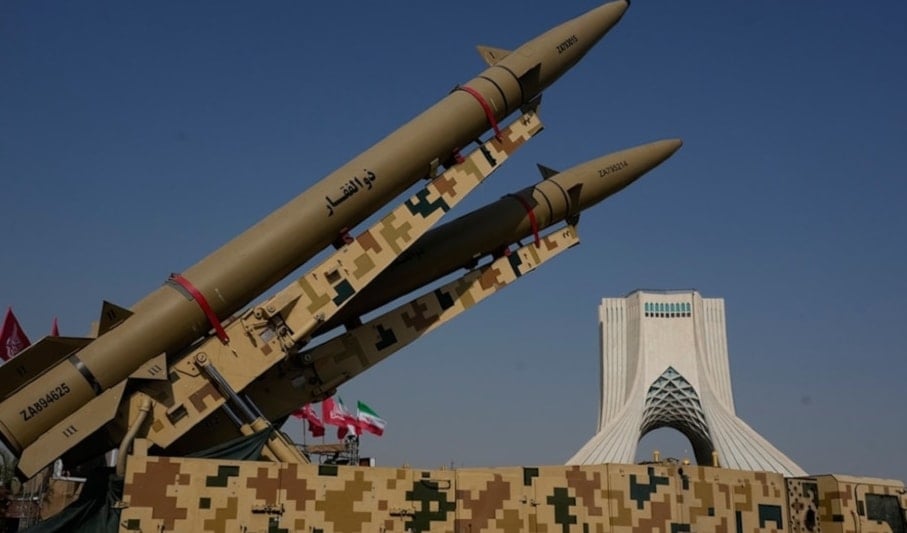
Iranian missiles are displayed by the armed forces in a temporary exhibition in front of the Azadi monument in Tehran, Iran, July 29, 2026 (AP)
Iran will not back down from the legitimate demands of the Iranian people or their leadership, the General Staff of the Iranian Armed Forces stated Sunday, vowing to pursue the defeat of American-Zionist adversaries as a top priority.
In a statement marking the anniversary of the "Return of the Liberated," the Iranian Armed Forces said the legacy of resistance forged by the generation of the Revolution had “grown into a strong, deeply rooted tree,” carried forward by “fierce and free” young people.
The statement said they had answered the call of the martyred leader of the Islamic Revolution, confronting the world’s most heavily equipped armies and forcing their “bankrupt leaders to kneel.”
Azadegan anniversary comes amid Iran-US tensions
It stressed that the armed forces would continue to press the Iranian people’s legitimate demands and those of the country’s leadership in confronting the United States, vowing to pursue the complete defeat of American-Zionist adversaries in the region, secure the rights of the Iranian people, and force the enemy to surrender.
The anniversary of the "Return of the Liberated," known as the Azadegan, is observed on 26 Mordad in the Persian calendar (August 16-17), marking the start of the return of the first group of Iranian detainees from detention in the former Iraqi regime’s prisons.
IRGC commander praises forces for subduing strongest army in history
The anniversary comes as Iran continues to commemorate the legacy of resistance, with its military leadership portraying the recent confrontation with the United States as another chapter in the country’s longstanding struggle to defend its sovereignty.
The Commander-in-Chief of Iran’s Islamic Revolution Guard Corps (IRGC), Major General Ahmad Vahidi, said Saturday that IRGC forces had “subdued the strongest army in the history of the world” during months of confrontation, praising the force's performance under difficult conditions.
In a message to IRGC forces marking the beginning of the Hijri month of Rabi' al-Awwal, Vahidi commended their efforts throughout the last six months.
He said the IRGC confronted the US military under exceptionally difficult circumstances, including extreme summer heat, heavy seasonal rainfall across the southern islands and coastlines, and freezing conditions in the northern highlands.
“You subdued the strongest army in the history of the world by relying on God and through your victorious fighting under extremely difficult conditions, including the scorching summer heat and heavy seasonal rains in the islands and southern coasts, as well as the cold of the high northern mountains, while successfully carrying out your offensive and defensive operations under a barrage of fire,” Vahidi said.
The IRGC commander praised the forces for maintaining their operational capabilities while carrying out both offensive and defensive operations under sustained fire.
War exposed US strategic weakness
Earlier, IRGC spokesperson Brigadier General Hossein Mohebbi said the war against Iran had “exposed the strategic weakness of the United States,” while also demonstrating the impact of Iran’s power on military, economic, and political equations.
Mohebbi said Iran had “fought a war with one of the strongest countries in the world,” adding that the conflict unfolded across multiple arenas. He identified the emergence of US “strategic vulnerability” as one of the defining characteristics of the latest war.
The remarks by Vahidi and Mohebbi reflect Tehran’s assessment of the confrontation as a test of Iran’s military capabilities and deterrence posture against the United States, while emphasizing the IRGC’s ability to sustain operations under prolonged and difficult conditions.
Read more: Iran reiterates it maintains control over Strait of Hormuz


