
War on Iran exposes new fault lines in global energy security: Report
 6 Min Read
Authors Jason Bordoff and Meghan L. O’Sullivan examine how the war on Iran reshaped global energy markets and exposed new vulnerabilities in oil and gas security.
-
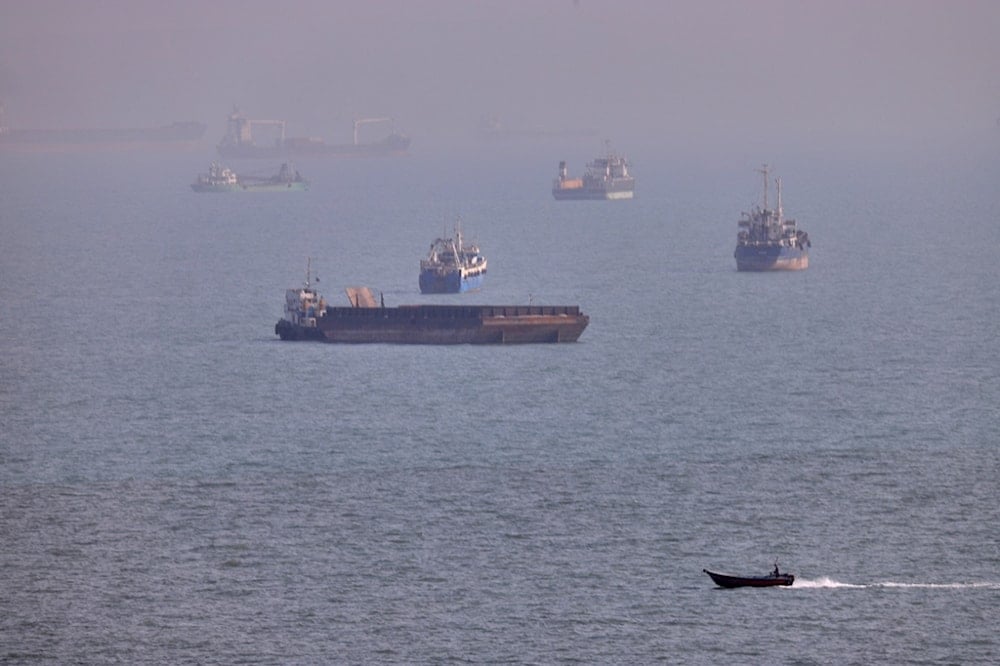
A small boat sails past cargo ships and other commercial vessels anchored in the Strait of Hormuz off Bandar Abbas, Iran on August 5, 2026. (Amirhosein Khorgooi/ISNA via AP)
In their analysis for Foreign Affairs, Jason Bordoff and Meghan L. O’Sullivan examine how the war on Iran has tested global energy markets after the prolonged disruption of traffic through the Strait of Hormuz.
Although the crisis has so far avoided the extreme oil-price surge and global recession many had anticipated, the authors argue that this relative resilience should not be mistaken for immunity. Instead, it reflects the temporary effectiveness of energy-security measures whose buffers are now being depleted.
The Strait of Hormuz, through which roughly one-fifth of global oil and LNG supplies normally pass, has remained largely closed for months. Yet oil prices have stayed below some worst-case projections, supported by alternative supply routes, emergency stockpiles, increased production and reduced demand. These conditions, however, may not endure as inventories fall, demand recovers, and energy infrastructure faces prolonged disruption.
How global markets absorbed the shock
When Tehran closed the Strait of Hormuz following US and Israeli attacks in late February, the head of the International Energy Agency described the subsequent disruption as the largest interruption to global oil supplies in history.
Brent crude subsequently averaged slightly above $100 per barrel, compared with around $70 before the war, while its April peak of $126 remained below the $200 level some analysts had warned about.
Oil demand fell by roughly five million barrels per day in the second quarter of 2026 as higher prices and shortages forced consumers to cut consumption and governments imposed emergency measures. The market had also entered the crisis with relatively high inventories and expectations of surplus supply.
Saudi Arabia and the UAE reportedly maximized pipelines designed to bypass Hormuz, moving more than five million additional barrels per day to international markets. Commercial inventories were drawn down, while the IEA coordinated the largest emergency release in its history.
The United States has also used its own reserves extensively, showing that its greater energy capacity has not shielded it from the crisis. The Strategic Petroleum Reserve fell by 6.1 million barrels in one week to 298.7 million barrels, dropping below the 300-million-barrel mark for the first time since January 1983.
The depletion is significant because the SPR represents one of Washington's principal safeguards against prolonged supply disruptions. The United States entered the war with roughly 415 million barrels in the reserve and has since authorized a 172-million-barrel release as part of a broader international effort to stabilize oil markets after triggering the crisis.
China has likewise helped stabilize global markets by reducing oil imports by roughly five million barrels per day through June, restricting refined petroleum exports and drawing modestly on its inventories. As the world's largest oil importer and a major holder of oil stocks, Beijing can significantly influence global prices by adjusting its purchases, exports, storage and releases.
A new geography of energy insecurity
The crisis has exposed how unevenly energy disruptions are now distributed. The United States remains better positioned than many import-dependent economies because of its large domestic oil production and comparatively lower oil intensity. But this resilience comes with costs, including higher energy prices and the rapid depletion of its emergency reserves.
China also possesses substantial insulation, while its enormous inventories give Beijing growing influence over global markets. If Chinese reserves become one of the last major buffers against another sharp price increase, China's energy leverage could become comparable in importance to Saudi Arabia's traditional influence through spare production capacity.
The heavier burden has fallen on poorer importing countries. OECD economies now account for less than half of global oil demand, compared with three-quarters in 1970. Emerging and developing economies therefore absorb more of the adjustment when supplies decline, despite having fewer fiscal resources to cushion higher prices.
Across Asia, the crisis has produced shortages and emergency measures. Jet fuel prices approached $200 per barrel in some markets, while countries introduced conservation measures, subsidies, tax suspensions and restrictions on consumption. Bangladesh restricted air-conditioning use, Laos shortened the school week, and Sri Lanka declared an additional public holiday.
The relatively moderate movement in global crude prices therefore conceals a much harsher reality for vulnerable economies. Much of the adjustment has occurred through reduced consumption in countries least capable of absorbing the shock.
The United States waged the war on Iran expecting overwhelming military pressure to force Iran into submission within weeks, but more than five months later, the war continues; Iran has not collapsed, and Washington is increasingly seeking a negotiated exit.
— Al Mayadeen English (@MayadeenEnglish) August 13, 2026
As US objectives… pic.twitter.com/p2UMPqDx81
Energy security does not guarantee a clean transition
The crisis could accelerate investment in renewable energy, nuclear power, electrification and efficiency, as previous energy shocks did. Yet the authors warn that governments could draw the opposite conclusion and strengthen oil and gas infrastructure rather than accelerate the transition away from fossil fuels.
Several Gulf states are considering additional pipelines to bypass Hormuz, while countries including India, South Africa and those in Southeast Asia are increasing strategic inventories and refining capacity. The crisis could also push governments to reconsider dependence on China for clean-energy technologies such as batteries, solar panels and critical minerals.
Energy-security concerns can also encourage greater coal use. Japan, South Korea, China and India have taken measures to maintain or increase coal consumption in response to fuel disruptions, while the IEA expects global coal use to reach a record level in 2026.
Preparing for the next shock
Bordoff and O’Sullivan identify five pillars of energy resilience: energy efficiency, diversified supply, integrated markets, increased domestic production and assistance for vulnerable countries.
Reducing oil consumption remains the first line of defense. The global economy now requires considerably less oil to generate each dollar of economic output than it did in the 1970s, reducing its exposure to price shocks.
Governments must also strengthen strategic reserves and alternative supply routes. For Washington, that means rebuilding the SPR after its latest drawdowns have pushed the stockpile to its lowest level in more than four decades.
Diversification is equally important. Integrated energy markets can also redirect scarce supplies toward regions where they are most needed.
Finally, "poorer" countries require greater support through investment in electrification, efficiency, domestic energy production and infrastructure.
The authors' central warning is that the relatively contained first phase of the Hormuz crisis should not create complacency. The world has not escaped the energy shock; it has absorbed it unevenly while consuming many of the buffers that made that possible. The next disruption could therefore be considerably more damaging if governments fail to rebuild the reserves, infrastructure and diversification that have so far prevented a far deeper crisis.
Read more: Trump's reckless Iran gamble risks a global energy crisis


