
Iran's SNSC hails victory, urges unity until deal finalized
 3 Min Read
The Supreme National Security Council of Iran congratulates the Iranian people while stressing that achieving the final terms requires continued resilience, unity, and cohesion.
-
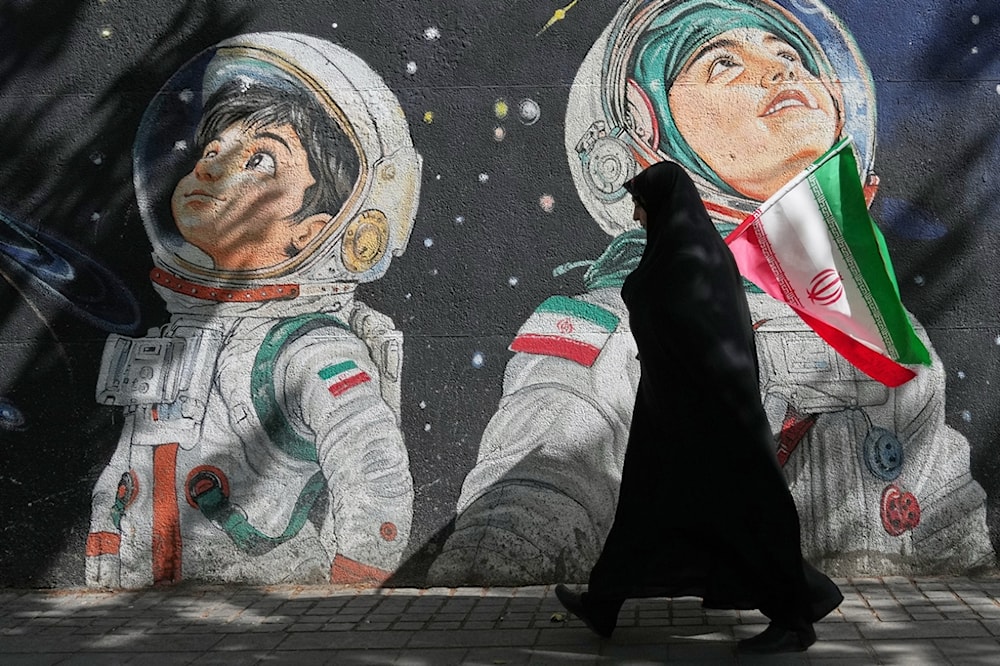
A woman walks past a mural depicting Iranian astronauts in space in Tehran, Iran, Wednesday, April 8, 2026. (AP Photo/Francisco Seco)
Iran's Supreme National Security Council has congratulated the Iranian people on their historic victory, while cautioning that sustained resilience and national unity remain essential until the full terms are formally secured.
In an official statement, the Council said the United States has in principle committed to a sweeping set of concessions: a pledge of non-aggression; recognition of Iranian control over the Strait of Hormuz; acceptance of uranium enrichment; the lifting of all primary and secondary sanctions; the annulment of all UN Security Council and Board of Governors resolutions targeting Iran; compensation payments to Tehran; the withdrawal of US combat forces from the region; and a cessation of hostilities across all fronts, including against the Islamic Resistance in Lebanon.
The Council stressed that translating these commitments into a final, binding outcome requires continued steadfastness. "Until the details of this victory are fully finalized," the statement read, "there remains a need for perseverance, prudent leadership, and the preservation of unity and cohesion."
It reiterated this call twice in its statement, underscoring the message's centrality.
The caution comes as the ceasefire remains provisional. Trump announced a two-week suspension of military operations, conditional on Tehran agreeing to the full reopening of the Strait of Hormuz, while Iran's armed forces agreed to suspend defensive operations if US and Israeli attacks halt.
A historic blow
The Council paid tribute to the "brave fighters of the resistance" in Lebanon, Iraq, Yemen, and occupied Palestine, crediting Iran and its allies with having, over 40 days, dealt blows to the enemy that "will remain etched in global historical memory."
The statement described Iran and the Axis of Resistance as representatives of "dignity and humanity" confronting the "most brutal enemies of mankind," asserting that the enemy's forces, capabilities, infrastructure, and political, economic, technological, and military assets had been decisively crushed.
That assessment found an unlikely echo in the Israeli press. Maariv described the ceasefire as amounting to a "strategic surrender" by both Washington and Tel Aviv, noting that efforts to target Iran's leadership and dismantle its nuclear program had failed, and that Iran maintained its operational capabilities and continued launching strikes through to the final moments of the confrontation.
The Council's statement closed on a Triumphant note, declaring the enemy now in a state of "collapse and desperation," with no option but to submit to the will of the Iranian people and the "honorable Axis of Resistance," an assessment that, with Maariv's own conclusions as backdrop, carries more than rhetorical weight.


