
Iran says IAEA has no role in sanctions, blames US for misuse
 4 Min Read
Iran’s nuclear chief says sanctions are a US tool, not an IAEA mandate, and affirms the safety of the country’s nuclear sector after the latest attack.
-
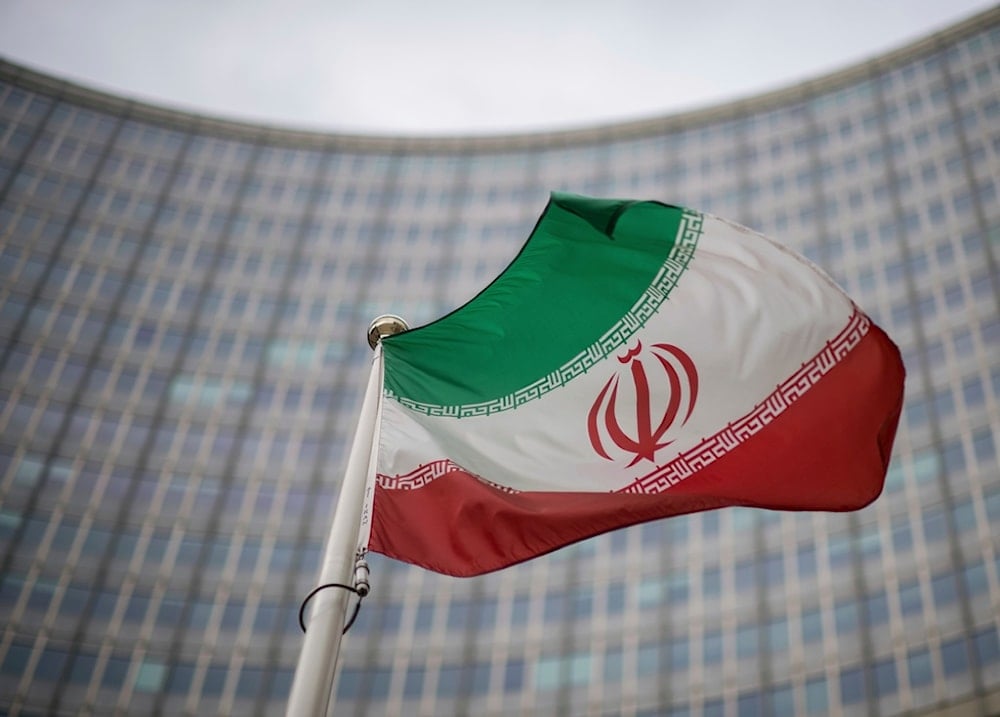
A national flag of Iran waves in front of the building of the International Atomic Energy Agency, IAEA, in Vienna, Austria, December 17, 2021. (AP)
Iranian Atomic Energy Organization Chief Mohammad Eslami said Monday that the International Atomic Energy Agency (IAEA) has “no direct role” in sanctions imposed on Iran, stressing that the punitive measures are fundamentally American and driven by Washington’s political agenda.
Speaking at Student Day commemorations in Iran, Eslami said the United States “uses the Agency and its tools to achieve its political objectives,” but that the sanctions framework itself is not within the IAEA’s mandate. He emphasized that Iran maintains roughly 50 national and international joint projects with the agency, all of which remain active.
Eslami highlighted advancements in Iran’s nuclear industry, noting that the country’s heavy water production ranks among the purest globally and that demand for Iranian nuclear products is expanding steadily. He said at least 56 countries have used Iranian-made nuclear materials and technologies.
The atomic energy chief also reaffirmed that Iran’s nuclear sector remains secure. He said the recent military attack on Iranian territory caused no casualties within the Atomic Energy Organization and that all its personnel are fully safeguarded.
Eslami clarified that those killed during the recent strike were not employees of the organization but university professors working on research projects linked to the nuclear sector. He asserted that they were “assassinated in an operation carried out by the Israeli regime.”
IAEA reports progress on inspections
Efforts and consultations with Iran are ongoing in a bid to restore inspection activities in the country, Rafael Grossi, the Director General of the International Atomic Energy Agency (IAEA), announced on Wednesday.
Addressing the IAEA Board of Governors, Grossi said, “I believe there has been some progress. We have returned to Iran, and over a dozen inspections have taken place so far."
"However, there is still more work to be done in line with the relevant provisions of the Comprehensive Safeguards Agreements," he added.
He noted that, in coordination with the Iranian foreign minister in Cairo, “significant technical understandings have been reached with Iran to facilitate inspections following the events of June,” emphasizing that “this is the path we need to continue on.”
Clash between Iran and the IAEA
Following the June airstrikes carried out by the Israeli occupation and the United States on numerous Iranian nuclear and military sites, Iran swiftly suspended full cooperation with the IAEA. In response, the Iranian parliament passed legislation barring further access to its nuclear facilities by IAEA inspectors unless specifically approved by the Supreme National Security Council. Tehran accused the agency of failing to condemn the attacks and criticized it for lacking neutrality, arguing that this undermined the security of its nuclear infrastructure.
In the months that followed, particularly throughout July and August, the IAEA was unable to conduct its routine inspections in Iran. Iranian officials insisted that any resumption of IAEA activities required a renegotiation of the terms of engagement, emphasizing that previous frameworks had failed to protect Iran’s sovereign rights. This signaled a shift toward a more guarded stance, as Iran sought stronger guarantees before reopening its facilities to international scrutiny.
By September, however, progress was made when IAEA Director General Rafael Grossi and Iranian officials met in Cairo. The parties reached a preliminary technical understanding aimed at restoring monitoring mechanisms. As part of the deal, Iran agreed to provide detailed status reports on its affected nuclear sites and to resume IAEA inspections gradually. While this understanding marked a step forward, no firm timeline for full cooperation was established, leaving the situation tentative.


