
Iran says Oman Hormuz agreement within reach if interference ends
 4 Min Read
Iran says an agreement with Oman on reopening the Strait of Hormuz is within reach if US and other foreign interference in the region comes to an end.
-
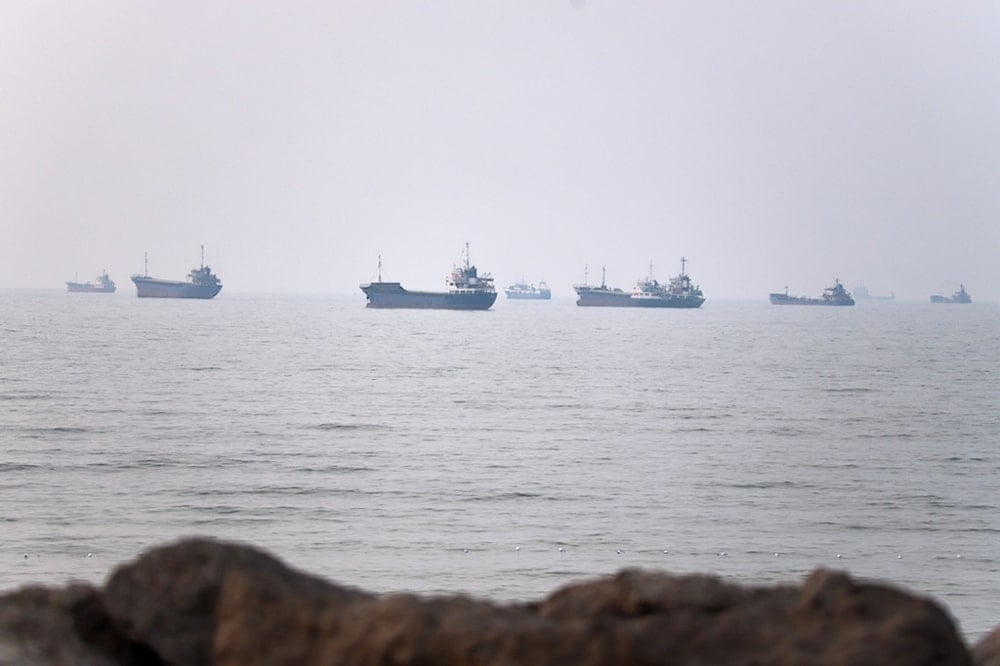
Commercial vessels are seen in the Strait of Hormuz off Bandar Abbas, Iran, Tuesday, June 30, 2026 (AP)
Iran and Oman are close to reaching an agreement on reopening the Strait of Hormuz, provided that US and other foreign interference in the region ceases, according to an informed source cited by Iran's Press TV.
The source said on Tuesday that the ongoing discussions are strictly bilateral between Iran and Oman, stressing that the United States is not involved in the negotiations.
The remarks come after a senior Iranian source told Reuters earlier that Tehran and Muscat are discussing a plan to reopen the strategic waterway while giving Iran oversight of shipping entering the Strait of Hormuz.
Iran, Oman discuss shipping arrangements for Strait of Hormuz
According to the Reuters report, the proposal would grant Iran control over inbound shipping traffic through the Strait of Hormuz, while outbound vessels would travel through a route shared between Iran and Oman.
Under the reported plan, Oman would issue departure clearances for ships after notifying Tehran as part of the proposed framework for reopening the waterway.
The Strait of Hormuz is one of the world's most important maritime chokepoints, carrying a significant share of global oil exports.
Tehran denies talks with Washington
Earlier, Iranian Foreign Ministry spokesperson Esmaeil Baghaei said discussions with Oman are focused solely on establishing a safe and temporary shipping corridor through the Strait of Hormuz.
Baghaei said Iran would ensure the continued flow of maritime traffic through the passage during the arrangement.
He also denied that Tehran is currently holding negotiations with the United States, adding that members of the Iranian delegation remain in Iran.
Iran denies US talks
A senior Iranian political and security source told Al Mayadeen that Iran is not holding any negotiations with the United States. The source accused US President Donald Trump of habitually lying and of blaming others rather than taking responsibility for undermining the prior understanding.
According to the source, Iran's actual negotiations are with Oman, its "permanent neighbor", given that the Strait of Hormuz lies entirely within the two countries' territorial waters. "The United States has always been a disruptive and destabilizing force," the source said, "and cannot present itself as the region's savior."
On the strait's status, the source said whether it stays open or closed "depends on the broader situation in the region," but stressed it will not reopen "as long as US aggression, the blockade, and other provocative measures against Iran continue."
The US military presence itself, the source added, is the core problem, since no country in the region wants war. "Everyone in the region understands that Netanyahu and Trump's recklessness has imposed an enormous and wide-ranging cost on them," the source concluded.
Trump insists talks are underway
At an Oval Office press conference on Monday, Trump insisted talks with Iran "are going on right now," claiming Tehran was simply reluctant to confirm it publicly.
He also said the talks were taking place at Iran's request, with the backing of Saudi Arabia, the UAE, and Qatar, expressing confidence that they would quickly produce results, first reopening the Strait of Hormuz, followed by discussions on Iran's nuclear program. Addressing the possibility of transit fees, he said the United States would not allow Iran to levy charges on vessels passing through the strait, claiming Washington maintains "total control".
Moreover, in a post on Truth Social earlier on Monday, Trump called Iranian leadership "unbelievably duplicitous," accusing Tehran of denying talks publicly while pursuing them privately through Oman. He described the US presence in the strait as a blockade some call the "Wall of Steel," declaring Iran's only options were "a Deal, or Total Surrender," and reiterated Iran would never obtain a nuclear weapon.


