
Tehran, not Washington, now dictates war's pace: FT
 3 Min Read
With energy markets rattled and US forces repositioning, analysts say Washington may be running out of ways to dictate the terms of this war.
-
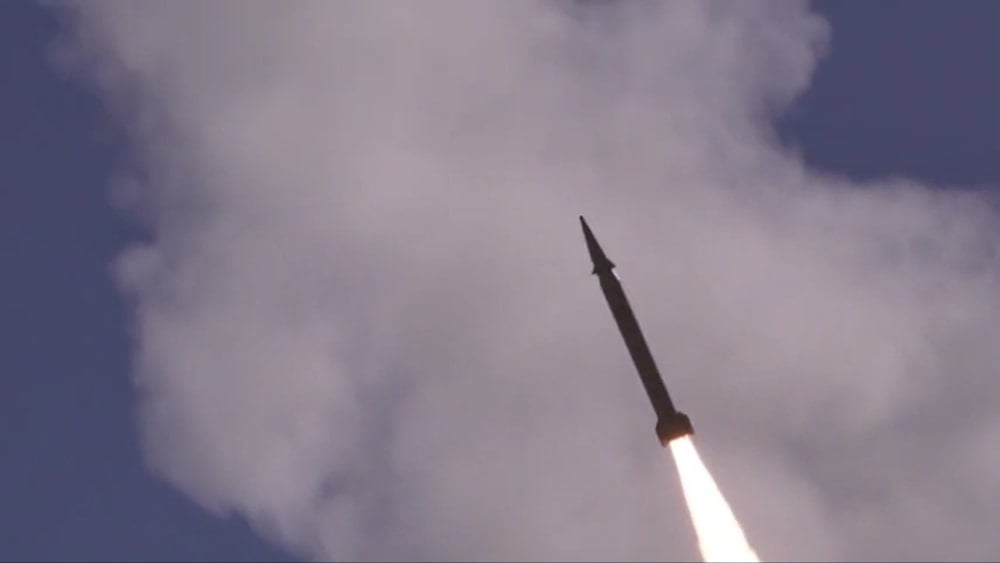
An Iranian Ballistic missile as it is being launched towards targets as part of an IRGC operation, in an undisclosed location in Iran, July 18, 2026 (IRGC Public Relations)
Six months into its war on Iran, Washington finds itself increasingly reacting to a battlefield tempo set by Tehran, not the other way around, according to an analysis published by the Financial Times, which cites regional analysts and former officials tracking the shifting balance of the war.
Over the past two weeks, Iran and its allies have moved from a defensive posture to a pre-emptive one, striking a US military installation in Jordan, disrupting shipping lanes in the Red Sea, and hitting targets in Syria.
The FT's analysis argues the shift signals Tehran's growing confidence in its ability to control the pace and scope of the confrontation, and to make continued US aggression costly.
A harder line since Sayyed Khamenei's assassination
Analysts cited by the FT note that Iran's calculus has hardened since the assassination of Martyred Leader Sayyed Ali Khamenei, claiming that the Islamic Revolution Guard Corps have taken a more assertive role in shaping strategy.
Iranian officials and allied voices in the region increasingly view negotiations with Washington as futile, the report argues, contending instead that sustained pressure, military and economic, is the only language the US administration understands.
The collapse of the June memorandum, which had briefly eased hostilities and reopened discussion around the Strait of Hormuz, underscores this shift.
After US-linked vessels attempted to breach the strait, Iran responded with strikes at sea, prompting Washington to launch a fresh wave of attacks on southern Iran. Since then, FT argues that Tehran and its allies have widened the scope of the war rather than retreat from it, extending pressure to the Bab al-Mandab and Suez corridors alongside Hormuz, effectively placing all three of the region's critical maritime chokepoints within reach.
Allied resistance factions widen the front
Yemen's Ansar Allah have joined the pressure campaign, striking Saudi energy infrastructure and threatening shipping routes vital to Western markets, actions the FT's sources describe as mutually reinforcing rather than centrally directed, but united in the objective of raising the cost of continued US presence in the region.
The strategy appears to be working on multiple fronts, the FT notes. Global energy markets are absorbing the shock of chokepoint disruptions, and Washington has been forced to redeploy forces away from exposed Gulf bases toward Jordan and occupied Palestine.
In Jordan, for example, public anger over hosting US forces has grown, with hundreds of activists and public figures signing a letter demanding US withdrawal.
A long war ahead
Despite mounting pressure, US President Donald Trump said on Saturday that a planned US attack had been called off at the request of regional allies, citing progress toward a potential deal, a claim Tehran has met with visible skepticism given the pattern of broken agreements.
Iranian strategists reportedly anticipate a prolonged confrontation, calculating that Western resolve will erode faster than Iran's capacity to sustain pressure.
While Iran faces long-term economic challenges, the FT reports that officials in Tehran are confident time is on Iran's side, as the costs imposed on US interests across West Asia continue to mount.


