
Iran signals conditional openness to talks after US proposal
 3 Min Read
Iran’s president says Tehran may pursue negotiations with the US if conditions are free of threats and align with national interests.
-
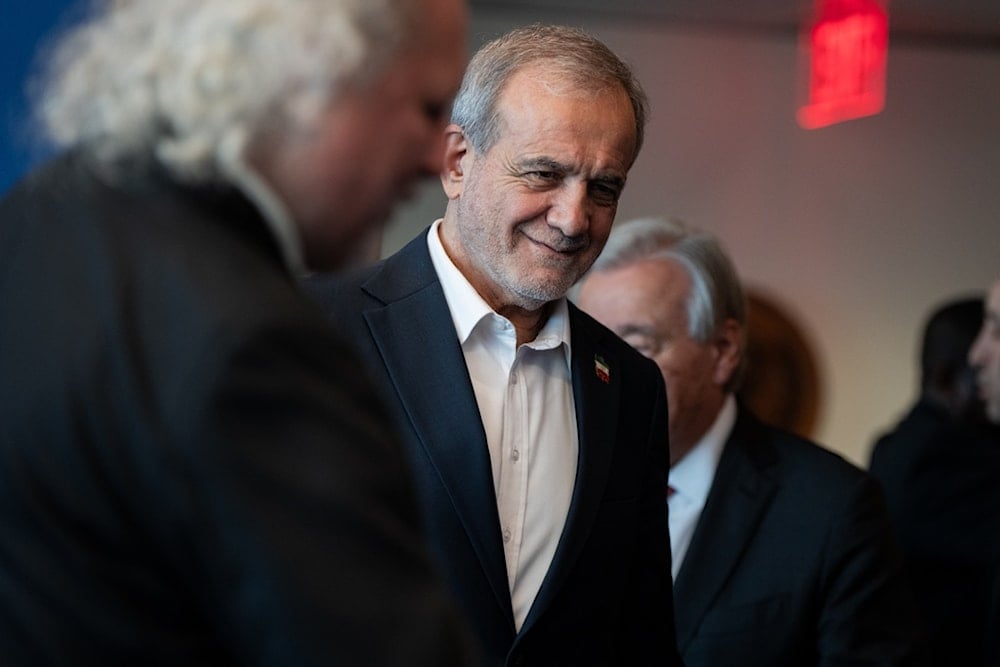
Masoud Pezeshkian, the president of Iran, attends the United Nations General Assembly at United Nations headquarters, on September 25, 2025. (AP)
Iranian President Masoud Pezeshkian said he has instructed his foreign minister to explore negotiations with the United States, responding to requests from “friendly governments in the region” following a proposal by the US president.
In a statement posted on X, Pezeshkian said the move comes after an initiative put forward by US President Donald Trump, stressing that any talks would be strictly conditional and subject to Iran’s national interests.
“I have instructed my Minister of Foreign Affairs, provided that a suitable environment exists—one free from threats and unreasonable expectations—to pursue fair and equitable negotiations, guided by the principles of dignity, prudence, and expediency,” Pezeshkian wrote.
Iran and the United States have remained without formal diplomatic relations for decades, with negotiations over Iran’s nuclear program repeatedly stalling amid disputes over sanctions, regional policies, and security guarantees. Pezeshkian’s remarks suggest Tehran is seeking assurances that any renewed talks would not be conducted under pressure or coercive demands.
Trump says US planning Iran talks
The United States plans to hold talks with Iran, even as Washington positions powerful naval forces in the region and escalates its threats, US President Donald Trump said on Thursday.
“I have had (conversations with Iran in the last few days), and I am planning on it,” Trump told reporters at the Kennedy Center, adding that “a lot of very big, very powerful” ships are currently sailing toward Iran. “It would be great if we didn’t have to use them,” he said.
When asked about the message he delivered to Iranian authorities, Trump said, “I told them two things: number one, no nuclear, and number two, stop killing protesters.”
US threats escalate
The comments come amid heightened regional tensions amid US threats to launch an aggression against Iran earlier this month. According to AFP, Saudi Arabia, Qatar, and Oman mounted a coordinated diplomatic effort on January 15 to dissuade US President Donald Trump from authorizing military strikes, warning that such an attack could trigger uncontrollable regional repercussions given the concentration of US military bases and strategic assets across the Gulf.
On the same day, diplomatic sources in Tehran told Al Mayadeen that a friendly regional party had informed Iran that Washington had reversed course on plans for military action following a reassessment of security and military risks, including the potential consequences of a large-scale strike and an evaluation of internal conditions inside Iran. Despite this reported pullback, Iranian authorities said they remained on full alert while keeping diplomatic channels open.
On January 18, Iranian President Masoud Pezeshkian warned that any aggression against the Leader of the Islamic Revolution would amount to an all-out war against the Iranian nation, reinforcing it as a central red line within Iran’s deterrence doctrine.


