
Iran to host Saudi, Turkish, and Pakistani officials for security talk
 2 Min Read
Senior Saudi, Turkish, and Pakistani officials are set to meet in Tehran with Iran to discuss regional security and de-escalation under the Mecca Agreement.
-
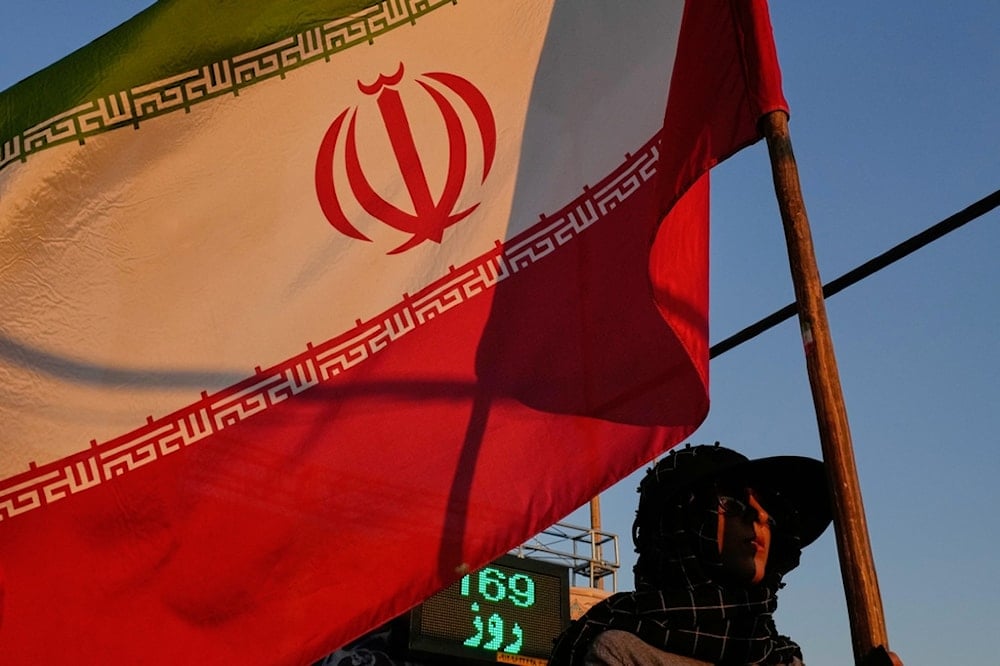
A woman holds an Iranian flag in downtown Tehran, Tuesday, Sept. 15, 2026 (AP Photo/Vahid Salemi)
Senior officials from Saudi Arabia, Turkey, and Pakistan are expected to visit Tehran today, Monday, for a joint meeting focused on regional security and efforts to reduce tensions.
Iranian Deputy Secretary of the Supreme National Security Council Ali Bagheri Kani announced the visit, according to Iran’s Tasnim news agency. The delegation includes Saudi Defense Minister Khalid bin Salman, Pakistani Army Chief General Asim Munir, and Turkish intelligence chief Ibrahim Kalin.
Bagheri Kani said Munir had informed Mohsen Rezaei, secretary of Iran’s Supreme National Security Council, that the officials had agreed to travel to Tehran, meet Iranian security officials, and hold a joint session.
He added that Iran and the three visiting countries could draw on Iran’s experience in building national security during the US-Israeli war against it to advance an approach to regional security rooted in the region itself.
Read more: Enriched uranium 'national wealth', will not be shipped: Rezaei
Saudi Arabia confirms participation
Saudi Arabia’s official Al Ekhbariya channel confirmed that Khalid bin Salman would lead a delegation to Tehran for a meeting between Iran and countries party to the Mecca Agreement.
The channel said the meeting forms part of the agreement’s efforts to reduce regional tensions.
Read more: Fars: Iran warns Berlin bases in region are targets if it joins war
US demands remain difficult
Iranian Foreign Ministry spokesperson Esmaeil Baghaei stated separately that Tehran had not abandoned negotiations with the United States, but remained fully prepared to defend itself while pursuing diplomacy
Iran maintained that diplomatic communications continue through intermediaries.
"Alongside continuing the diplomatic track, [Iran was] fully prepared to defend itself," he said during an interview with German television channel ARD,
Baghaei identified Washington's insistence on unilateral demands and its refusal to reconsider its positions as the main obstacle to progress in the negotiations.


