
Iran warns regional states over military cooperation with US
 4 Min Read
Iranian military chief Ali Abdollahi says any regional state that supports US forces could be considered complicit in military aggression against Iran.
-
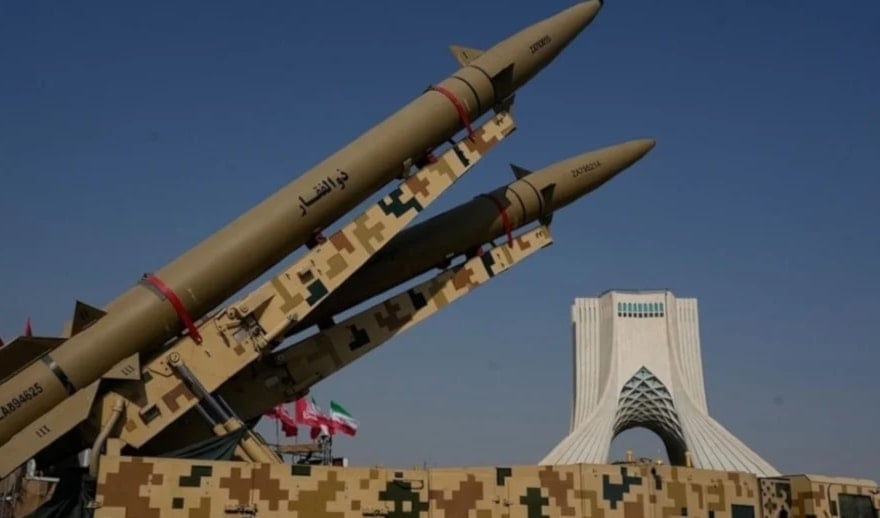
Iranian missiles are displayed by the armed forces in a temporary exhibition in front of the Azadi monument in Tehran, Iran on July 2026. (AP)
Iranian Armed Forces Chief of Staff Major General Ali Abdollahi said on Wednesday that regional states providing support to US forces could be regarded as parties to any military action against Iran.
Abdollahi added that, "It is unlikely that military aircraft and refueling aircraft would be stationed at regional bases without the knowledge of the host countries".
He warned that Iran is fully aware of the positions and actions of countries that have publicly rejected allowing the United States to use their territory against Iran, concluding that: "Nothing can be hidden from us".
US cannot defend its own bases: Araghchi
In a similar vein, Iranian Foreign Minister Abbas Araghchi commented on Tuesday on the regional balance of power, stating that the recent war "proved that America cannot even defend its own bases".
The foreign minister also confirmed diplomatic channels between Iran and the United States, noting that Qatar and Pakistan "have played an effective mediation role between Iran and Washington", adding that "currently, relations between Tehran and Doha are going through a very positive phase".
Regarding the broader regional security framework, Araghchi said that the new security approach in the region "must be based on 'collective security' and resolving economic conflicts".
It is worth noting that Iran has repeatedly said that US military bases and economic assets in the Gulf region have been used to launch acts of aggression against Iran, including strikes that have resulted in civilian casualties. In this framing, any Iranian action targeting such facilities is a retaliation against hostile military activity originating from or enabled by those bases.
Iran shifts from defensive to offensive policy: Reuters
Iran has decided to shift its policy "from defensive to fully offensive", Reuters claimed, citing a senior Iranian official on Monday, as Tehran set a deadline of a few weeks for Washington to fully implement a memorandum of understanding.
The official said Iran would inform the United States and regional countries of the timeline it has set through mediators. The official also stated that pressuring Washington or relying on mediators to reach a permanent agreement "is not realistic," adding, "We will not wait for America to continue the naval blockade indefinitely."
In a related development, Iranian Foreign Ministry spokesperson Esmail Baghaei earlier on Monday confirmed his country's rejection of being placed under time pressure regarding extending the "60-day deadline" set by the Islamabad memorandum of understanding.
Iran set to expel US forces from Gulf, Iran-Oman talks reached advanced stage
Baghaei also addressed consultations with Oman concerning navigation management in the Strait of Hormuz, as well as Iranian pilots being held in Qatar.
On Sunday, the chief of staff of the Iranian armed forces, Major General Amir Hatami, confirmed the beginning of the implementation of a decision to expel US forces from the Gulf, the Gulf of Oman, and the Strait of Hormuz, stating that his country would not allow US bases to return to their previous status.
The developments come as talks between Oman and Iran over navigation arrangements in the Strait of Hormuz have reached an advanced stage. Iranian Foreign Minister Abbas Araghchi had previously confirmed that the agreement with Muscat had entered its final phases, while emphasizing at the same time that reaching an Omani-Iranian agreement would not alone mean the reopening of the strait.


