
Ghalibaf criticizes US officials, Araghchi rejects temporary truce
 4 Min Read
Iran US tensions intensify as Iranian Parliament Speaker Mohammad Bagher Ghalibaf criticizes US officials and Abbas Araghchi rejects a ceasefire, calling for an end to the war.
-
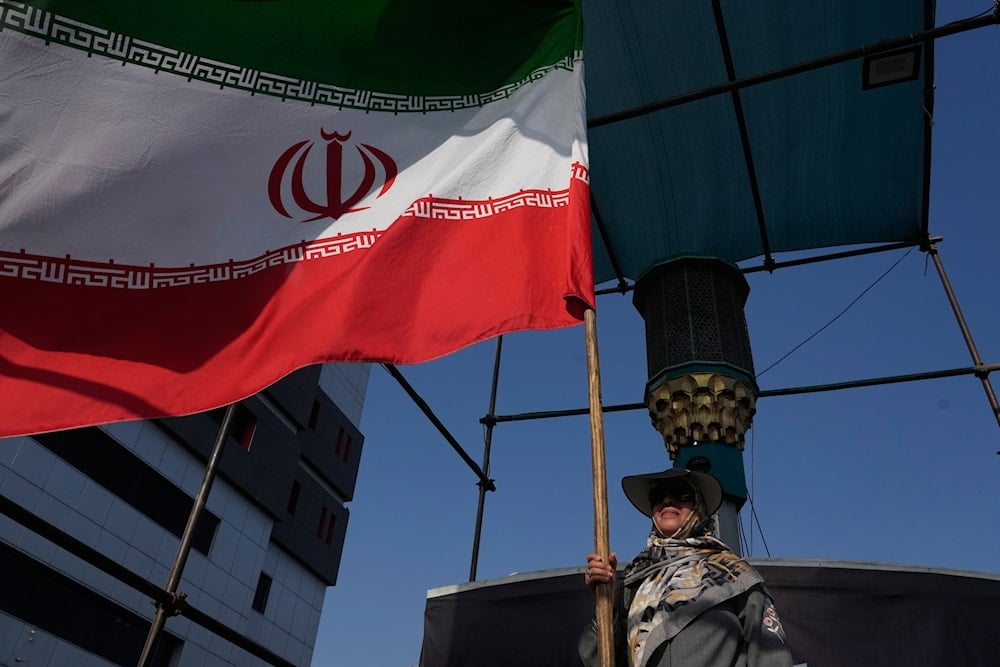
A woman holds an Iranian flag as part of a campaign in downtown Tehran, Iran, Monday, Aug. 17, 2026 (AP)
Iranian Parliament Speaker Mohammad Bagher Ghalibaf has sharply criticized two senior US officials, stating that the US Secretaries of War and Treasury "completely lack the necessary competence" and have caused chaos.
Ghalibaf also addressed the ongoing tensions between Tehran and Washington, asserting that Americans believe that by increasing pressure on Iran, "they will extract concessions that were never part of the agreement."
On the other hand, Iranian Foreign Minister Abbas Araghchi ruled out a temporary truce with the United States, telling Iranian state television that Tehran has communicated its position to mediators.
"We have told the mediators that we do not accept a ceasefire; rather, the war must end," Araghchi said. He elaborated that Iran has told the mediators that "we do not accept a ceasefire; rather the war must end in a way that does not happen again."
US cannot even defend its own bases: Araghchi
Araghchi further commented on the regional balance of power, stating that the recent war "proved that America cannot even defend its own bases."
The foreign minister also confirmed diplomatic channels between Iran and the United States, noting that Qatar and Pakistan "have played an effective mediation role between Iran and Washington," adding that "currently, relations between Tehran and Doha are going through a very positive phase."
Regarding the broader regional security framework, Araghchi said that the new security approach in the region "must be based on 'collective security' and resolving economic conflicts."
Iran asserts Strait of Hormuz will remain closed, reject US impositions
Iranian Parliament Speaker Mohammad Bagher Ghalibaf said earlier on Tuesday that the Strait of Hormuz will remain closed until the blockade and oil embargo are lifted, warning that Tehran is prepared to inflict a "more severe defeat" on any party that continues its aggression or threats against Iran.
Ghalibaf asserted the victory of the Iranian people as evidence of US defeat, referring to it as a sign of Washington’s failure under the title of the Islamabad Memorandum of Understanding. He stressed that Iran "will never compromise over the blood of the martyred Iranian leader and the country’s martyrs," vowing that the aggressors would be punished and that the Islamic Republic would emerge victorious from this historic test.
Major General Mostafa Izadi, the Deputy Commander-in-Chief of the Islamic Revolution Guard Corps (IRGC), said Tuesday that "the enemy failed to destroy Iran’s defensive capabilities and nuclear industries."
Izadi said Iran had developed "exceptional deterrence power" through its full control of the Strait of Hormuz and a qualitative advancement in its missile and defensive capabilities, adding that the Axis of Resistance had taken decisive steps by establishing control over strategic positions in the Red Sea and the Bab al-Mandab Strait.
Meanwhile, Foreign Minister Abbas Araghchi said that Iran had resisted the world’s largest army, despite its backing by most Western countries as well as several states in the region and beyond. "We were the ones who rejected a ceasefire and continued the war until we reached a point at which they accepted a ceasefire and negotiations on Iran’s terms," Araghchi said.
Araghchi added that "those who sought to impose unconditional surrender on Iran begged for negotiations shortly after the war began," and stressed that Iran had fought hard and negotiated from a position of strength, emerging victorious in both the war and diplomacy.


