
Oil prices rise as US-Israeli war on Iran deepens global supply fears
 4 Min Read
Oil prices increased as the prolonged US-Israeli war on Iran, stalled diplomacy, and disruptions in the Strait of Hormuz and Bab el-Mandeb intensified concerns over global energy supplies.
-
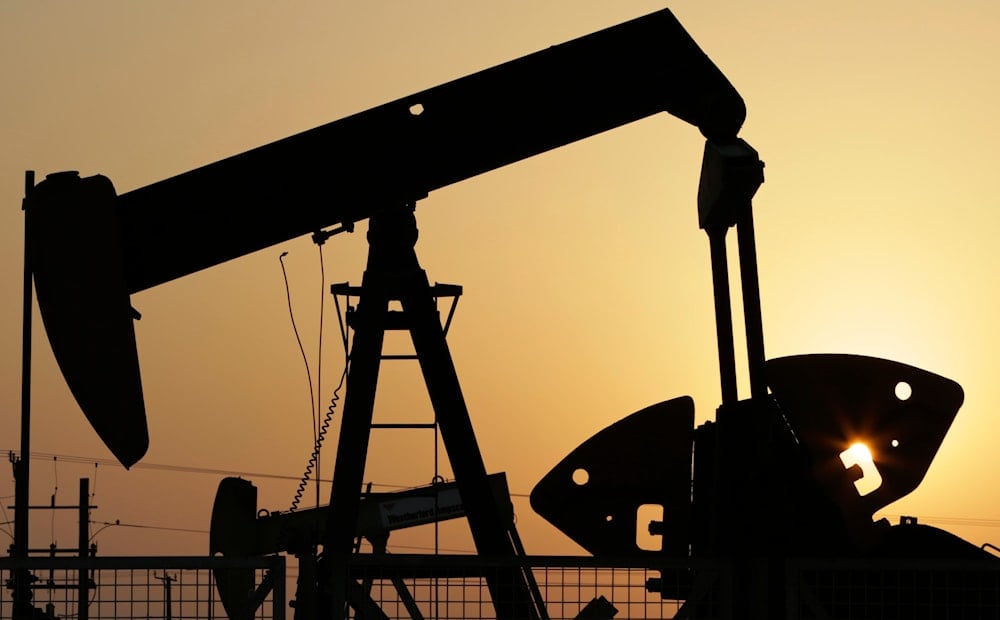
In this Sept. 30, 2015, file photo, oil pumps work in the desert oil fields of Sakhir, Bahrain (AP)
Oil prices increased on Tuesday as the prolonged US-Israeli war on Iran and Washington’s refusal to extend a temporary ceasefire kept pressure on global energy markets and major maritime routes
Brent crude futures rose 27 cents, or 0.3%, to $91.14 a barrel by 0003 GMT, after touching their highest level since July 30 during the previous session. US West Texas Intermediate crude gained 42 cents to $85.04, having earlier reached $85.37, its highest since July 31.
The latest rise came as efforts to secure a permanent end to the conflict remained stalled, with Tehran signaling that it would respond to the lack of progress by adopting a more forceful military posture.
A senior Iranian official told Reuters on Monday that Iran would shift toward a "fully offensive" military posture after negotiations aimed at ending the war failed to produce a lasting agreement.
Washington, meanwhile, has ruled out extending the temporary ceasefire arrangement, further weakening prospects for an immediate diplomatic breakthrough and prolonging uncertainty across energy markets.
"Oil has jumped to start the week as U.S.-Iran relations look increasingly shaky. A deal to reopen the Strait of Hormuz still does not appear to be in sight, and shipping numbers remain at a trickle", KCM chief market analyst Tim Waterer said.
Kpler ship-tracking data showed that only five commodity vessels passed through Hormuz on Saturday, while no crossings were registered on Sunday. That compared with 31 vessels during the previous weekend.
Pressure extends to Red Sea
Supply concerns have also intensified around Bab al-Mandeb, another strategic maritime chokepoint linking the Red Sea with the Gulf of Aden.
Sanaa said it had targeted a Saudi military vessel and four escort ships with missiles, according to military spokesperson Yahya Saree. "The dual chokehold on the Strait of Hormuz and the Bab el-Mandeb remains highly significant. These are not secondary concerns. They sit at the centre of the current supply-risk narrative", Waterer said.
Together, the Strait of Hormuz and the Bab al-Mandeb Strait serve as vital arteries for global energy trade, linking Gulf producers with markets in Asia and Europe. Instability affecting both routes has heightened concerns over a broader disruption to energy supplies and global trade flows.
Tehran, Muscat pursue navigation agreement
Iran has continued separate negotiations with Oman over a mechanism regulating passage through the Strait of Hormuz, with Tehran saying the two sides are close to reaching an agreement. The talks have offered one of the few remaining regional avenues for reducing tensions around the strategic waterway.
However, US President Donald Trump’s threat to bomb Oman over its role in the negotiations has further complicated the diplomatic environment and raised questions over Washington’s approach to regional mediation.
At the same time, reports that Trump has opened back-channel discussions with the IRGC suggest Washington continues to seek channels of communication with Tehran even as it publicly rejects an extension of the ceasefire.
The contrast highlights the pressure facing the United States as the war continues to affect shipping, energy prices and regional security.
US crude inventories are also expected to have declined last week alongside product stockpiles, according to a preliminary Reuters poll released Monday, adding another potentially supportive factor for prices.
For energy markets, however, the dominant concern remains the continuation of the US-Israeli war and its impact on Hormuz and Bab el-Mandeb, with the absence of a political settlement keeping the risk of further supply disruption firmly in focus.
Read more: Iran shifts from defensive to offensive policy: Reuters


