
Southern Hormuz route faces closure as Iran-Oman talks advance
 3 Min Read
The elimination of the southern shipping route through the Strait of Hormuz requires vessels to coordinate passage with the IRGC Navy as most traffic shifts to an Iranian-designated corridor.
-
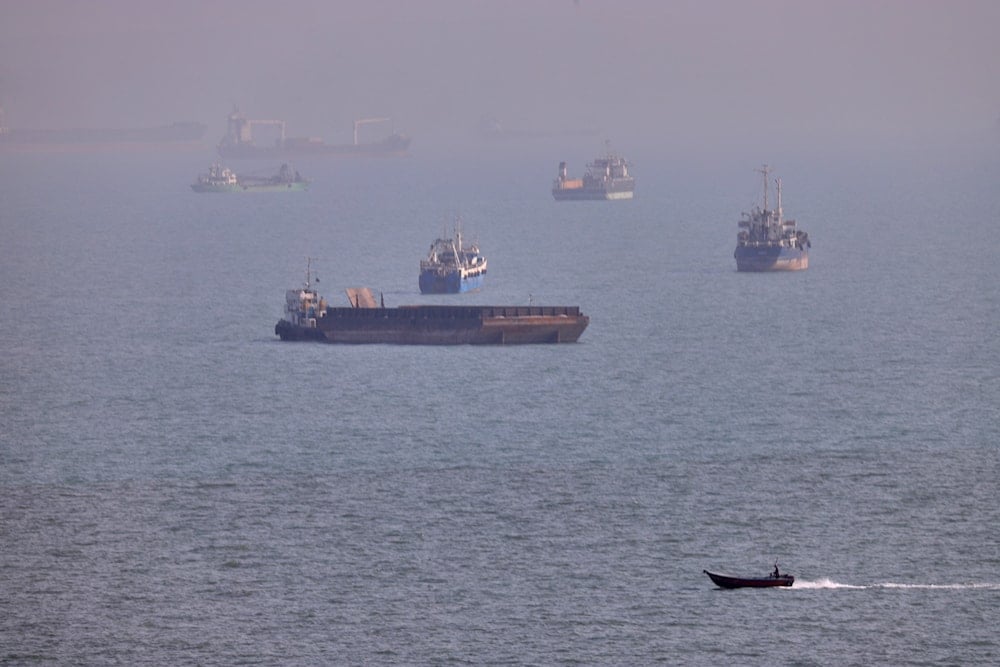
A small boat sails past cargo ships and other commercial vessels anchored in the Strait of Hormuz off Bandar Abbas, Iran, Wednesday, Aug. 5, 2026 (AP)
Ongoing negotiations between Iran and Oman could lead to a major change in maritime traffic through the Strait of Hormuz, with the southern shipping corridor potentially being discontinued, Al Mayadeen’s correspondent reported from the strategic waterway.
Under the arrangements currently being discussed, vessels crossing the strait would be required to coordinate their movements with the Islamic Revolution Guard Corps Navy before being allowed to proceed.
The correspondent said most commercial vessels have already shifted to the shipping corridor designated by Iran, indicating that Tehran’s proposed traffic system is increasingly being followed by maritime operators navigating the area.
Agreement on navigation movement map
The development comes a day after Iranian Foreign Ministry spokesperson Esmaeil Baghaei said Tehran and Muscat had reached an agreement regarding a navigation movement map through the Strait of Hormuz, marking further progress in negotiations over the organization of maritime traffic through the waterway.
Talks between the two neighboring states had already reached an advanced stage earlier this month, as efforts continued to establish an agreed framework for vessels seeking passage through the strait.
Security concerns and route disputes
Tehran has maintained throughout the negotiations that discussions over navigation arrangements are being conducted directly with Oman rather than the United States. Iranian officials have also repeatedly raised security concerns over the southern route and maintained that it could not provide safe passage for commercial vessels.
The reported negotiations come amid continued congestion in the Strait of Hormuz, where dozens of commercial ships and oil tankers remain at anchor while awaiting authorization from the IRGC Navy to continue their journeys. Al Mayadeen’s correspondent reported Sunday that the vessels were awaiting approval from the Iranian force before transiting the waterway.
The IRGC Navy has previously instructed vessels operating in the strait to use routes approved by Iran, maintaining that those corridors provide the secure framework for navigation through the strategic passage.
Strategic implications for global shipping
Ending the southern route would further consolidate maritime traffic into the Iranian-designated corridor and strengthen Tehran’s role in regulating passage through one of the world’s most important energy transit points.
The Strait of Hormuz connects the Gulf with the Gulf of Oman and the Arabian Sea and serves as a critical route for global oil and gas shipments. Any lasting change to navigation arrangements in the waterway could therefore have significant implications for regional shipping and international energy markets.
Read more: Baghaei: Iran, Oman agree on navigation movement map


