
Iran warns US against nuclear facilities attacks, promises surprises
 5 Min Read
Iranian officials warn that continued US and Israeli aggression could escalate the crisis, disrupt global energy markets, and provoke unforeseen consequences across the region.
-
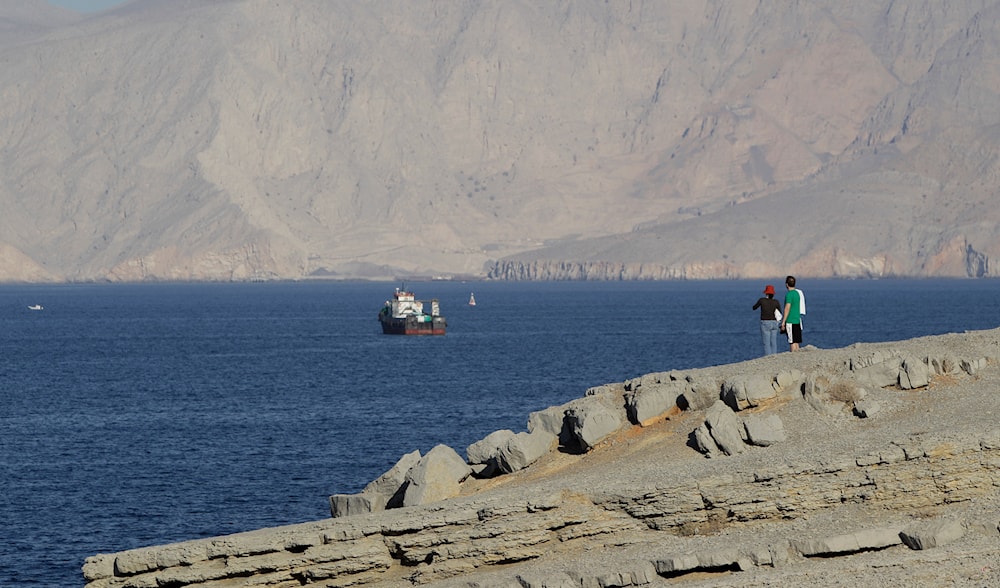
In this Jan. 18, 2012 photo, a tourist couple watches the mountains in the south of the Strait of Hormuz as the trading dhows and ships are docked on the Gulf waters near the town of Khasab, in Oman (AP)
Senior Iranian officials have issued a series of warnings as the US-Israeli aggression on Iran intensifies, cautioning that regional security and global energy markets could face further disruption.
Ali Larijani, Secretary of Iran’s Supreme National Security Council, said stability in the Strait of Hormuz would be difficult to achieve amid the war waged by "Israel" and the US in the region.
من المستبعد أن يتحقق أيُّ أمنٍ في مضيق هرمز في ظلِّ نيران الحرب التي أشعلتها الولايات المتحدة وإسرائيل في المنطقة، ولا سيّما إذا كان ذلك بتصميم أطرافٍ لم تكن بعيدةً عن دعم هذه الحرب والإسهام في تأجيجها. https://t.co/Fn2tcbLhDT
— Ali Larijani | علی لاریجانی (@alilarijani_ir) March 9, 2026
“It is unlikely that any security can be achieved in the Strait of Hormuz amid the flames of war ignited by the United States and Israel in the region,” Larijani wrote in a post on X.
He added that “this security will not be achieved amid the war that was ignited by the determination of certain parties that were not far from supporting it and contributed to fueling it.”
Araghchi warns of ‘surprises’ for Washington
On his part, Iranian Foreign Minister Abbas Araghchi said Tehran has “many surprises in store” for the United States as the war enters its second week and global energy prices surge.
Writing on X, Araghchi mocked the US aggression against Iran, calling it “Operation Epic Mistake,” and linked the war to rising commodity prices.
9 days into Operation Epic Mistake, oil prices have doubled while all commodities are skyrocketing. We know the U.S. is plotting against our oil and nuclear sites in hopes of containing huge inflationary shock. Iran is fully prepared.
— Seyed Abbas Araghchi (@araghchi) March 9, 2026
And we, too, have many surprises in store. pic.twitter.com/UNQu0fVZE2
“9 days into Operation Epic Mistake, oil prices have doubled while all commodities are skyrocketing. We know the US is plotting against our oil and nuclear sites in hopes of containing huge inflationary shock. Iran is fully prepared,” he wrote.
“And we, too, have many surprises in store,” he added.
These remarks come amid sharp volatility in global energy markets since the US-Israeli aggression began. Benchmark crude briefly approached $120 a barrel as concerns grew that the crisis could disrupt Middle Eastern energy supplies.
Governments and financial markets are also closely watching the situation around the Strait of Hormuz, one of the world’s most important oil transit routes.
Iranian officials have repeatedly warned that Tehran will retaliate against attacks on its strategic infrastructure, including oil facilities and nuclear sites, raising fears of further escalation.
IRGC-linked advisor predicts ‘three decisive weeks’
IRGC Navy political advisor Mohammad Akbarzadeh said the coming weeks could prove pivotal in the confrontation with Washington and Tel Aviv.
Speaking on Monday, he said “three decisive weeks lie ahead,” citing what he termed as several factors that have undermined the plans of what he called the “system of hegemony.”
Akbarzadeh said the first factor was “the policy of restricting passage through the Strait of Hormuz, which has created an energy crisis and driven prices higher, while the global economy cannot withstand such pressure.”
He also praised the capabilities of the Islamic Revolution Guard Corps and the broader Iranian armed forces, saying their offensive precision had “surprised the enemies and confused many American analysts and generals.”
According to Akbarzadeh, the third factor was the “concerned, massive and broad presence of the people in the Revolution Square,” which he said had alarmed supporters of the war in Washington and Tel Aviv.
He argued that the second week of the war would be the most critical period.
“If Iran is able to maintain the upper hand as it did last week, which is entirely possible, then we should expect to hear a new tone from United States calling for an end to the war, because the enemy’s calculations have faltered and the imbalance in their behavior has become clear,” he stressed.
Akbarzadeh added that by the third week, global powers would likely focus their attention on Tehran in an effort to prevent a wider regional war.
Trump seeking contact to end war, Tehran not responding: Exclusive
US President Donald Trump has been attempting to communicate with Tehran through intermediaries in an effort to end the war, but Iran has refused to respond, although he continues to claim otherwise, a senior Iranian political official told Al Mayadeen.
According to the official, Trump’s private messages contradict his public rhetoric. “Trump contradicts what he is sending us,” the official said, pointing to the US president’s statements to American media claiming that there is no specific timetable for ending the war.
Tehran rejects messages from Washington
The Iranian official confirmed that Tehran has informed mediators it will not receive or respond to messages from the US.
He said the conflicting signals from Washington reflect a state of “chaos and deep crisis” within the Trump administration, adding that the US president has found himself “in a terrible predicament without a clear way out of this quagmire.”
Iran links position to wider regional war
The official emphasized that Iran’s position remains firm and strategic, stating that Tehran will not respond to any initiative while the confrontation with the US and "Israel" continues.
He added that Iran’s stance is tied to the broader regional conflict and what Tehran describes as the consequences of Israeli actions in the region.
"Iran maintains a firm and resolute position with a strategic objective: not to respond to any initiative until the Zionist entity retreats and fully collapses after all the crimes it has committed in the region," the official told Al Mayadeen.
War continues across region
Amid the ongoing US-Israeli aggression against Iran, Tehran has continued launching missile and drone attacks against targets in the occupied Palestinian territories and US bases across the region.
The developments come as the war enters a critical stage and diplomatic channels appear increasingly strained.


