
Trump's war on Iran doomed to failure from the start: UnHerd
 4 Min Read
The US war on Iran raises questions about Washington’s objectives while analysts warn of rising oil prices, global economic risks, and Western military supply chain shortages.
-
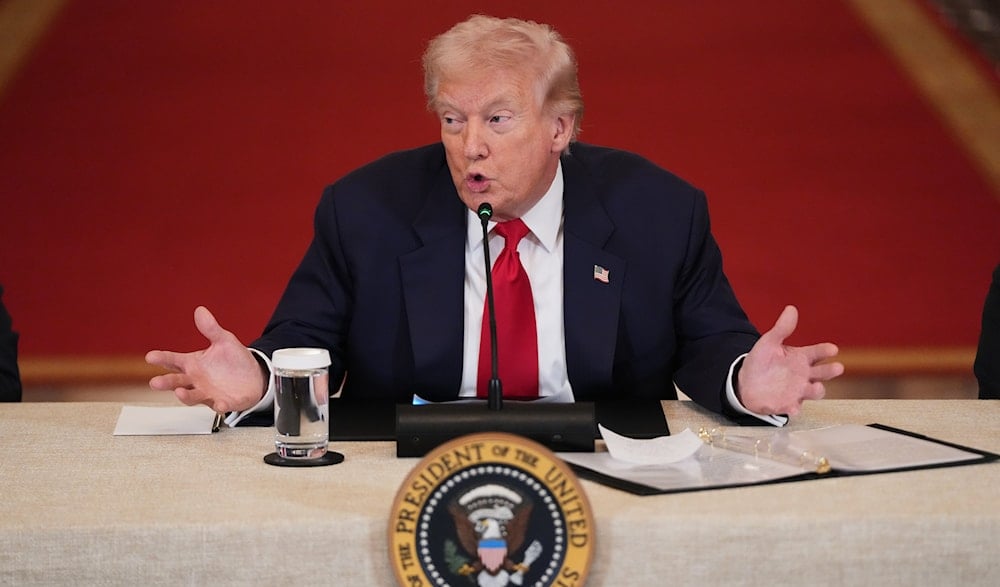
US President Donald Trump speaks during a roundtable discussion on college sports in the East Room of the White House, Friday, March 6, 2026, in Washington. (AP)
US President Donald Trump has yet to provide clear answers about the objectives of the ongoing US war on Iran, even a week after its launch. According to an UnHerd report, the key questions remain unresolved: why the war began, what its goals are, and how it will end.
The report notes that intelligence assessments suggested the United States would struggle to achieve one of its declared objectives, regime change in Iran, even through a prolonged military campaign.
A long war, it warns, could severely damage the global economy by driving up oil prices, leading to higher inflation, rising interest rates, and slower economic growth. Several European countries, including Germany, the Netherlands, and the United Kingdom, are already facing shortages in gas reserves.
At the same time, the analysis says that a short conflict could also produce destabilizing consequences. It argues that Trump might abandon the operation abruptly, leaving tensions in the Middle East to escalate further. Even under such a scenario, the report suggests it remains uncertain whether global oil and gas flows would quickly return to normal levels.
Global economic repercussions
The analysis also highlights the geopolitical impact of rising oil prices, noting that the United States has already lifted oil sanctions on Russia. As a result, Russian President Vladimir Putin has reportedly resumed oil shipments to India, this time at higher prices rather than discounted rates.
The report adds that Moscow has also threatened to cut remaining energy supplies to Europe, potentially reshaping expectations about the outcome of the war in Ukraine.
Meanwhile, the analysis argues that Western military planning is increasingly constrained by industrial capacity and supply chains. It states that Western countries are facing difficulties in sustaining the supply chains required for military procurement, warning that even the world’s most powerful armies may struggle to maintain operations in wars lasting more than a few weeks due to shortages of essential equipment.
Contrary to Trump’s recent claim that the United States has “almost unlimited” ammunition supplies, the analysis cites reporting by Foreign Policy indicating that the conflict is rapidly depleting US and Israeli arsenals. According to the report, repairing the damage inflicted by Iranian strikes could take years and would depend heavily on securing critical minerals used in defense production.
Industrial capacity and supply chains
Modern warfare is increasingly shaped by industrial supply chains. The article references Prussian military theorist Carl von Clausewitz, noting that while great powers in his era possessed abundant craftsmen capable of producing weapons, today’s military strategies require a sophisticated understanding of global supply networks.
The analysis argues that leaders such as Vladimir Putin and Chinese President Xi Jinping have placed significant emphasis on industrial supply chains and natural resources. It notes that Putin wrote his thesis on Russia’s mineral resources, advocating their nationalization, while Xi’s economic outlook was shaped by observing the collapse of the Soviet Union and the importance of maintaining strong industrial capacity.
According to UnHerd, China has strategically prioritized industries such as rare earth minerals, magnets, electric vehicle batteries, solar panels, robotics, and electric vehicles. In contrast, the analysis criticizes Western leaders for paying comparatively little attention to mining and industrial supply chains, noting that many industrial regions in the United States were allowed to decline over decades.
The article concludes that these structural weaknesses could limit Western strategic options. It suggests that if China were to move against Taiwan, the United States might attempt to intervene, particularly if semiconductor supplies were disrupted, but it remains uncertain whether the US would be prepared for a prolonged conflict with another major nuclear power.


