
Iranian Army strikes US forces concentrations in Bahrain, Kuwait
 3 Min Read
Iran launched missile and drone strikes on US military sites in Bahrain and Kuwait, while Washington said it targeted Iranian military assets after attacks in the Strait of Hormuz.
-
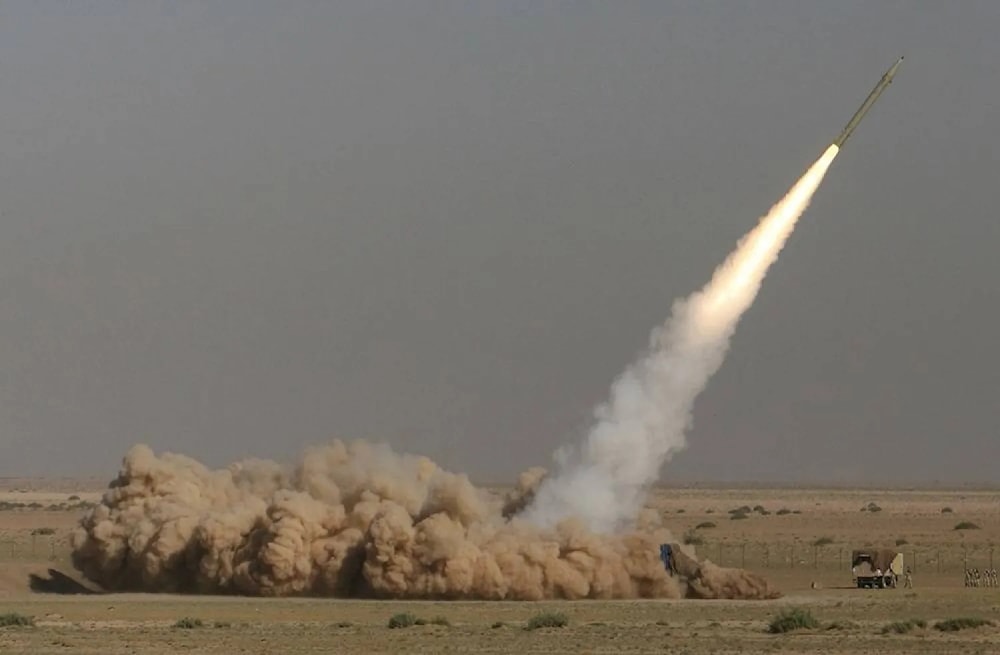
An Iranian Fateh missile is launched in a drill near the city of Qom, 80 miles (130 kilometers) south of the capital Tehran, Iran, Sept. 27, 2009 (Fars News Agency)
Iran's military struck US force concentration centers at Sheikh Isa Air Base in Bahrain on Wednesday at dawn, declaring the attack a direct response to American violations of the ceasefire agreement.
The Iranian Army confirmed the strikes and issued an unequivocal warning: all US bases across the region are now legitimate targets for Iranian drones. Tehran will treat any American movement or infringement as grounds for immediate military action.
The Islamic Revolution Guard Corps (IRGC) executed a separate joint naval and aerospace operation, launching missiles and drones against 85 US military installations.
The targets included Bandar Salman port, the US Fifth Naval Region in Bahrain, and Ali Al Salem Air Base in Kuwait. The IRGC stated the operation was retaliation for America's breach of the ceasefire and confirmed that the drone shot down over Bushehr had been attempting to disrupt the attack.
The IRGC asserted that the strikes came in retaliation for the United States' violation of the ceasefire agreement, while reporting that a drone shot down over Bushehr had been attempting to interfere with its offensive and interceptive operations.
US CENTCOM confirms aggression on Iran
On Wednesday at dawn, US forces launched an aggression on Iran, with a statement from US Central Command (CENTCOM) claiming the operations were carried out “in response to Iranian attacks on three commercial vessels transiting the Strait of Hormuz.”
CENTCOM further claims that US strikes had targeted Iranian air defense systems, command-and-control networks, coastal radar sites, anti-ship missile capabilities, and more than 60 small fast-attack craft belonging to the IRGC in and around the strait.
In a counter-narrative, Iranian state television reported that the majority of US raids on southern Iran had struck “non-military areas."
The United Nations and several Gulf states are reportedly convening emergency consultations as fears grow over broader instability in the Strait of Hormuz, a critical chokepoint for global oil shipments.
Ghalibaf: The era of bullying, extortion over, Iran doesn't fold
For his part, Iranian Parliament Speaker Mohammad Bagher Ghalibaf condemned Washington for violating multiple provisions of the bilateral memorandum between Tehran and the United States, declaring that the era of "bullying and extortion" has ended.
In a post on X, Ghalibaf enumerated US infractions, including interference in Iran's adjustments related to the Strait of Hormuz, continued threats of further strikes, the reinstatement of sanctions on Iranian oil, attacks on southern Iran, and sustained Israeli aggression against Lebanon.
Major MOU Violations by the US:
— محمدباقر قالیباف | MB Ghalibaf (@mb_ghalibaf) July 8, 2026
Violating Iranian adjustments in the Strait
Persistent threats of further strikes
Reinstating oil sanctions
Attacks on southern Iran
Continued Zionist aggression on🇱🇧
The era of bullying and extortion is over. It leads nowhere. We don’t fold.
"The era of bullying and extortion is over. It leads nowhere. We don't fold," Ghalibaf wrote.
The Parliament Speaker specifically referenced Washington's reinstatement of oil sanctions as a direct breach of the memorandum.
Iran's Foreign Ministry earlier condemned the US decision to revoke the temporary suspension of sanctions on Iranian oil sales, categorizing it as a violation of Article 10 of the Islamabad Memorandum signed on June 28.
Tehran stated that the decision to end the temporary sanctions waiver exposed the US administration's "bad faith, instability, and unreliability." The ministry emphasized that Iran had fully fulfilled its commitments under the agreement.
The Foreign Ministry warned that Washington would bear full responsibility for the consequences of breaching the memorandum and confirmed that Iran would take necessary measures to protect its national interests and security.


