
Iranian attacks hit 20+ US facilities, contradicting US narrative: BBC
 5 Min Read
The satellite imagery analysis raises questions about the scale of losses sustained by Washington.
-
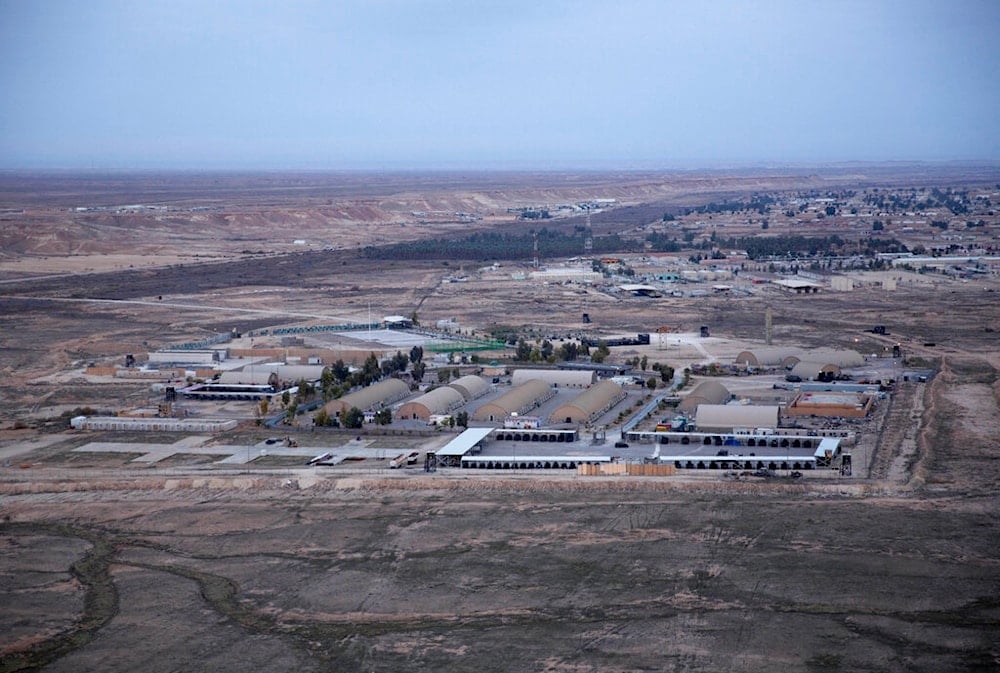
This Dec. 29, 2019, aerial file photo taken from a helicopter shows Ain al-Asad air base in the western Anbar desert, Iraq (AP)
Satellite imagery and video analysis indicate that Iranian strikes have damaged at least 20 US military facilities across West Asia since the outbreak of the war on the Islamic Republic, suggesting a broader impact on American military infrastructure than publicly acknowledged by Washington.
The findings, based on an investigation by BBC Verify using commercial satellite imagery, point to damage across eight countries and underscore the growing effectiveness of Iran's retaliatory campaign following months of US and Israeli attacks on Iranian territory and allied Resistance forces in the region.
According to the BBC analysis, Iranian operations have struck US bases and joint military facilities in Saudi Arabia, the United Arab Emirates, Qatar, Kuwait, Iraq, Jordan, Bahrain, and Oman.
The assessment identified damage at 20 sites, though some military analysts cited in the report estimate that the actual number of affected facilities could be as high as 28.
The attacks form part of Tehran's response to the US-Israeli aggression launched earlier this year against Iran. While US officials have repeatedly portrayed Iran's military capabilities as severely degraded, analysts argue that the extent of documented damage presents a different picture.
A US defense official declined to comment on the findings, citing operational security concerns.
Iranian strikes hit bases across the region
Among the facilities reportedly damaged were key US military installations housing advanced missile defense systems, surveillance assets, logistical infrastructure, and troop accommodations.
The report states that Iranian strikes affected Al Ruwais and Al Sader airbases in the UAE, as well as Muwaffaq Salti Airbase in Jordan, where Terminal High Altitude Area Defense (THAAD) systems were reportedly damaged.
THAAD batteries represent some of the most advanced missile defense platforms in the US arsenal and are deployed at a limited number of strategic locations worldwide.
Former Irish Defense Forces chief Vice-Admiral Mark Mellett, in comments to the BBC, described the systems as central components of a highly integrated regional defense architecture that cannot be rapidly replaced.
Read more: Iran to revise draft agreement with US as negotiations continue
Advanced US aircraft and infrastructure affected
Analysis cited in the report also pointed to significant damage at Prince Sultan Airbase in Saudi Arabia.
Satellite imagery reportedly showed damaged aircraft, impact craters, and infrastructure destruction. Experts identified one of the affected aircraft as an E-3 Sentry airborne surveillance platform, a system valued at hundreds of millions of dollars.
Elsewhere, Ali Al Salem Airbase and Camp Arifjan in Kuwait sustained damage to fuel facilities, aircraft hangars, troop accommodations, and communications infrastructure.
The report further stated that at least 42 aircraft have been damaged or destroyed since February, including F-15 and F-35 fighter jets, MQ-9 Reaper drones, and A-10 attack aircraft.
Estimates indicate that "Operation Epic Fury" has cost the Pentagon upwards of $98 billion, with repair and replacement expenses expected to account for a significant portion of that total.
Analysts question Washington's narrative
The findings have renewed debate regarding official US assessments of the war on Iran.
While American officials have repeatedly emphasized the success of military operations against Iran, analysts cited in the report argue that Tehran has demonstrated increasing precision and adaptability throughout the war.
Dr. Kelly Grieco of the Stimson Center said Iran shifted from large-scale missile barrages to more focused strikes against high-value military targets.
"[Iran's] opening salvos were optimised for volume—mass waves designed to overwhelm air and missile defences through sheer numbers," she said.
"Within days, however, Iran had shifted to smaller, more precisely targeted salvos, conserving remaining missiles and drones for specific high-value targets and concentrating fire where even near-misses cause significant damage."
Analysts also noted that Iran's reliance on relatively inexpensive drones and missiles has allowed it to challenge significantly more expensive US military assets across the region.
Ceasefire strains renew escalation concerns
The report comes amid renewed tensions surrounding the fragile ceasefire between Washington and Tehran.
Iranian officials highlighted the growing vulnerability of US military installations throughout West Asia, with officials stating that US bases could no longer rely on regional states for protection.
“The nations and lands of the region will no longer serve as shields for American bases,” Leader of the Islamic Revolution, Sayyed Mojtaba Khamenei, said on May 16. "The United States not only will no longer have a safe haven for its mischief and for establishing military bases in the region, but day by day, it is growing more distant from its former status."
His remarks were followed by reports of fresh exchanges between US forces and Iran's Islamic Revolution Guard Corps (IRGC), raising concerns that the ceasefire could further deteriorate.
Analysts warn that any return to large-scale hostilities could expose US facilities to renewed attacks at a time when air-defense interceptor stocks have already been significantly depleted.


