
Iranian general says Israeli regime masking defeat with threats
 3 Min Read
Iranian General Ahmad Vahidi says “Israel” is using threats and propaganda to cover up defeat in the Twelve-Day War and growing isolation.
-
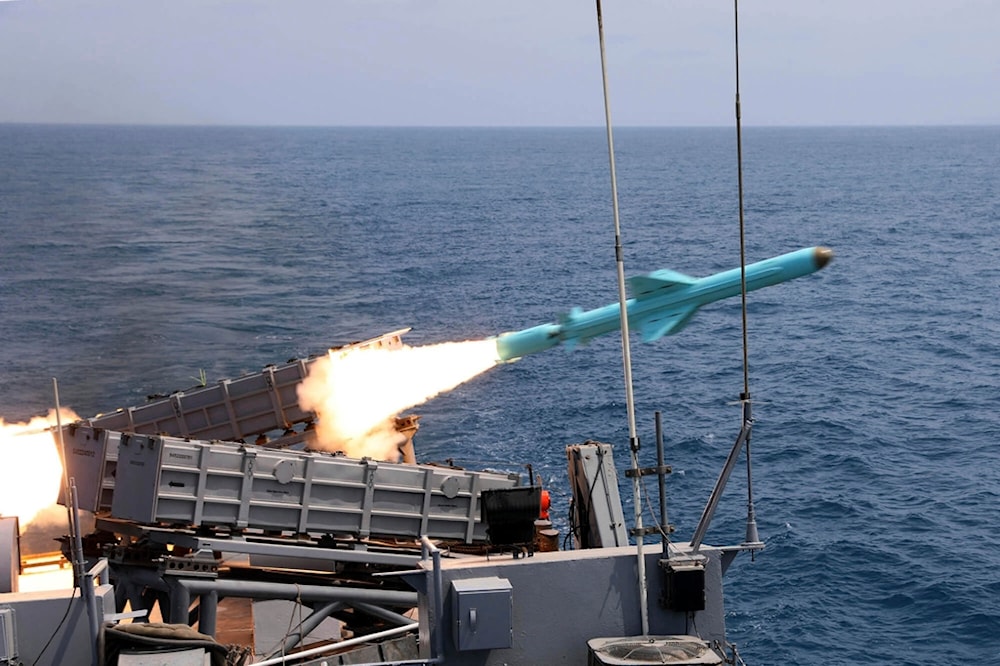
In this picture released by the official website of the Iranian Army on Thursday, August 21, 2025, a missile is fired from a vessel during an Iranian Navy drill in the Gulf of Oman and the Indian Ocean (AP)
Iranian Brigadier General Ahmad Vahidi, Deputy Chief of Staff of the Iranian Armed Forces, said “Israel” is attempting to conceal what he described as a severe defeat in the Twelve-Day War through threats, media campaigns, and political maneuvers.
In a statement to Al Mayadeen, Vahidi commented on Israeli Prime Minister Benjamin Netanyahu’s upcoming visit to the United States and ongoing Israeli threats against Iran, saying the Zionist entity is resorting to psychological warfare to distort reality.
Vahidi said “Israel” is seeking to project an image that does not reflect conditions on the ground, adding that it is facing serious internal and strategic problems and has failed to achieve any of its objectives in its confrontation with Iran.
He added that Israeli statements and propaganda efforts are unlikely to produce results, describing “Israel” as increasingly isolated and engaged in what he called desperate attempts to survive, while Iran continues to closely monitor developments.
Israeli-US plans for new Iran attack?
Israeli Prime Minister Benjamin Netanyahu is preparing to urge US President Donald Trump to back a new round of attacks on Iran, a source familiar with the preparations and multiple former US officials briefed on the matter told NBC.
According to these sources, the meeting, expected to take place at Mar-a-Lago later this month, will involve detailed discussions on potential US-Israeli coordination for renewed military action against Iran, including several military scenarios similar to the menu "Israel" offered before the June 2025 assault: "Israel" acting alone, limited US involvement, full joint operations, or a unilateral US campaign.
Netanyahu intends to argue that Iran’s reconstruction of its missile-production facilities, air defenses, and regional alliances represents a threat that could justify new strikes. Israeli officials also claim Iran is repairing previously targeted enrichment sites, though assessments from US officials remain mixed.
Speaking about his upcoming meeting with Netanyahu, Trump told reporters, "We haven’t set it up formally, but he’d like to see me." Israeli officials, however, have already announced the December 29 date.
Renewed aggression
This push for military escalation comes less than a year after "Israel" launched a large-scale aggression that triggered a twelve-day war.
At the time, Israeli occupation forces struck nuclear, civilian, and military sites inside Iran even as nuclear negotiations between Tehran and Washington were collapsing over US "maximalist" demands that went far beyond the nuclear file.
The attacks, coordinated later with the US, killed nearly a thousand people in Iran, destroyed sections of its air-defense grid, and damaged key infrastructure, according to both Iranian authorities and independent monitors.
Israeli regime officials now claim that Iran is rebuilding those defensive capabilities at a pace they consider unacceptable.
Such comments show the aggressive and expansionist nature of the Israeli regime, which goes far beyond what normal actors do in defense, as Tel Aviv considers that stripping all parties in the region of their sovereignty and defensive capabilities as a necessity to feel safe as a colony.


