
Iraq, US hold talks on security, Syria, government formation
 4 Min Read
The talks covered counter-terrorism cooperation, ISIS detainee repatriation, and Syria's political arrangements, among others.
-
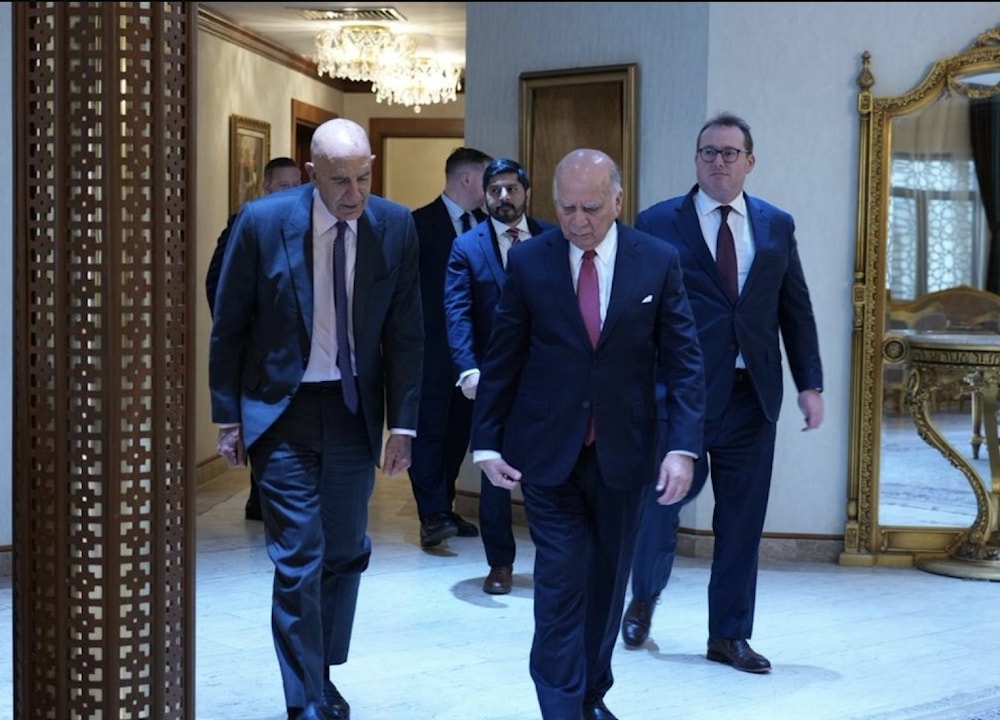
Iraqi Foreign Minister Fuad Hussein received US Special Representative for Syria Tom Barrack in Baghdad (Image sourced from the Iraqi Foreign Ministry)
Iraq’s Deputy Prime Minister and Foreign Minister Fuad Hussein met in Baghdad on Monday with US Special Envoy for Syria Tom Barrack in talks officially described as part of ongoing strategic coordination between Baghdad and Washington.
According to Iraq’s Foreign Ministry, discussions covered bilateral ties, regional security developments, and the stalled process of forming a new Iraqi government. The meeting comes amid growing domestic criticism that the United States continues to wield undue influence over Iraq’s political and security landscape.
ISIS file and counter-terrorism
Both sides reiterated cooperation in counter-terrorism. The US delegation welcomed Iraq’s transfer of ISIS detainees from facilities abroad into Iraqi custody, presenting the move as a reinforcement of sovereignty and judicial responsibility.
Hussein said Baghdad remains in contact with several governments to repatriate their nationals accused of terrorism, praising Türkiye’s agreement to receive Turkish detainees.
However, observers argue that Washington has repeatedly used the continued ISIS threat to justify maintaining its security footprint and intelligence networks in Iraq. They maintain that Iraqi forces, including the Popular Mobilization Forces, played the decisive role in defeating ISIS territorially, and warn that counter-terrorism cooperation must not become a channel for prolonged US leverage over Iraqi institutions.
Syria and border security
The talks also addressed the agreement between the Syrian Democratic Forces and Syria’s transitional authorities. Both sides affirmed support for its implementation, linking it to regional stability and Iraq’s western border security.
While Baghdad stresses the need to prevent cross-border militant infiltration, critics note that the SDF framework remains intertwined with US military strategy in northeastern Syria. From this perspective, lasting stability requires restoring full Syrian state authority and reducing foreign military presence, including that of the United States.
US-Iran negotiations
Hussein raised the risks of escalation between Washington and Tehran, reiterating Iraq’s preference for diplomatic solutions and backing the upcoming Geneva talks mediated by Oman.
Iraqi observers have warned that Iraq risks becoming a frontline arena in any US-Iran confrontation. While supporting dialogue, resistance-aligned forces argue that regional deterrence remains necessary to prevent external aggression.
Government formation and external pressure
Government formation featured prominently in the discussions, including nominations for leadership of the Council of Ministers and the presidency. Barrack outlined the American perspective, while Hussein stressed that forming a government is an internal Iraqi matter, even as he acknowledged the relevance of international partners’ views.
Analysts point to what they describe as repeated US pressure, including diplomatic signaling and economic tools such as control over dollar liquidity, as indirect interference in cabinet formation. The candidacy of Nouri al-Maliki, leader of the State of Law Coalition, remains divisive, facing objections from domestic rivals as well as regional and international actors.
Debate within the Coordination Framework continues as blocs seek to break the political deadlock and complete constitutional procedures. Critics argue that foreign opposition to specific candidates indicates Washington’s continuing weight in Iraqi political outcomes.
The meeting followed separate talks between Prime Minister Mohammed Shia al-Sudani and Barrack, which focused on Syria, economic cooperation, and preventing regional escalation.
While officials frame US-Iraq engagement as a partnership, resistance-aligned voices describe an unequal dynamic in which Iraq’s security architecture and political decision-making remain vulnerable to external pressure. As negotiations continue on multiple fronts, the question of sovereignty remains at the heart of Iraq’s next political phase.
Read more: PMF, Iraqi army launch large-scale operation against ISIS remnants


