
Iraq’s Coordination Framework: Maliki candidacy a 'sovereign matter'
 3 Min Read
The Coordination Framework renews support for Nouri al-Maliki as prime minister, stressing national sovereignty, constitutional timelines, and balanced international relations.
-
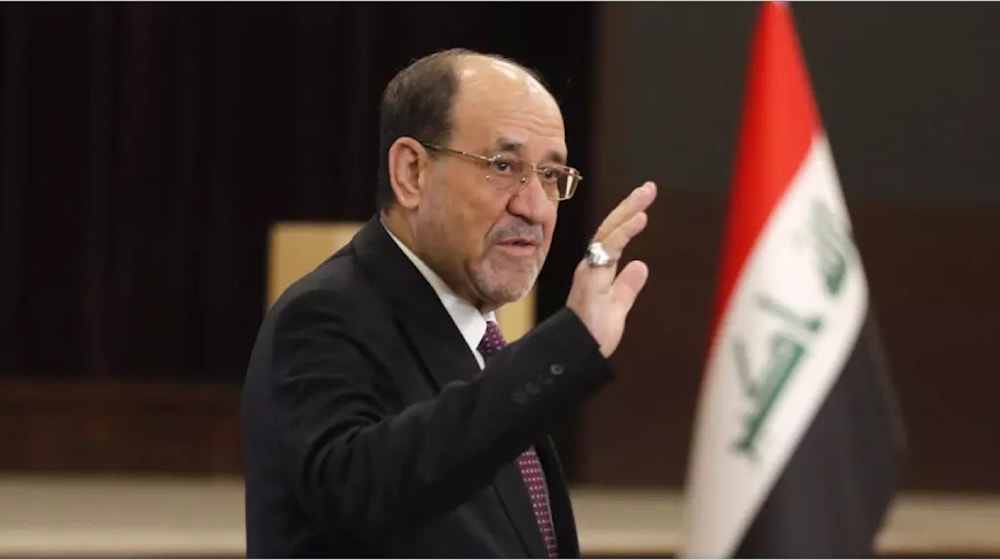
Former Iraqi prime minister Nouri al-Maliki leaves after casting his ballot at a polling station in Baghdad (AFP)
Iraq’s Coordination Framework held a regular meeting on Saturday at the office of former Prime Minister Nouri al-Maliki to discuss the latest political developments.
In a statement following the meeting, the Coordination Framework reaffirmed that the selection of the Prime Minister is a purely constitutional Iraqi matter, conducted through political mechanisms that uphold national interests and are free of foreign interference. The group also renewed its support for Nouri al-Maliki as its candidate for the premiership.
The statement stressed the Framework’s commitment to building balanced relations with the international community, particularly with key global powers, based on mutual respect and non-intervention in internal affairs.
The Coordination Framework emphasized that Iraq is a state of institutions, capable of managing its political obligations in line with the constitution and the will of its elected representatives.
It also underscored the importance of respecting constitutional timelines, urging all parties to intensify efforts to reach consensual political solutions that satisfy all sides.
Trump interferes in Iraq
On January 27, US President Donald Trump warned on Truth Social that if Iraq's former Prime Minister Nouri al-Maliki returns to office, "the United States of America will no longer help Iraq and, if we are not there to help, Iraq has ZERO chance of Success, Prosperity, or Freedom." Unironically, the warning came from a country that has long positioned itself as an advocate for free and fair elections in Iraq, unfettered by external pressures.
The threat came after Iraq's Coordination Framework nominated al-Maliki for the premiership following prolonged political deadlock. A parliamentary session scheduled for Tuesday to elect a president, who would then appoint the prime minister, was canceled due to a lack of quorum, leaving the political process in limbo.
Yet, Responsible Statecraft posits that Trump's public intervention, widely perceived in Iraq as blatant interference in domestic politics, may achieve the opposite of its intended effect: strengthening rather than weakening al-Maliki's position by effectively casting him as a defender of Iraqi sovereignty against external pressure.
Al-Maliki swiftly rejected Washington's warnings, slamming them as "blatant American interference" that "constitutes an encroachment on the Coordination Framework's decision to select its candidate for the post of prime minister" and represents "an infringement on Iraq's sovereignty."
He stressed that his nomination reflects internal political consensus, vowing to continue "until we reach the end in a way that serves the interests of our people." He also rejected coercive diplomacy, saying "the language of dialogue between states is the only political option in dealing with one another, not resorting to the language of dictates and threats."
Read more: Chevron pressures Iraq for better deal before taking Russian oilfield


