
Iraqi Coordination Framework nominates Nouri al-Maliki for PM
 3 Min Read
The Iraqi Coordination Framework has announced the nomination of Nouri al-Maliki for prime minister, pledging commitment to the constitutional process.
-
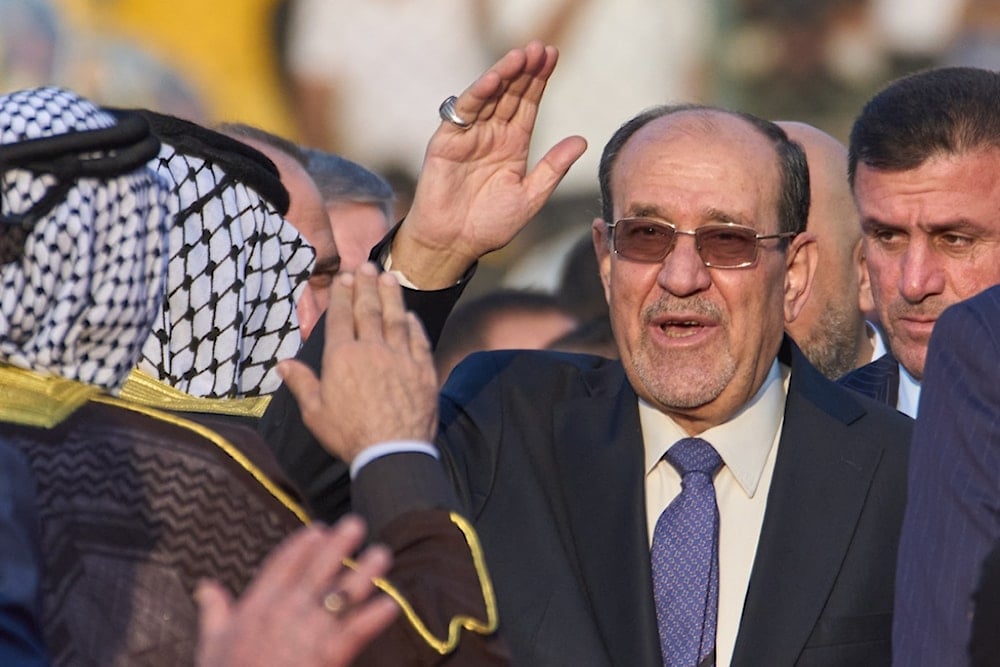
Former Iraqi Prime Minister Nouri al-Maliki arrives at his political bloc's campaign rally before the parliamentary elections in Baghdad, Iraq, Friday, November 7, 2025 (AP)
Iraq’s Coordination Framework announced on Saturday that it has nominated Nouri al‑Maliki for the post of prime minister, according to the Iraqi News Agency.
In a statement, the Coordination Framework said the decision followed an expanded meeting of its leadership held at the office of Hadi al‑Amiri, during which current political developments and the next phase of the process were discussed.
The bloc said the nomination was made by majority vote after what it described as an in-depth and extensive discussion, naming al-Maliki as the candidate of the largest parliamentary bloc, citing his political and administrative experience and his role in managing state affairs.
The Coordination Framework reaffirmed its full commitment to the constitutional path, stressing its readiness to work with all national political forces to form what it described as a strong and effective government capable of confronting challenges, delivering services, and safeguarding Iraq’s security and unity.
The statement also called on the Iraqi Council of Representatives to convene its session to elect a president of the republic in line with constitutional timelines, as part of completing the remaining constitutional requirements.
US threatens Iraq’s oil revenue over cabinet composition
Washington has threatened Iraqi officials that it could impose financial sanctions targeting the Iraqi state, including potentially restricting its access to vital oil revenues, if certain political factions are included in the next government, four sources familiar with the matter told Reuters.
The reported threats reflect a growing campaign by the United States to influence the political formation process in Iraq. According to three Iraqi officials and one additional source, the message was delivered repeatedly over the past two months by US Chargé d’Affaires Joshua Harris to high-level Iraqi political figures.
Among those contacted were Prime Minister Mohammed Shia al-Sudani, religious clerics Ammar al-Hakim and Hadi al-Amiri, and Kurdish official Masrour Barzani. According to the sources, the US threatened that the inclusion of a group of 58 MPs identified by Washington would lead to a suspension of diplomatic engagement and halting of dollar transfers.
Iraq’s Oil Dollars at Stake
Iraq, one of the top oil producers in the region, maintains its oil revenues in a Central Bank account held at the Federal Reserve Bank of New York. This decades-old arrangement grants the US considerable control over Iraq’s dollar inflow, effectively giving Washington a strong lever over Baghdad’s economy.
While US administrations have in the past sanctioned individual banks within Iraq, a suspension of dollar transfers from oil revenues would mark a dramatic escalation.
“The American line was basically that they would suspend engagement with the new government should any of those 58 MPs be represented in cabinet,” one Iraqi official said. “They said it meant they wouldn’t deal with that government and would suspend dollar transfers.”
Renad Mansour, director of the Iraq Initiative at Chatham House, noted, “The US has significant leverage. The threat of the loss of access to US dollars, which is how Iraq’s economy functions through the sale of oil, has made it very concerning.”


