
Iraq orders raised military readiness after US-Saudi strikes
 3 Min Read
Iraq orders heightened military readiness and accelerates air defense upgrades after US-Saudi strikes targeted Popular Mobilization Forces positions.
-
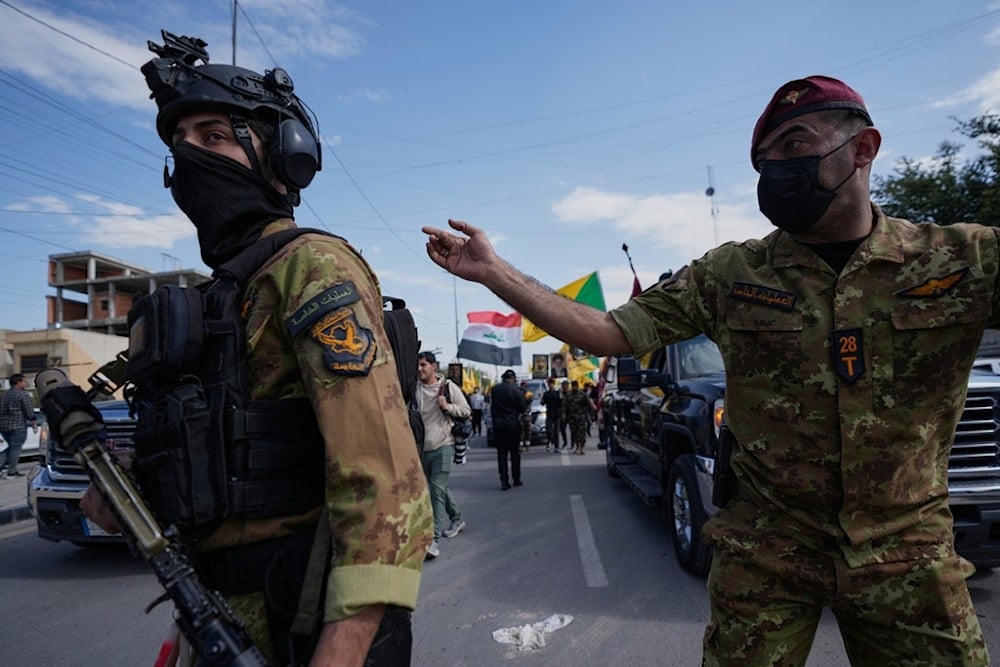
Members from the Popular Mobilization Forces attend the funeral of fighters from Kataib Hezbollah, who were martyred in an airstrike in Babil province southwest of Baghdad, Iraq, Thursday, March 5, 2026 (AP)
Iraq has ordered raising the alert level and combat readiness across all military camps and bases, the spokesperson for the Iraqi commander-in-chief stated.
The Iraqi commander-in-chief's directives, according to the spokesperson, include strengthening preventive intelligence plans to thwart any attacks or infiltration attempts and accelerating the procurement and armament plan for radar, early warning, and air defense systems.
This comes after the Iraqi government has ordered its armed forces to strengthen military readiness and accelerate the modernization of the country's air defense network following US-Saudi strikes targeting positions of the Popular Mobilization Forces (PMF).
Iraqi government spokesperson Sabah al-Numan said Friday that Prime Minister Ali al-Zaidi issued "strict and immediate orders" to raise the level of alert "to the maximum" across military camps and bases, particularly those operated by the Iraqi Armed Forces and the PMF.
The directive comes after US-Saudi airstrikes on Wednesday targeted bases belonging to the PMF, killing 20 fighters, including five Iranians, according to official figures.
Riyadh claimed the strikes followed the interception of drones allegedly targeting Saudi oil facilities, accusing Iran-aligned groups operating in Iraq of carrying out the attacks.
Read more: Iraq denies approving US-Saudi strikes, suspends Saudi visit
Baghdad prioritizes air defense modernization
Al-Numan said rebuilding and modernizing Iraq's air defense capabilities has become a "top priority," with the government seeking to accelerate the deployment of modern radar systems, early-warning capabilities, and advanced air defense equipment.
The prime minister also ordered security agencies to strengthen intelligence operations while emphasizing the state's exclusive authority over weapons and preventing what the government described as "individual irresponsible actions."
Baghdad has repeatedly stressed that Iraqi territory should not be used as a launchpad for attacks against neighboring countries and has sought to prevent the country from being drawn deeper into regional military confrontations.
Armed Resistance groups reject allegations
The strikes came amid growing US pressure on Baghdad to disarm armed factions aligned with the Islamic Resistance in Iraq, which have carried out operations against US military positions in Iraq and elsewhere in the region in support of Iran during the recent regional war.
Prime Minister al-Zaidi, who assumed office earlier this year, has pledged to strengthen state control over weapons held by armed groups.
The Islamic Resistance in Iraq denied responsibility for the alleged drone attacks on Saudi Arabia and warned that its response to the US-Saudi strikes would be "inevitable."
The latest developments underscore the continued volatility of Iraq's security landscape as regional military escalation places increasing pressure on Baghdad.
Read more: Hezbollah: US-Saudi aggression on Iraq serves US-Israeli scheme


