
Iraqi parliament sets April 11 for presidential election
 3 Min Read
Iraq’s Parliament sets April 11 as a adate for its presidential election, urging political blocs to finalize the vote and form a government.
-
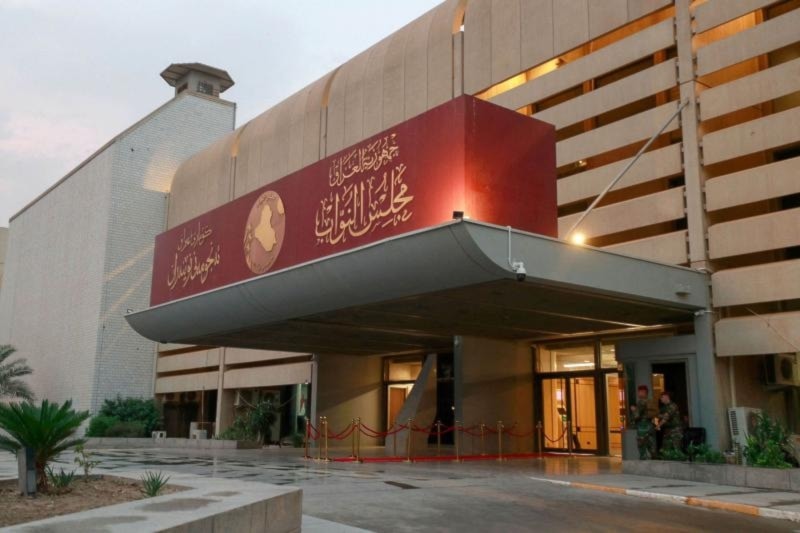
A view of the Iraqi Parliament in Baghdad, undated. (AFP)
The Iraqi Parliament announced on Monday that a session to elect the President of the Republic will be held on Saturday, April 11, marking a key step to complete constitutional obligations in the country.
Parliament’s speakership called on political bloc leaders to assume national responsibility and work toward finalizing the presidential election, paving the way for forming a government capable of addressing political, economic, and security challenges.
The speakership emphasized that the current stage requires coordinated efforts among all political forces to expedite the constitutional process and avoid further institutional delays.
Iraq and the broader region have witnessed exceptional developments this year. The Iraqi Resistance has also intensified operations against the US and "Israel", in support of Iran, Lebanon, and Palestine, as part of efforts to deter American aggression in Iraq.
Adjustment of elections deadline
The elections were supposed to be held in January but were postponed to grant rival Kurdish parties more time to reach a consensus on a candidate.
The official Iraqi News Agency (INA) reported the delay in late January without specifying a new date, after Parliament Speaker Haibat al-Halbussi received requests from the Kurdistan Democratic Party (KDP) and the Patriotic Union of Kurdistan (PUK) to postpone the vote “to allow both parties more time” to strike a deal.
By long-standing convention, Iraq’s top posts are divided along sectarian and ethnic lines: the prime minister is a Shia Muslim, the parliament speaker is Sunni, and the presidency is held by a Kurd.
Under a tacit understanding between the two main Kurdish factions, the PUK has traditionally secured the Iraqi presidency, while the KDP selects the president and regional premier of the semi-autonomous Kurdistan Region. This time, however, the KDP broke with precedent by nominating its own candidate for Iraq’s presidency, Foreign Minister Fuad Hussein, complicating talks with the PUK and prompting the delay.
A history of US interference
Iraqi elections have seen significant external meddling, particularly by the United States. Washington has threatened Iraqi officials that it could impose financial sanctions targeting the Iraqi state, including potentially restricting its access to vital oil revenues, if certain political factions are included in the next government, four sources familiar with the matter told Reuters.
The reported threats reflect a growing campaign by the United States to influence the political formation process in Iraq. According to three Iraqi officials and one additional source, the message was delivered repeatedly over the last year by US Chargé d’Affaires Joshua Harris to high-level Iraqi political figures.
Among those contacted were Prime Minister Mohammed Shia al-Sudani, religious clerics Ammar al-Hakim and Hadi al-Amiri, and Kurdish official Masrour Barzani. According to the sources, the US threatened that the inclusion of a group of 58 MPs identified by Washington would lead to a suspension of diplomatic engagement and halting of dollar transfers, effectively threatening sanctions if US diktats were not heeded.
Iraq, one of the top oil producers in the region, maintains its oil revenues in a Central Bank account held at the Federal Reserve Bank of New York. This decades-old arrangement grants the US considerable control over Iraq’s dollar inflow, effectively giving Washington a strong lever over Baghdad’s economy.


