
Iraqi Resistance delays retaliation, vows martyrs' blood won't fade
 3 Min Read
The Islamic Resistance in Iraq says it delayed its planned response after a call from Badr Organization chief Hadi al-Amiri.
-
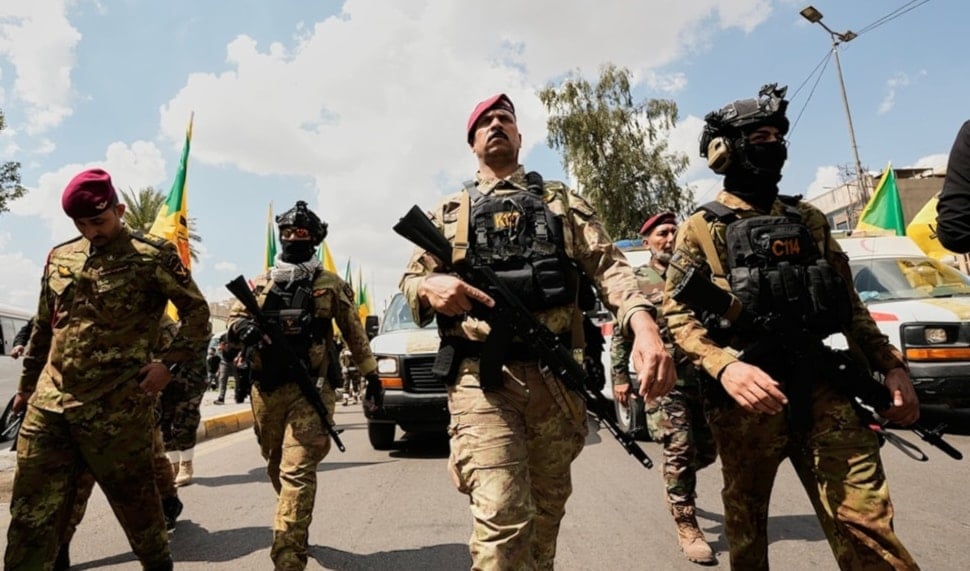
Members of the Iraqi Islamic Resistance in Basra province south of Baghdad, Iraq, April 8, 2026 (AP)
The Islamic Resistance in Iraq said it postponed the response scheduled for today, in response to a call from the Secretary-General of the Iraqi Badr Organization, Hadi al-Amiri, and in recognition of the principled positions adopted by honorable political leaders.
Al-Amiri addressed the Resistance with a video message early Friday, urging it to postpone any response to the “American-Saudi attack that targeted Iraq” and to “endure these wounds patiently,” for the sake of Iraq's higher interest, adding that the rights of the dead and the wounded will be pursued through diplomatic means.
The Iraqi Resistance affirmed “that the pure blood of the martyrs has not been and will never be a commodity in the market of political calculations,” calling upon politicians “whom the chair [power] has blinded from protecting blood and violated sovereignty to review themselves and return to their senses.”
Concluding its statement, the Resistance warned the US and its regional allies that the blood of its martyrs and wounded is the fuel of its steadfastness, declaring that "sovereignty will not be restored through timid statements, but through the fists of the loyal who will not bargain over the sanctity of the land or the dignity of the martyrs."
Those who sent suicide bombers are now sending missiles: Al-Amiri
The Secretary-General of the Iraqi Badr Organization, Hadi al-Amiri, vowed on July 31 that those killed in the recent US-Saudi aggression would be avenged, saying their killing would not go unanswered, while stressing that Iraq would remain resilient, victorious, and united.
At the time, al-Amiri said that “those who were sending car bombs and suicide bombers to Iraq yesterday have returned today to send missiles.”
Al-Amiri's remarks echoed Iraqi political and armed factions, which also voiced strong opposition to the aggression, with several groups denouncing the attacks.
The remarks followed the US-Saudi aggression that targeted, on July 29, positions belonging to the Popular Mobilization Forces in several Iraqi provinces, killing 20 personnel and injuring 32 others.
The attack was carried out under the pretext of responding to strikes on oil facilities in Saudi Arabia, while the Islamic Resistance in Iraq denied any involvement in attacks against Saudi Arabia, vowing that it would respond to the targeting.
The Iraqi Resistance said it would grant Iraqi government bodies "a deadline extending no later than the 23rd of the month of Safar [August 7] to see what actions they will take," adding, "Our response to the American enemy is coming without doubt, and it may reach its instruments in Saudi Arabia whenever circumstances require it."


