Israeli air defenses strained as Iran breaches grow: report
 3 Min Read
A report warns that the Israeli regime's air defenses are weakening as Iranian strikes penetrate deeper, raising concerns over US radar failures and regional vulnerabilities.
-
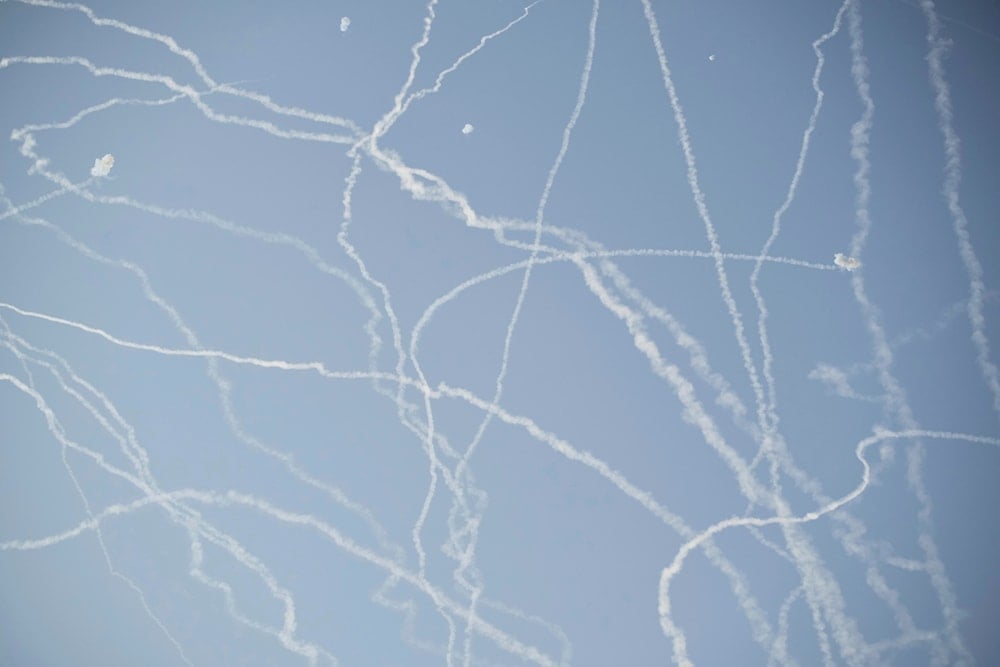
Israeli air defense system fires to intercept missiles during an Iranian retaliatory attack over Tel Aviv, Israel, Thursday, June 19, 2025. (AP)
The Israeli occupation's air defense systems are showing growing vulnerabilities one month into the US-led war on Iran, with Iranian missiles increasingly penetrating defenses and striking key locations, according to a report by Responsible Statecraft.
The report highlights that major sites, including Tel Aviv, Dimona, and Arad, have sustained damage in recent days, raising concerns about the effectiveness of the Israeli regime's multi-layered air defense network amid sustained Iranian attacks.
While early explanations have focused on the depletion of interceptor stockpiles, Responsible Statecraft notes that deeper structural weaknesses may be at play, particularly within the broader US-Israeli air defense network that spans the wider region.
Mounting pressure on interceptor systems
The Israeli anti-air architecture, long hailed for its advancement, relies on multiple layers, including Iron Dome, David’s Sling, Arrow systems, and US-provided THAAD batteries.
However, the report suggests that heavy operational demand has rapidly drained interceptor reserves, with some estimates indicating that up to 80% of advanced munitions were expended in the first three weeks of fighting.
This strain has forced prioritization of targets, potentially leaving critical areas more exposed despite the system’s layered design.
Detection failures raise deeper concerns
Beyond interceptor shortages, the report points to a more serious issue: potential failures in detection systems. Damage to radar and sensor networks, which form the backbone of the integrated US-Israeli defense architecture, may be limiting the ability to identify incoming threats in time.
According to available satellite-based assessments cited by Responsible Statecraft, at least 10 US radar installations across the region have been struck by Iranian drones since the start of the war, including systems linked to THAAD and advanced phased-array radars in the Gulf.
Such losses could significantly degrade early warning capabilities, undermining both interception success rates and overall defensive coordination, the report stressed.
US bases increasingly vulnerable
The report also points to growing vulnerabilities at US military installations in the region. Reports indicate that some US personnel have been relocated from bases in the Gulf due to heightened risks from Iranian missile and drone strikes.
Recent attacks have reportedly damaged aircraft and injured personnel, including an incident at Prince Sultan Air Base in Saudi Arabia where 12 servicemembers were wounded, and multiple aircraft were hit.
These developments suggest that the challenges extend beyond the Israeli occupation's defenses to the wider US military posture in West Asia.
Strategic implications for US defense
The redeployment of components from THAAD and Patriot systems from Asia to West Asia may indicate efforts to repair or reinforce damaged systems rather than simply increase capacity, the report argues.
According to Responsible Statecraft, the emerging vulnerabilities highlight a broader strategic issue: the reliance on ground-based radar and sensor networks that may be increasingly susceptible to disruption in modern warfare.
The report concludes that addressing these weaknesses will require more than replenishing interceptor stockpiles, as well as a reassessment of US military deployments in high-risk regions.