
Israeli media raises alarm over Turkish radar system in Syria
 4 Min Read
Israeli media reported concerns over a Turkish-made radar system deployed at Damascus airport, linking it to growing Türkiye-Syria cooperation and regional shifts.
-
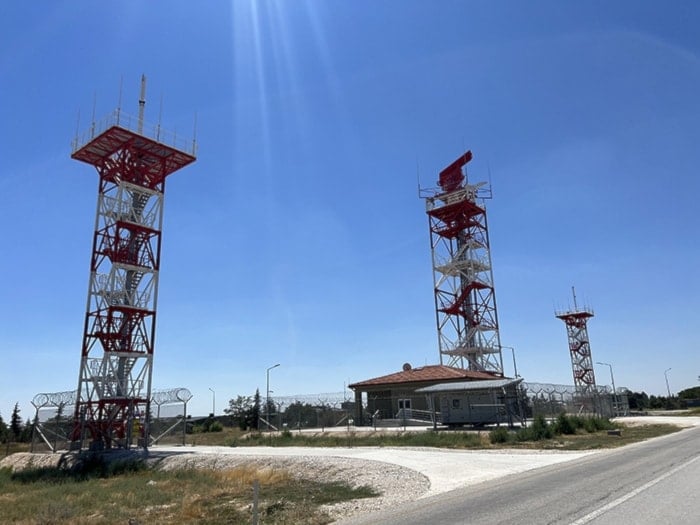
Turkish ASELSAN HTRS-100 radar system, undated photo. (ASELSAN)
Israeli media raised concerns over the deployment of a Turkish-made radar system at Damascus International Airport, claiming that the technology could have military applications and affect the regional balance of power.
According to an analysis published by the Alma Center and cited by Hebrew-language outlet Maariv on Thursday, the HTRS-100 radar system, manufactured by Turkish defense company ASELSAN, could provide Syria with expanded aerial monitoring capabilities beyond its stated civilian purpose.
The system was introduced by Syrian civil aviation authorities and Turkish Ambassador to Damascus, Nuh Yilmaz, as an upgrade intended to improve flight safety and air traffic management.
Israeli analysts claim that the radar’s technical capabilities give it potential dual-use functions, propagandizing fear as security coordination efforts between Türkiye and Syria continue to grow.
Read more: NATO’s cracks widen as Turkey summit exposes Western bloc divisions
Turkish radar deployment draws Israeli scrutiny
According to the Israeli Alma Center analysis cited by Maariv, the HTRS-100 system can generate a three-dimensional aerial picture within a range of approximately 150 to 185 kilometers.
The Israeli analysis claimed that the system’s range extends beyond Damascus and covers parts of Lebanon and occupied northern Palestine.
The radar reportedly includes primary surveillance technology operating on the S-band frequency, advanced systems for reducing environmental interference, and secondary surveillance capabilities used for aircraft identification.
Israeli analysts also highlighted the system’s ability to maintain functionality during electronic warfare scenarios due to its redundant architecture, describing this as a feature that increases its operational resilience.
While Damascus and Ankara have presented the system as a civilian aviation project, Israeli assessments have focused on its possible military applications and potential implications for aerial operations in the region.
Ankara and Damascus expand military cooperation
The radar deployment comes amid increasing cooperation between Türkiye and Syria, across military and institutional fields.
Syrian forces participated for the first time in the EFES-2026 military exercise, Türkiye’s largest annual military drill, held in Izmir between April 11 and May 22.
During the exercise, Ankara announced expanded military assistance to Syria, including training, operational planning, and logistical support. Further signs of closer ties emerged on May 11, when the Turkish naval vessel TCG Meltem made an official visit to the Syrian port of Latakia.
On June 18, a Syrian military delegation visited Türkiye’s National Defense University in Istanbul, reflecting continued engagement between the two militaries.
Israeli media described these developments as part of a broader Turkish effort to strengthen its position in Syria, although no formal agreement has been announced regarding Turkish access to Syrian military air bases.
'Israel' monitors changing dynamics in Syria
According to Israeli reports, officials are closely watching Türkiye’s expanding relationship with Damascus and assessing its possible impact on the regional balance.
The reports claim that the Turkish radar system could alter calculations regarding aerial operations in the region, particularly as Syria’s military landscape continues to change.
Israeli War Minister Israel Katz reportedly said that Türkiye is not currently considered an immediate military threat but stressed that the occupation entity would maintain its positions in Syria as long as it views security concerns as unresolved.
An Israeli military source cited in the reports said intelligence units were monitoring developments in Syria, while another source claimed that the IOF increased hostile preparations along the occupied Syrian border.
"We have created a physical barrier, and we are sitting in a strong security zone from the crest of Mount Hermon and along the entire border on the eastern side," the source said.
"Israel" has continued to violate Syria's sovereignty since the fall of the Assad government in late 2024, with continuous land incursions, kidnapping, and checkpoints being set up on Syrian land. The concern over Syria's deployment of Turkish radars comes from Damascus working for its own national interest rather than allowing "Israel" the freedom to act as it wills.
Read more: Damascus bomb attacks leave one dead, 36 injured in final toll


