
Italy calls for Schengen suspension with Spain over Ceuta migration
 2 Min Read
Italy’s Foreign Minister Antonio Tajani called for Spain to be suspended from the Schengen Area after migrant arrivals in the Spanish enclave of Ceuta.
-
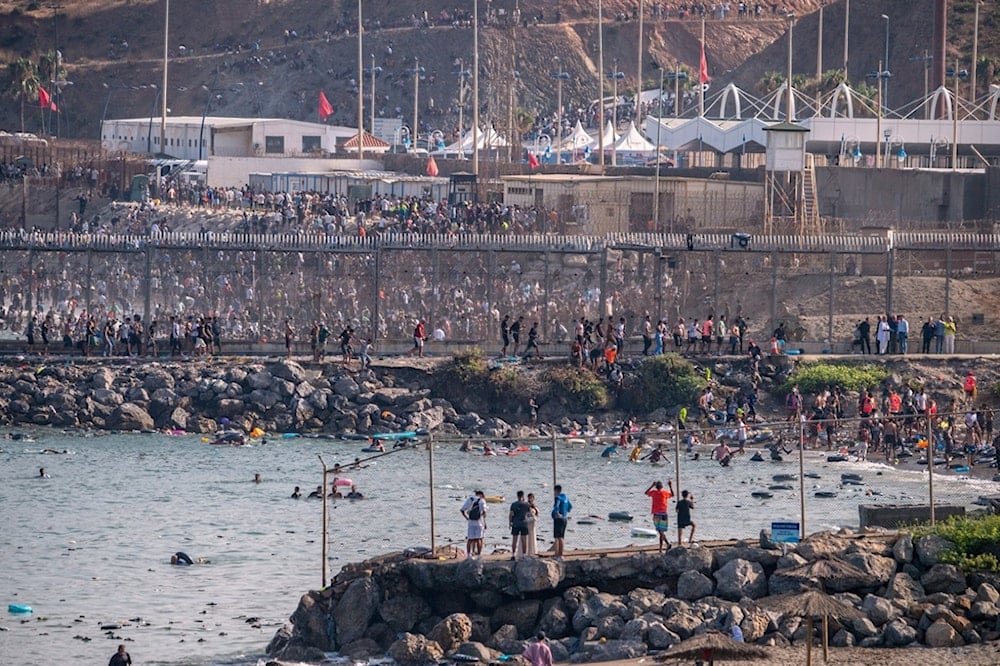
Migrants crowd together as they try to cross from Morocco into the Spanish enclave of Ceuta, Thursday, July 30, 2026. (AP Photo/Antonio Sempere)
Italian Foreign Minister Antonio Tajani called for the suspension of Spain from the Schengen Area after hundreds of migrants entered Spain’s North African exclave of Ceuta from Morocco.
The Schengen Area allows passport-free movement across 29 European countries that have abolished border controls at their shared frontiers.
"I am in favour of closing the Schengen area with Spain," Tajani wrote on X, arguing that irregular migration represents a threat to national security.
Sono favorevole alla chiusura dello spazio Schengen con la Spagna e ho piena fiducia nell’operato del Ministro Piantedosi. L’immigrazione irregolare e incontrollata rappresenta un pericolo per la sicurezza nazionale. Le immagini che arrivano da Ceuta dimostrano come la scelta del…
— Antonio Tajani (@Antonio_Tajani) July 30, 2026
Rome criticizes Spain’s migration policies
Tajani said images from "Ceuta showed the consequences of Spain’s migration decisions," accusing Madrid of encouraging human trafficking.
"The images coming from Ceuta show how the Madrid Government's decision to grant Spanish, and therefore European, citizenship to over 500,000 irregular immigrants is profoundly wrong and encourages human trafficking," he said.
Italian officials push for stricter border controls
Italy’s Deputy Prime Minister Matteo Salvini, who leads the far-right League party, also called for the suspension of the Schengen system and urged European countries to strengthen border controls.
The calls come after a renewed migration dispute involving Ceuta, a Spanish territory located on the northern coast of Africa that shares a border with Morocco.
The Schengen Area has faced repeated political disputes over migration management, with some European governments calling for stricter controls and greater restrictions on movement amid concerns over irregular crossings.


