
Japan claims Chinese fighter jet locked radar on Japanese aircraft
 3 Min Read
Japan slams China's radar lock on its jets near Okinawa, escalating tensions after Takaichi's remarks on Taiwan.
-
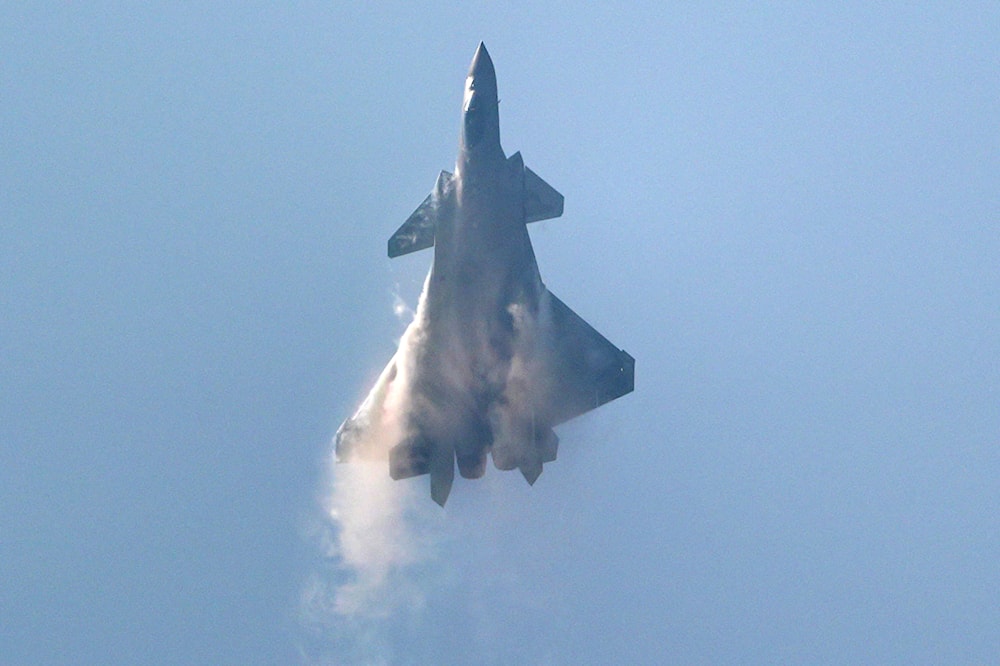
A Chinese J-20 stealth fighter jet performs during the 15th China International Aviation and Aerospace Exhibition, also known as Airshow China 2024, at Zhuhai in southern China's Guangdong province, Tuesday, Nov. 12, 2024 (AP)
Japan’s Defense Ministry said a Chinese J-15 fighter jet locked fire-control radar on Japanese military aircraft on two occasions over international waters southeast of Okinawa on Saturday, describing the manoeuvres as unsafe.
In a statement on Sunday, the Ministry said both incidents occurred in areas far beyond what would be considered necessary for the safe operation of military aircraft, while Defense Minister Shinjiro Koizumi called the actions “extremely regrettable” during a press briefing.
Tokyo has lodged a protest with Beijing and urged China to prevent any repeat of the incident, according to the Ministry.
China accuses Japan of interfering in military drills
Meanwhile, the Chinese Navy said on Sunday that the Japanese military aircraft repeatedly approached the Chinese Navy's drill area, posing a serious threat to aviation safety.
On Saturday, China's Liaoning aircraft carrier strike group conducted scheduled deck-based fighter jet drills in waters east of the Miyako Strait in a pre-announced area, a statement posted on the Chinese Navy's official WeChat account read.
"During the period, aircraft of the Japan Self-Defense Forces repeatedly approached the Chinese Navy's drill area, creating interference that seriously affected the progress of China's routine drills and posed a serious threat to flight safety," the statement read.
The commotion raised by the Japanese side over the military drills "does not reflect the reality," and China's naval forces will take necessary measures in accordance with the law, the statement added.
Tensions on the rise
This comes against a backdrop of tensions between the two neighbors over comments made by the newly elected Prime Minister Sanae Takaichi, who said that Japan could intervene if China attacks Taiwan.
On November 7, Prime Minister Sanae Takaichi told Japanese lawmakers that a Chinese attack on Taiwan could be considered a “survival‑threatening situation” for Japan, a legal threshold under Japan’s security laws that could justify military action.
Beijing responded swiftly. On November 8, the Chinese Consul‑General in Osaka, Xue Jian, posted on social media a now‑deleted threat against Takaichi, saying that “the dirty head that sticks itself in must be cut off,” prompting outrage in Tokyo.
In the days that followed, especially between November 12 and November 14, China issued formal protests, demanded that Japan retract the comments, and warned of a “crushing military defeat” if Japan were to intervene.
By November 18, the tensions had expanded to economic and cultural retaliation: Japan warned its citizens in China about safety risks, and China reportedly suspended certain Japanese films, advised its citizens against traveling to Japan, and scrutinized bilateral cultural and business ties.


