
Japan PM to call China an ‘important neighbor’ in policy speech
 3 Min Read
Japanese PM Sanae Takaichi is expected to seek stable ties with China as Tokyo faces tensions over Taiwan, economic pressures and a deepening population decline.
-
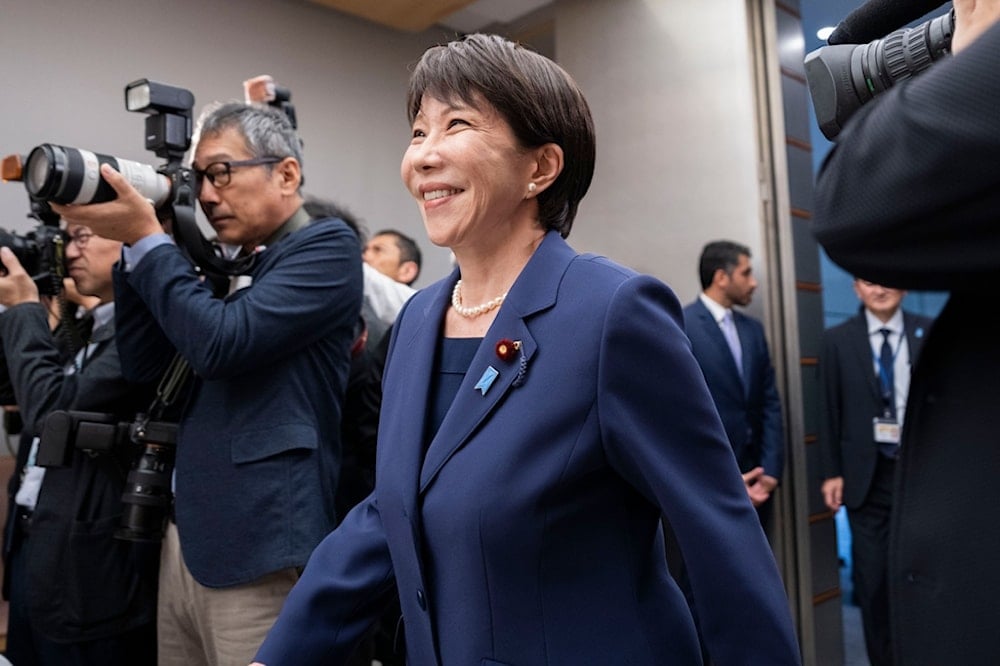
Japan's Prime Minister Sanae Takaichi arrives for a meeting with Qatar's Prime Minister and Foreign Minister Sheikh Mohammed bin Abdulrahman Al Thani at the prime minister's office in Tokyo Friday, Oct. 2, 2026. (Yuichi Yamazaki/Pool Photo via AP)
Japanese Prime Minister Sanae Takaichi is expected to describe China as an “important neighbor” and call for a stable relationship with Beijing in a policy address to parliament on Monday, according to Japanese media.
Takaichi is expected to say that her government intends to build a constructive and stable relationship with China, TV Asahi reported, citing an early draft of the speech.
The anticipated message comes as relations between Tokyo and Beijing remain strained following Takaichi's comments in November suggesting that Japan could intervene in the event of an attack on Taiwan.
Her remarks are expected to signal Tokyo's effort to contain tensions with Beijing while maintaining its broader strategic and security policies.
The policy address will open a parliamentary session scheduled to continue through December, with the government expected to introduce legislation addressing economic and social pressures inside Japan.
Read more: Japan's Takaichi warns of ‘enormous’ oil shock on Asia-Pacific
Taiwan tensions strain Japan-China relations
Japan-China relations have deteriorated significantly since Takaichi's remarks on Taiwan, with Beijing warning against Japanese interference in an internal Chinese matter.
China also warned its citizens against traveling to Japan last year and imposed trade restrictions that contributed to a sharp decline in supplies of critical rare-earth minerals to Japanese companies.
Beijing has nevertheless signaled an interest in stabilizing relations. China's top diplomat said last week that ties with Tokyo were “waiting to be normalised again” during a meeting with a former Japanese foreign minister who was leading a trade delegation in Beijing.
Against this backdrop, Takaichi's expected reference to China as an “important neighbor” could represent an attempt to prevent further deterioration in bilateral relations.
Population decline emerges as domestic challenge
Beyond foreign policy, Takaichi is expected to focus heavily on Japan's demographic crisis.
Kyodo News reported that the prime minister plans to describe population decline as a “quietly advancing national crisis” and pledge to formulate a comprehensive strategy by the end of the year.
Japan's population has continued to shrink as the country confronts low birth rates and an aging society. Government data released in July showed that the number of Japanese people living in the country had fallen below 120 million for the first time in 42 years.
The demographic decline poses long-term challenges for Japan's labor force, social welfare system and economic growth.
Takaichi is also expected to reaffirm her commitment to a proactive fiscal policy after her government's expansive spending program raised concerns in financial markets over Japan's mounting debt.
Inflation and household costs will feature prominently in the parliamentary agenda. The government is expected to discuss a proposal to temporarily cut the consumption tax on food for two years as it seeks to ease the impact of rising prices.
Despite facing these pressures, Takaichi has maintained unusually high approval ratings a year into her tenure, according to reports.
Her government must now balance domestic economic demands with fiscal concerns while managing increasingly complex relations with Beijing.
Read more: China seen as more positive influence than US in Latin America: Poll


