
China’s strategic vision sets it apart from the West: Zakharova
 4 Min Read
Maria Zakharova says China’s strategic vision and long-term approach to global development distinguish it from the West’s focus on electoral cycles.
-
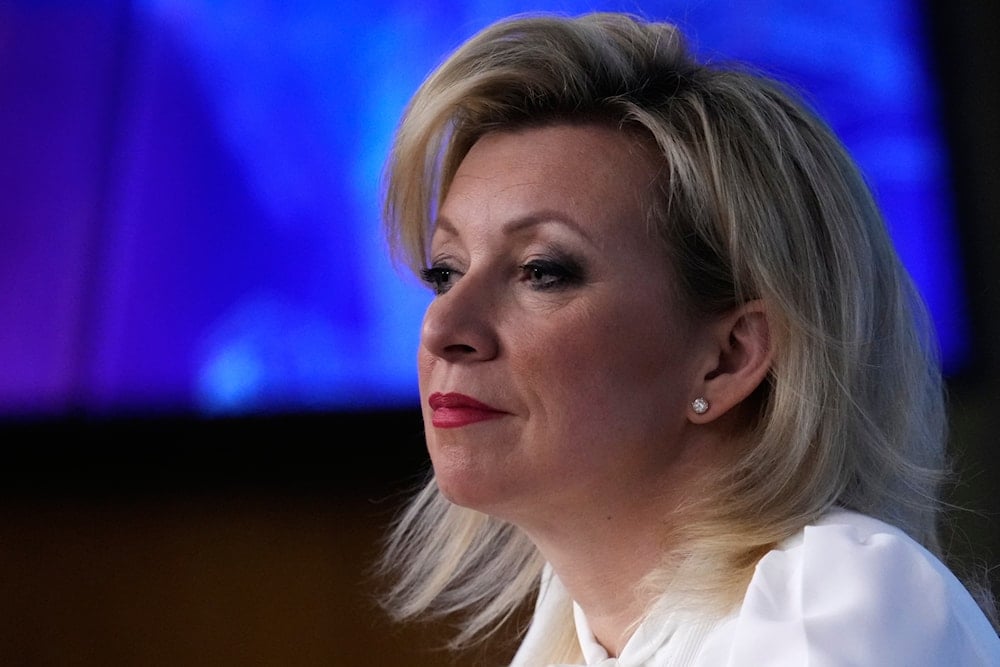
Russia's Foreign Ministry Spokeswoman Maria Zakharova attends Russian Foreign Minister Sergey Lavrov's annual news conference in Moscow, on Tuesday, Jan. 20, 2026 (AP)
China has a strategic vision that sets it apart from the West, which she said relies exclusively on electoral cycles, Russian Foreign Ministry spokeswoman Maria Zakharova said on Monday.
"China has a different perception of the relationship between its country and the world as a whole. I think this is a significant characteristic worth taking into account," Zakharova said during a lecture as part of China Week at MGIMO University.
She added that she refers to the ability to develop while strategically looking toward the future, and to see beyond mere electoral cycles. "Because the Western minority has staked everything on precisely that, what they call 'Western democracy.' In essence, they are betting exclusively on electoral cycles," the spokeswoman noted, recalling the Western saying, "After us, the deluge."
Zakharova said Russia and China are giving practical effect to their alliance through responsible behavior rooted in a long-term vision of global development. "Responsible behavior means not simply barging in somewhere, disrupting lives, and shattering destinies just because you feel like it or because your approval ratings are slipping," she said.
She added that this approach is grounded in a long-term vision of how the world evolves, an understanding that the world won't end tomorrow and didn't begin yesterday, but is part of an ongoing historical process.
China, Russia, hold no secrets from each other: Lavrov
Russian Foreign Minister Sergey Lavrov said Russia and China have built an equal, strategic partnership in which neither side withholds technology from the other, in remarks published September 8.
Speaking to the online project Sama Menshova, Lavrov said the absence of technological secrecy between the two countries reflects the balanced and mutually beneficial character of their comprehensive strategic partnership, pointing to joint agreements as evidence.
Asked whether Russia risks slipping into the role of China's "junior partner," Lavrov rejected the framing outright, saying Moscow and Beijing have never approached the relationship in those terms. He praised China's standing as a leading technological power across both applied and theoretical science, citing its output of high-tech goods, robotics and reusable spacecraft.
He said Russia's own scientific tradition is equally strong, and that the two countries' strengths complement one another, pointing to joint work underway in space exploration, advanced technology and artificial intelligence.
Russia-China cooperation reaches new highs
Separately, Russia's Transport Ministry said September 8 that maritime cargo traffic between Russian and Chinese ports rose 19.2 percent year-on-year in the first half of 2026, reaching 109.5 million tonnes.
The ministry released the figures during the 30th plenary session of the Russian-Chinese Subcommission on Transport Cooperation, held as part of the Second Russian-Chinese Forum in Khabarovsk. Officials noted that sea cargo volumes between the two countries had already grown 4.3 percent across all of 2025, reaching 196.75 million tonnes, before accelerating further in the opening months of this year.
According to China's General Administration of Customs, trade between Russia and China rose 28.4 percent in the first eight months of 2026 compared with the same period last year, reaching $185 billion.
Chinese exports to Russia totaled $84.675 billion between January and August, up 30.7 percent year-on-year, while Russian exports to China climbed 26.5 percent to $100.37 billion over the same period, customs data released September 8 showed, leaving Russia with a trade surplus of more than $15.6 billion.


