
Multipolar world is a definitive reality: Lavrov
 12 Min Read
Sergey Lavrov discusses the rise of a multipolar world, NATO expansion, the Ukraine crisis, China’s AI development, Iran, and Armenia.
-
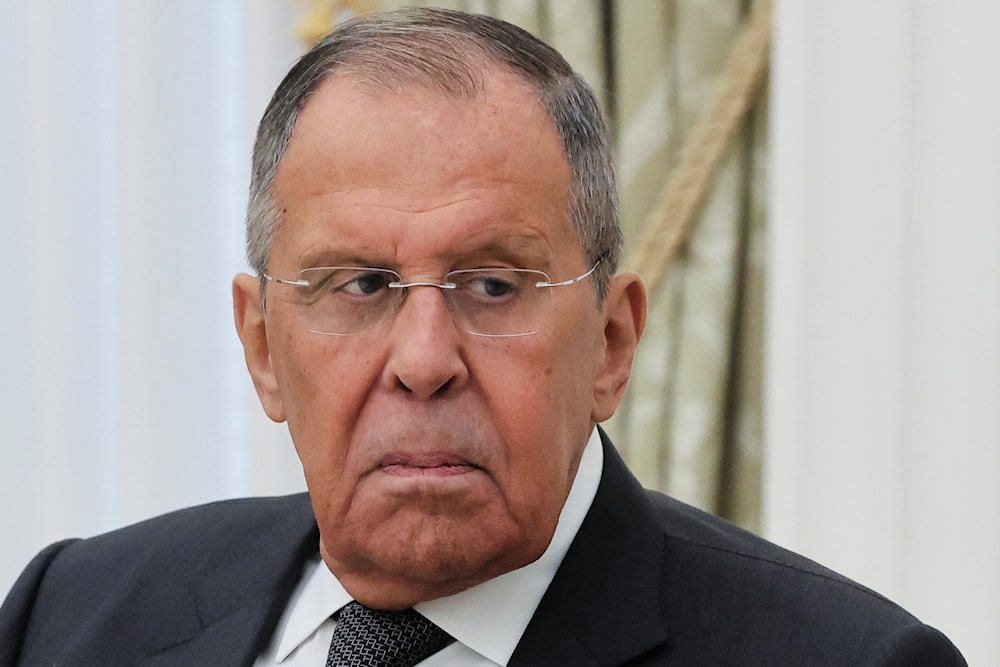
Russian Foreign Minister Sergey Lavrov attends talks between Russian President Vladimir Putin and Indian Foreign Minister Subrahmanyam Jaishankar at the Senate Palace of the Kremlin in Moscow, Monday, Aug. 24, 2026 (AP)
The world is undergoing accelerated geopolitical and economic transformations, with new international powers emerging and Western dominance declining, Russian Foreign Minister Sergey Lavrov said in a press interview detailing a wide range of foreign policy issues.
Speaking to the RBC television channel, Lavrov said the emergence of a multipolar world has become a tangible reality, noting that China is the world's leading economy, a fact "almost everyone acknowledges" in terms of purchasing power parity and its impressive economic growth rate.
“In geopolitical and geoeconomic terms, giants such as China, India and Brazil are raising their heads and very rapidly strengthening their economic positions,” Lavrov told RBC.
Deception is the basis of Western diplomacy
The foreign minister said Africa is undergoing radical transformations, as it has begun to move away from the neocolonial model in which raw materials were plundered from the continent and value was added in Europe.
He said Africans have rejoiced and enjoyed political freedom and liberation from colonialism, but the economic problem remains.
Lavrov asserted that "deception is the basis of Western diplomacy, and it remains so," recalling that in 1999, at the Organization for Security and Cooperation in Europe summit in Istanbul, it was stated that NATO would not expand.
He explained that this was written in different terms, namely that no one has the right to strengthen their security at the expense of others, and no state or organization in the Euro-Atlantic area has the right to claim hegemony, but NATO did the exact opposite.
Moscow's longstanding grievance over NATO's Eastern march
He referred to the memoirs of Yevgeny Primakov, who headed the Russian Foreign Ministry in the mid-1990s, and to the memoirs of former US Ambassador to Russia J. Matlock, who, Lavrov said, clearly and unconditionally affirmed that there was a definitive promise that NATO would not expand if Germany was unified.
He added that the alliance did expand, not only to East Germany but to other countries as well.
When Russia asked how this could happen after receiving a definitive promise, Lavrov said it was told it had been verbal. Then, in Istanbul in 1999, it was documented in writing, but expansion continued.
Russia asked again for an explanation, and this time it was not verbal but written at the highest level, and the response was that this was a political declaration and not legally binding.
Lavrov said the penultimate attempt was in 2008, when Russia proposed a legally binding treaty that translated into legal language the same principles set out in the OSCE and signed by Western leaders, but they disappeared from view and did not discuss it.
He asserted that the same applies to the last attempt to prevent the Ukrainian crisis, explaining that in December 2021, Russia proposed to NATO and the United States that treaties be concluded on European security in that part of the Eurasian continent, adding that such examples are numerous.
West 'boasted' about ceasefire before arming Kiev
He said that after the start of the special military operation and after the West overcame some confusion, it firmly embarked on a course of supplying the Kiev regime with increasingly modern and deadly offensive weapons.
"The West boasted about the need for a ceasefire, then a return to the 1991 borders by peaceful means, and then deployed 'stabilization forces' in the remaining territories under Zelensky's control, with Britain and France leading this initiative," Lavrov said, according to the statement.
He stated that these "forces" essentially preserve and protect the new Nazi regime, which he stated is the only regime in the world that has legally banned an entire language and an entire religion, noting that this ban was imposed long before the start of the special military operation.
Lavrov said he asked a Vatican representative how they respect these human rights, including religious rights, and the representative replied that it was not good and promised, in response to his request, to send a similar signal in subsequent communications with Ukrainians.
He explained that the Vatican representative was in Kiev a month before visiting Moscow and that he asked whether these topics had been raised because the Vatican monitors all developments and changes in the global religious environment and in all religions and could not be unaware of what is happening, but the representative admitted he had not had enough time.
Lavrov said he has spoken publicly for years about his rejection of these actions and cited the UN Charter, which states that "everyone undertakes to respect and ensure human rights regardless of race, sex, language, or religion," considering that this is directed specifically at the Kiev regime.
Russian, US security services work together in silence
Lavrov stated that Russian and US security services are working together in silence, after Kremlin spokesperson Dmitry Peskov revealed that CIA director John Ratcliffe recently visited Moscow for security service contacts, which Russian President Vladimir Putin was briefed on.
Director of the Russian Foreign Intelligence Service (SVR) Sergey Naryshkin later told reporters that discussions with Ratcliffe covered matters falling within the purview of intelligence agencies.
Lavrov said, "I wasn't there. We, like the rest of the world, have rules governing how security services interact. There's nothing unusual about that. And there's nothing unusual about them working in silence."
Russia mostly works in silence in diplomacy: Lavrov
He added that Russia also mostly works in silence in diplomacy, but diplomats are bound by tradition and the nature of their profession to make some statements, explaining that highly sensitive details or issues still under study are not disclosed, given the importance of not raising concerns about any possible compromises or consensus.
Lavrov said Russia appreciates the fact that US President Donald Trump has from the outset pursued a different policy from that of the Europeans and that of former President Joe Biden, noting that Trump began seeking the root causes.
He added that in his speeches in August 2025, Trump confirmed that the United States is not seeking some kind of "truce" that would inevitably collapse within a year or two, but rather to formulate a sustainable long-term basis for a stable settlement.
Lavrov said that even looking at statistics on the US share of the global economy, it probably leads only in military spending, adding that Europe has caught up, with military spending reaching approximately $1.5 trillion, which is what the United States wants for its military budget.
Remembering 9/11: When Moscow reached out to Washington
Lavrov said Russia was completely sincere when the Americans suffered the disaster of September 11, 2001, noting that President Vladimir Putin was the first to call then-US President George W. Bush to offer assistance and express solidarity.
He added that a few days later, the UN Security Council adopted a resolution that formed the basis of the US operation in Afghanistan, with a goal declared to the world and enshrined in the Security Council resolution: to eliminate terrorism and help Afghans return to normal life.
He noted that eventually a full international coalition was formed under this resolution, and Russia was fully prepared to cooperate in various forms, but the Americans ultimately decided, instead of eradicating terrorism, to stay in Afghanistan until recent events.
Lavrov said Russia expressed its solidarity, especially because at that time it knew and understood more than anyone else what international terrorism was, which, he said, was actively supported in Russia's Caucasus region by Britain and some other Western countries.
He explained that Britain's role is the most negative, as it has been for centuries.
'Shameful silence': Lavrov accuses UN leaders over Ukraine
He said there should be no surrender to attempts instigated by Zelensky, actively supported by Europeans, to destabilize Russian society by attacking oil refineries, markets, and civilian infrastructure using terrorist methods to spread fear.
Lavrov noted that these attacks target schools, children's centers, beaches, and passenger buses, asserting that many of these facilities have no connection to military capabilities.
He accused the West of maintaining "shameful silence" and said UN Secretary-General Antonio Guterres and Human Rights Commissioner Volker Türk are also maintaining "shameful silence," considering that they have clearly and firmly sided with the Ukrainian regime.
Russia has not issued any ultimatums to the United States regarding Washington's support for Ukrainian strikes on Russian territory, but regularly raises the issue in bilateral contacts, the Russian foreign minister said.
"No, there was no ultimatum on our part," Lavrov told RBC when asked to comment on media reports to that effect, explaining that Russia raises the matter with the United States through its regular diplomatic channels.
Strait of Hormuz standoff: 'A question of national pride'
Regarding Iran, Lavrov said that in June 2025, the United States and "Israel" unexpectedly launched war on Iran amid ongoing talks, explaining that the discussions had ended in the evening and a meeting was scheduled for the next morning, but the war lasted 12 days.
He added that aggressions were restarted on February 28 and that Washington is now demanding Iran open the Strait of Hormuz, while the Islamic Republic of Iran says sanctions must be eased or lifted in return, and that it will do so.
He said the more interesting point is that the Strait of Hormuz was fully open until February 28 and that "after this aggression, Iran demonstrated that it, too, has its own national interests, national pride, and traditions," noting that Persian history spans thousands of years. Lavrov pointed out that the issue of tolls was never mentioned until the US and "Israel" launched their wars on Tehran.
Lavrov expressed Russia's opposition to tolls in the strategic waterway, stating, "We, by the way, also do not want a fee [for passage through the Strait of Hormuz] to be introduced, but this is a matter for further discussion."
China takes center stage in global AI race
Regarding artificial intelligence, Lavrov said the divide has not yet begun between countries but is beginning to take shape, explaining that the United States sees China as its main competitor.
He added that according to some reliable professional assessments, China is advancing faster and more effectively in this field, attributing this to national traits such as discipline, a willingness to sacrifice leisure time, and total dedication to work.
Lavrov noted that China hosted the first global artificial intelligence conference in July of this year, during which it announced the establishment of the World Artificial Intelligence Organization.
Russia encourages global discussion on AI
Furthermore, the Russian foreign minister explained that Russia participated in the conference as a full founding member and that the organization is currently in a critical phase, where the concept will be refined and complemented with organizational matters, including governance structures, supporting institutions, the scientific council, who will be president, the number of vice presidents, and others.
Lavrov added that 29 countries, including Russia, have signed the agreement establishing the World Artificial Intelligence Organization and that the Americans have a similar number of participants.
He affirmed the importance of this, explaining that Russia supports in principle a global discussion on artificial intelligence, rather than confining it to ideological national or class "chambers".
Armenia's EU ambitions put Moscow on alert
Regarding Armenia, Lavrov said the Russian Foreign Ministry's position is to work in the interests of the Armenian people, noting that Russia's and Armenia's interests have intertwined over the centuries and that the two countries have always stood side by side and in solidarity for long periods.
He explained that other goals guide the current authorities in Yerevan, as the stated goal of joining the European Union has been adopted and a law has been passed to begin the accession process.
He noted that the countries of the Eurasian Economic Union, which met at the May summit this year, issued a statement calling on the Armenian leadership to hold a referendum to determine whether it wants to join the European Union or remain in the Eurasian Economic Union, considering that this was a completely justified request.
Lavrov said Russia has taken all necessary measures regarding Armenia and that all its positions and the advantages Armenia receives from participation in the Eurasian Economic Union are clear, noting that Armenia receives energy from Russia at prices three to four times lower than prices in the European Union.
He explained that examining the root causes of each crisis shows that all the problems that have arisen around Russia are imported from abroad, asserting that this applies to Britain and the Europeans and that Europe is always the cause.


