
Trump kept Ratcliffe's secret Moscow mission hidden from top officials
 6 Min Read
Trump secretly dispatched Ratcliffe to Moscow for talks on NATO, Ukraine, and Russia-Iran ties while publicly denying that the visit carried any special message.
-
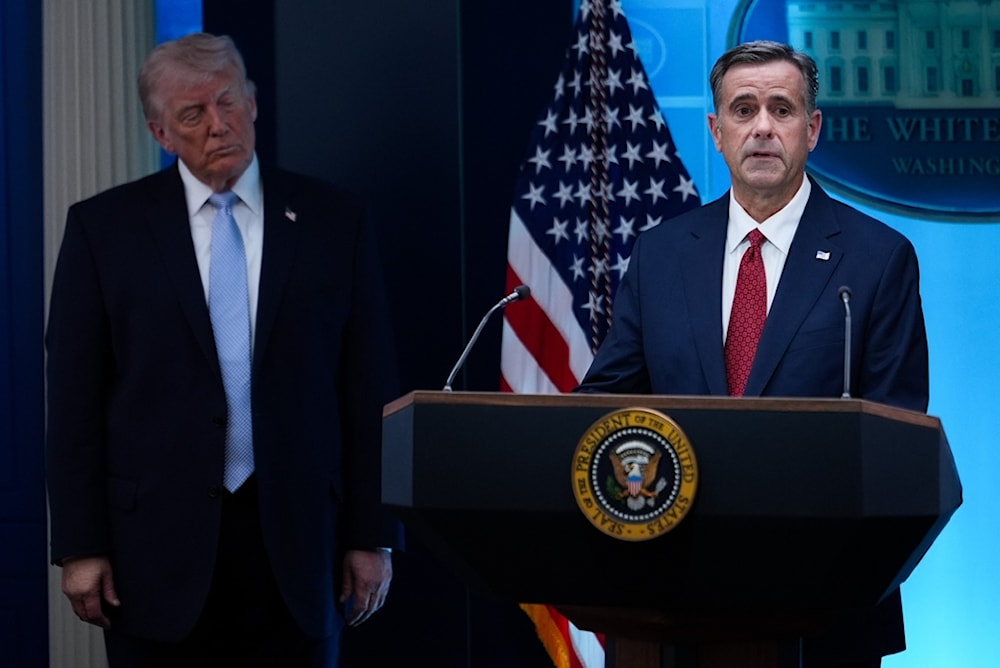
CIA Director John Ratcliffe, accompanied by President Donald Trump, speaks with reporters in the James Brady Press Briefing Room at the White House in Washington, April 6, 2026 (AP)
US President Donald Trump personally sent CIA Director John Ratcliffe to Moscow this week on a highly restricted diplomatic mission that was kept from several senior White House officials and military leaders, The Wall Street Journal reported, citing US officials.
According to the newspaper, Ratcliffe's visit was intended to deliver several messages to senior Russian officials concerning NATO, Ukraine, and Moscow's relations with Iran, despite Trump publicly characterizing the trip as a largely routine intelligence contact.
The mission came as Washington continues efforts to revive negotiations over the war in Ukraine while simultaneously pressing Russia over its political, economic, and security cooperation with Tehran.
Ratcliffe reportedly traveled from Latvia to Moscow aboard an unmarked US C-17 military transport aircraft, a level of secrecy that prompted European officials to seek clarification after news of the visit emerged.
CIA chief reportedly reassures Russia on NATO commitments
Two European officials briefed on the talks told the WSJ that Ratcliffe reaffirmed Washington's commitment to NATO's Article 5, which considers an attack against one alliance member an attack against all.
The message reportedly followed US intelligence assessments warning that Russia could seek to test NATO's willingness to respond to a limited confrontation in the coming years.
European governments have also raised concerns over what they describe as Russian hybrid operations, including cyberattacks, drone incidents, cruise missile activity, and explosive-filled packages targeting states supporting Ukraine.
Despite such assessments, Trump publicly dismissed concerns that Russian President Vladimir Putin could launch an attack against NATO territory.
He “won’t attack NATO territory,” Trump told reporters Thursday.
Latvian Prime Minister Andris Kulbergs similarly played down the immediate threat.
“There is currently no reason for concern,” Kulbergs said. “Latvia’s level of military threat hasn’t changed. The risk of direct military invasion threats to Latvia is currently low.”
According to the WSJ, US and European officials nevertheless believe Moscow is revising military planning related to NATO after suffering heavy losses in Ukraine, while some European officials warn Russia could pose a more serious conventional military challenge by around 2030.
Ratcliffe pushes renewed Ukraine talks
The CIA director also reportedly discussed restarting negotiations aimed at ending the war in Ukraine.
Kyrylo Budanov, head of Ukraine's presidential office, said Thursday that talks could resume in September.
Trump has made reaching a settlement in Ukraine one of the central foreign policy goals of his second administration and has previously relied on several envoys to engage Moscow.
Special envoy Steve Witkoff has met Russian President Vladimir Putin on multiple occasions, while Trump's son-in-law Jared Kushner later joined diplomatic efforts. Secretary of State Marco Rubio and former Ukraine envoy Keith Kellogg have also held discussions with officials from Russia and Ukraine.
Trump also met Putin in Alaska last August in an attempt to break the diplomatic deadlock, although the summit failed to produce an agreement.
Alternative channels
According to the WSJ, the decision to send Ratcliffe reflects Trump's willingness to rely on alternative channels after previous diplomatic initiatives failed to bring the conflict to an end.
Ratcliffe has previously dealt with Russian officials on issues including the release of detained Americans, while the CIA maintains longstanding communication channels with Russian intelligence agencies.
J.C. Lintzenich, a former senior US intelligence official and Senate national-security advisor, said Ratcliffe's involvement was designed to make clear that Washington's attempts to negotiate with Moscow did not diminish its commitments to European allies.
“Putin has a tolerance for extraordinary risk and is even potentially willing to escalate to compel de-escalation, but he is unlikely to roll the dice on actions that could threaten the Russian state,” Lintzenich said.
Ratcliffe pressed Moscow over Iran ties
The WSJ also reported that Ratcliffe urged Russian officials to reduce economic and security cooperation with Iran as Washington intensifies its campaign of economic pressure against Tehran.
The reported message stands in contrast to Trump's public comments on Thursday, when he said he was not concerned about continued cooperation between Moscow and Tehran.
“No … they are doing business,” Trump said when asked whether Washington was concerned about Russian economic relations with Iran.
When asked separately whether the United States could impose further sanctions or other measures on Russia because of its ties with Tehran, Trump declined to provide a clear answer.
“Well, it depends. It depends,” he said.
Washington launched what Trump called an economic operation against Iran on August 20, with the US president calling for Tehran's “isolation on an unprecedented scale” and urging allied governments to participate.
US Treasury Secretary Scott Bessent said Monday that Washington intends to target every potential source of revenue supporting the Iranian government.
Russia, however, has continued maintaining political and economic ties with Tehran.
Iranian Ambassador to Russia Kazem Jalali said Wednesday that Iranian President Masoud Pezeshkian expects to meet Putin on the sidelines of the Shanghai Cooperation Organization summit in Bishkek on August 30-31.
Trump publicly denies Ratcliffe carried special message
The WSJ account contrasts sharply with statements issued publicly by both Washington and Moscow regarding Ratcliffe's visit.
Trump told Axios on Thursday that the CIA director's contacts with Russian officials were routine and denied that Ratcliffe had been sent with any particular instruction.
“Ratcliffe sees his Russian counterpart once every six months or once every year. They have a very good relationship. There was no message and there was nothing unusual,” Trump said.
Russian Foreign Intelligence Service Director Sergei Naryshkin likewise described his meeting with Ratcliffe as part of the normal working relationship between the two intelligence agencies.
Kremlin spokesperson Dmitry Peskov later confirmed that Putin had been informed about the contacts between Ratcliffe and Russian intelligence representatives.
The CIA declined to comment on the details of Ratcliffe's mission, while the White House referred reporters to Trump's previous public remarks.
According to the WSJ, however, the visit was sensitive enough that senior officials who would ordinarily have been informed were left unaware of both Ratcliffe's travel and the substance of the message he was tasked with delivering.
Read more: China rejects Bessent's demand to economically isolate Iran


