
Russia, China veto UNSC extension of Iran sanctions panel
 2 Min Read
The UN Security Council fails to extend the Iran sanctions expert panel mandate after Russia and China veto a US-sponsored resolution.
-
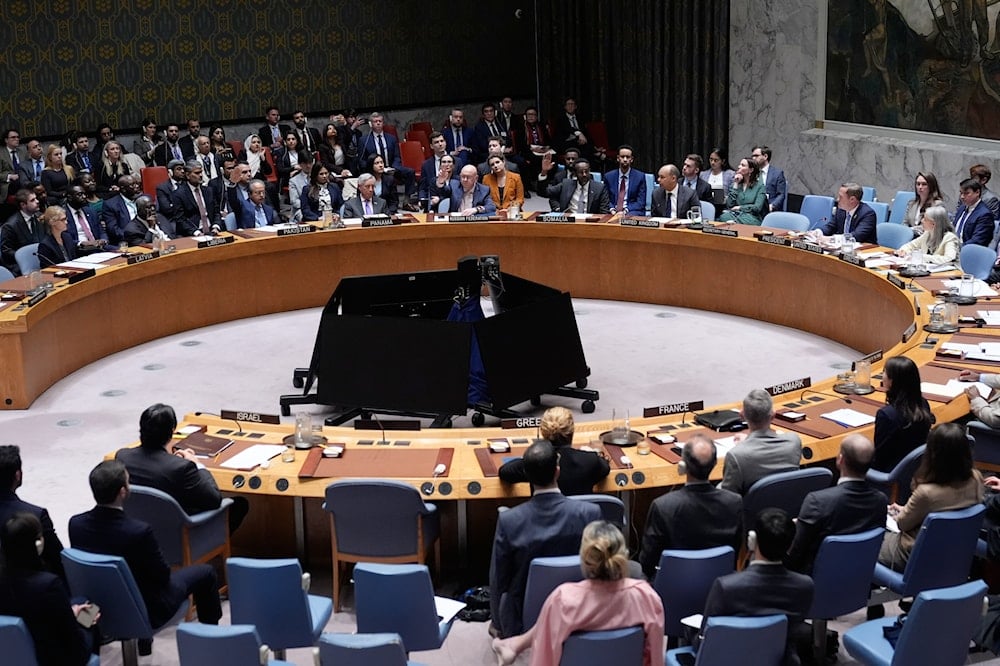
Members of the Security Council vote on a Russian sponsored resolution at United Nations headquarters, Wednesday, March 11, 2026 (AP)
The United Nations Security Council failed Thursday to extend the mandate of an expert panel monitoring sanctions against Iran after Russia and China cast a double veto during a contentious session.
The US-sponsored draft resolution sought to prolong the Panel of Experts assisting the 1737 Iran Sanctions Committee under Resolution 1929, ahead of the expiration of its mandate on Sept. 26.
The draft secured 11 votes with two abstentions. It was rejected owing to the negative votes cast by Moscow and Beijing, two permanent members on the council.
Russia says discussions 'grossly abuse procedure'
"The Security Council concluded its consideration of the Iranian nuclear issue, and the item non-proliferation was removed from the list of matters of which the council is seized," the Russian delegation told the chamber, asserting that Resolution 2231 expired Oct. 18, 2025, leaving no procedural or legal foundation for the meeting.
The session opened under the French presidency with an immediate procedural dispute when Moscow objected to holding discussions under the "Non-proliferation" agenda item, characterizing the move as an attempt "to grossly abuse procedure and conduct a meeting on the selfsame non-existent agenda item."
Beijing aligned with Moscow's position, urging member nations to avoid "political confrontation and pressurization," arguing that respecting statutory expirations remains essential to preserve multilateral credibility and foster dialogue.
Ghalibaf praises Chinese-Russian veto
The Chinese-Russian veto rejected the political exploitation of the United Nations Security Council and reaffirmed the rule of law, Iranian Parliamentary Speaker Mohammad Bagher Ghalibaf said on Thursday.
"The Chinese-Russian veto rejected the political exploitation of the United Nations Security Council and reaffirmed the rule of law," Ghalibaf said.
Ghalibaf further stated that "the unipolar system has come to an end, wherein one party would forcibly and through coercion obtain concessions," emphasizing that "we must defend multipolarity, for unipolarity is not in anyone's interests."


