
Judge indefinitely blocks Trump-backed $1.8bln anti-weaponization fund
 5 Min Read
The federal judge cites concerns over the fund's legality and demands formal assurances that the plan will not proceed.
-
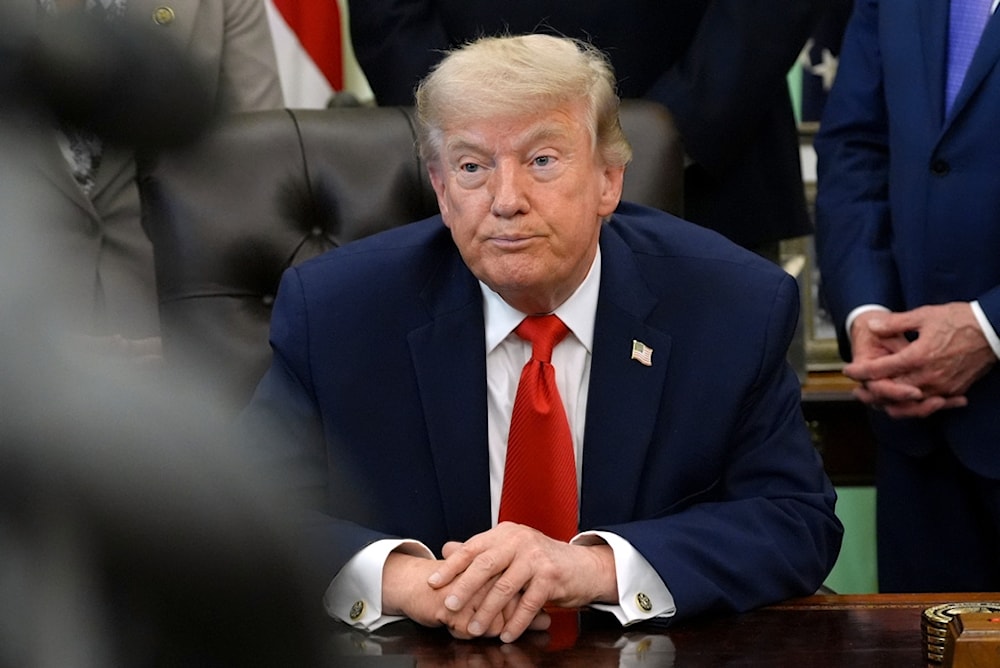
US President Donald Trump listens during an event to sign a proclamation about the fishing industry, in the Oval Office of the White House, Thursday, June 11, 2026, in Washington (AP)
A federal judge has ordered a halt to a controversial Trump administration initiative that would establish a multibillion-dollar compensation program for individuals claiming they were harmed by what supporters describe as government "weaponization", Reuters reported.
On Friday, Judge Leonie Brinkema issued a preliminary injunction preventing the creation of the proposed $1.776 billion fund while litigation over its legality continues. She also gave the administration seven days to submit a sworn declaration affirming that the program will not move forward.
The lawsuit was filed by a coalition of individuals and organizations who argue they were subjected to political targeting by the Trump administration and would be excluded from receiving compensation under the proposed mechanism.
During proceedings, Brinkema expressed concern over the government's plan to allocate public funds to a narrowly defined group of recipients.
The judge said it was “problematic” that the administration sought to set up a pool of taxpayer money to favor “an extremely small group” that many Americans feel engaged in “unacceptable” conduct.
Fund linked to IRS settlement
The compensation initiative emerged from a settlement between President Donald Trump and the Justice Department over a $10 billion lawsuit filed against the Internal Revenue Service and Treasury Department following the disclosure of Trump's tax records by former IRS contractor Charles Littlejohn.
As part of the settlement, the Justice Department announced the creation of a $1.776 billion "Anti-Weaponization Fund," a figure widely viewed as a reference to the year 1776. The proposed fund would be administered by a five-member commission tasked with reviewing applications from individuals claiming to have been victims of "lawfare" or "weaponization", terms frequently used by Trump and his allies to describe investigations and criminal cases they regard as politically motivated.
The fund was expected to draw resources from the federal Judgment Fund, a Treasury account traditionally used to pay legal judgments and settlements against the government.
Questions persist despite administration assurances
The ruling came despite statements from administration officials indicating that the proposal had been abandoned.
According to court filings and testimony cited by government lawyers, Acting Attorney General Todd Blanche previously informed lawmakers that the administration was not pursuing the fund. However, Brinkema concluded that such statements were insufficient to resolve the matter, noting that the administration had not formally rescinded the order establishing the program.
The judge pointed to recent public remarks by Trump endorsing the concept as evidence that the initiative could still be revived.
At Friday's hearing, Justice Department attorney Andrew Block argued that the plaintiffs' concerns were speculative and urged the court not to issue a ruling based on uncertain future actions.
Block said the court should not issue an order that “rests on hypotheticals.”
He also asked the judge to rely on statements made by Blanche and Justice Department lawyers indicating that the proposal would not be implemented.
Legal and political backlash
The proposal triggered immediate criticism from opponents who argued that the executive branch lacks the authority to establish a compensation program involving nearly $2 billion without explicit congressional approval.
Critics also questioned how recipients would be selected and warned that the fund could disproportionately benefit Trump allies and individuals connected to investigations that the president has long denounced as politically motivated.
The initiative drew opposition from legal scholars and prompted multiple lawsuits challenging its legality. Some Republicans reportedly expressed concerns that the proposal would face significant legal obstacles and become a political liability.
The Justice Department did not immediately comment on Friday's ruling.
Separate court scrutiny
The controversy surrounding the fund has expanded beyond the Virginia case.
In a separate proceeding, Judge Kathleen Williams ordered a review of the settlement that gave rise to the compensation proposal after a group of retired federal judges alleged that the underlying IRS lawsuit may have been used to facilitate creation of the fund.
The retired judges argued that the settlement could constitute a fraud on the court, claiming the litigation may have served primarily as a vehicle for establishing the compensation mechanism. The review remains ongoing.
Court seeks formal commitment
Brinkema repeatedly questioned why the administration had not officially withdrawn the directive establishing the fund.
The issue has surfaced in multiple court proceedings, including a separate hearing earlier this week before another federal judge.
When asked why the order remained in place, Block said he did not know. Brinkema responded, “There’s a huge gap in the record if you don’t have the answer to that question.”
Injunction may be reconsidered
The judge indicated she may reconsider the injunction if the administration provides a formal sworn statement confirming the proposal has been abandoned. She also asked the plaintiffs whether they would be willing to withdraw their lawsuit if such assurances were submitted.
The latest order extends a temporary block that Brinkema imposed last week and was due to expire Friday.
“I don’t have in this record the type of uncontested evidence that this will not be repeated,” she said during the hearing.
Although the administration has publicly indicated that it is not moving forward with the fund, reports suggest Trump allies are exploring alternative legal avenues to compensate individuals who claim they were victims of government abuse, ensuring that the broader debate over "weaponization" remains unresolved.
Read more: Dems slam $1.8bln fund for Trump allies as 'unconstitutional, corrupt'


