
KSA restricts US military access over Iran retaliation fears: Reports
 2 Min Read
Riyadh imposes restrictions on US military activity in the region, demanding security guarantees amid fears of Iranian retaliation and doubts over US protection.
-
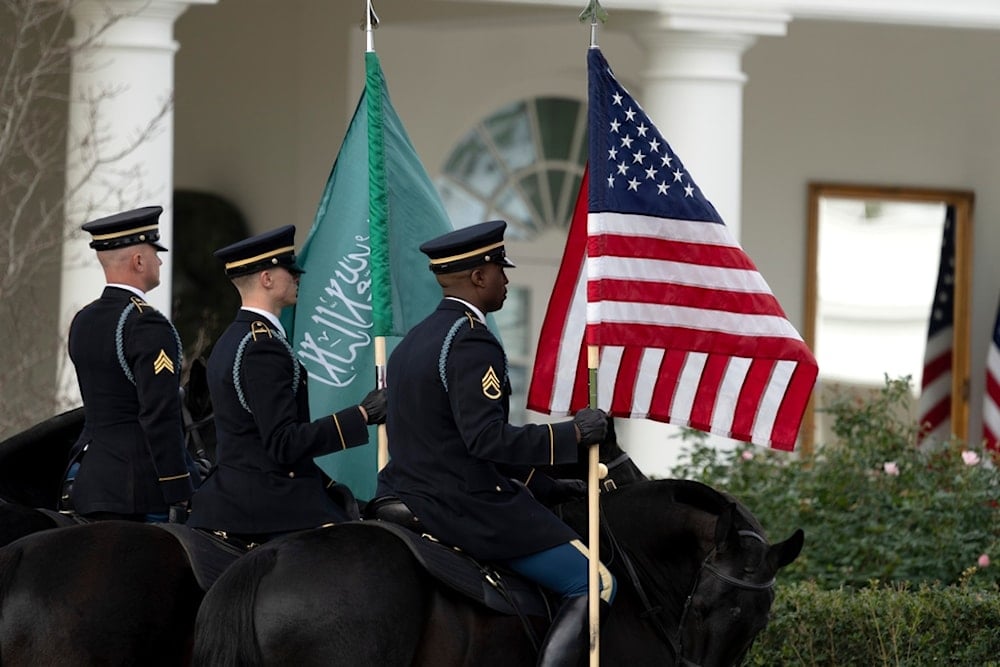
Members of a mounted honor guard hold Saudi Arabian and American flags near the Oval Office of the White House after the arrival of Saudi Arabia's Crown Prince Mohammed bin Salman, Tuesday, November 18, 2025, in Washington. (AP Photo/Mark Schiefelbein)
Saudi Arabia has imposed restrictions on certain aspects of US military activity in the region, citing fears of Iranian retaliation and what Riyadh perceives as insufficient US security guarantees, a Gulf source told Israeli channel i24NEWS.
The source said Saudi leadership does not oppose cooperation with Washington in principle, but has grown increasingly cautious following "previous experiences" in which the US response to strikes on Saudi and Emirati facilities was seen as limited.
Riyadh is now demanding prior coordination on "any military movements," explicit defense commitments, and an end to unilateral US decisions that could expose Gulf states to direct Iranian strikes.
"There are no sufficient guarantees that Washington will protect its allies in the region," the source said, adding that Saudi Arabia believes Iran would not collapse under any regional confrontation, a calculation that has made Riyadh unwilling to enter an open-ended conflict or prolonged standoff with Tehran.
Project Freedom fallout
The i24NEWS report aligns with an NBC News account published Wednesday, which revealed that Saudi Arabia had suspended US military use of Prince Sultan Air Base and Saudi airspace after Trump publicly announced "Project Freedom," an operation aimed at reopening the Strait of Hormuz, without prior coordination with regional partners. A subsequent phone call between Trump and Crown Prince Mohammed bin Salman failed to resolve the dispute, and the operation was suspended.
Qatar and Oman were also reportedly caught off guard by the announcement. NBC noted that US military operations in the region depend heavily on Gulf states for basing, overflight rights, and logistical support, with Saudi Arabia, Jordan, Kuwait, Bahrain, and Oman all described as strategically critical to sustaining regional air operations.
Trump later said the operation would be "paused for a short period of time" while talks with Iran continued. He claimed Wednesday that talks had been "very productive," though Iranian officials rejected the characterization, with MP Ebrahim Rezaei describing the latest US proposal as a "wish list.


