
Lavrov: West politicized IAEA, shifted blame to Iran after US withdrew
 9 Min Read
Russia's FM outlines his country's foreign policy, EU criticism, the Iran nuclear program, and Moscow's stance on NATO and the US.
-
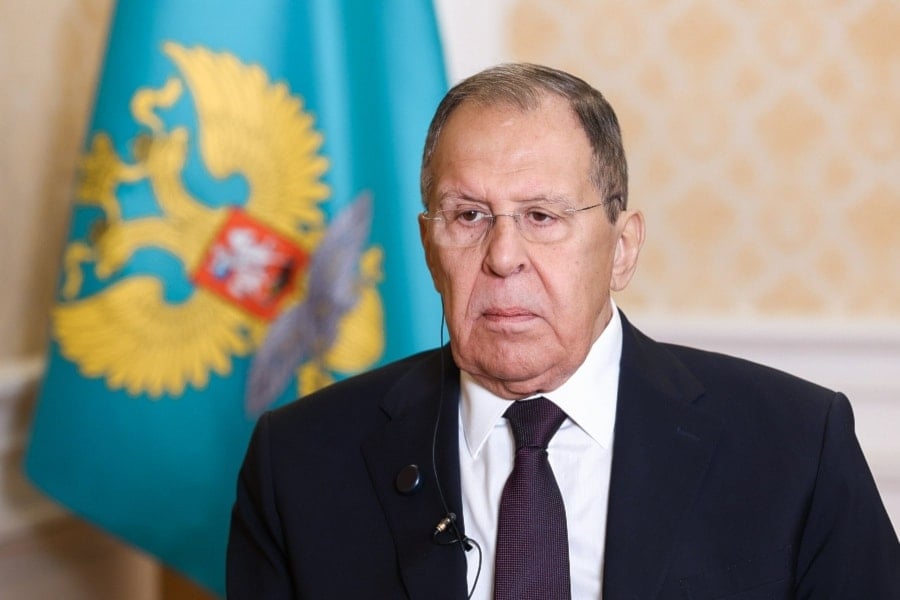
Undated photo of Russian Foreign Minister Sergei Lavrov (Russian Ministry of Foreign Affairs)
Russian Foreign Minister Sergey Lavrov, in an interview for the Islamic Republic of Iran Broadcasting (IRIB) on December 15, addressed several key international issues, including the Iranian civilian nuclear program, the war in Ukraine, and the decline of Western global influence.
Speaking early on about the crisis surrounding Iran's nuclear programme, he said that the US unilaterally withdrew from the Joint Comprehensive Plan of Action (JCPOA) in 2018, effectively dismantling an agreement endorsed by the UN Security Council.
Lavrov stressed that Iran had fully complied with the JCPOA until Washington declared it was “no longer bound” by the deal, a move he described as a "blatant violation of all the rules and norms." He said UN Security Council Resolution 2231, which underpinned the agreement, was “thrown by the United States into the dustbin.”
According to Lavrov, Western governments later attempted to shift blame onto Tehran, despite Iran’s documented adherence to the agreement. He said this marked a turning point in the erosion of trust in global diplomacy.
"I think it was a shame of the world diplomacy when they deceptively pushed through the decision on reinstating the sanctions against the Islamic Republic of Iran," Lavrov said. "True and honest diplomats do not behave like this. Swindlers and thieves do."
Read more: For past 500 years, Europe crucible of 'all world tragedies': Lavrov
Western pressure, IAEA politicization
Lavrov went on to criticize European powers and the International Atomic Energy Agency (IAEA), accusing them of politicizing oversight mechanisms to justify renewed sanctions on Iran. He said IAEA reports were used as a pretext for activating the snapback mechanism, despite a lack of evidence that Iran violated its commitments.
He argued that Iran had gone beyond its obligations under the Non‑Proliferation Treaty (NPT) by granting extensive access to inspectors, only for those concessions to be exploited politically.
Lavrov acknowledged frustration within Iran over continued engagement with the IAEA but said Moscow believes Tehran should remain within the NPT framework, warning against allowing public debate to be weaponized by Western governments.
Attacks on Iran, Russia’s support for Tehran
Addressing military escalations, Lavrov condemned attacks carried out by "Israel" and the United States against Iranian facilities, saying they had “absolutely nothing to do with international legality.” He noted that neither the IAEA nor Western governments provided evidence that Iran had violated nuclear commitments.
Lavrov said Russia has consistently supported Iran’s right to peaceful nuclear energy and remains ready to assist Tehran diplomatically in restoring dialogue with the IAEA and Western states, on terms that respect Iran’s sovereignty.
He added that Russian President Vladimir Putin has repeatedly assured Iranian President Masoud Pezeshkian that Moscow would accept whatever course of action Iran chooses in the interests of its people.
Read more: Iran questions IAEA silence on attacks against its nuclear facilities
Comprehensive treaty, strategic cooperation
Lavrov highlighted the Treaty on Comprehensive Strategic Partnership between Russia and Iran, which entered into force in October, calling it a cornerstone of bilateral relations. He said the treaty outlines principles of mutual solidarity and cooperation across political, economic, and security domains.
He noted that the Intergovernmental Commission on Trade and Economic Cooperation, chaired by senior ministers from both countries, plays a central role in implementing the treaty, particularly in trade, investment, and infrastructure development.
Lavrov said Moscow views relations with Tehran as a long‑term strategic priority within a broader Eurasian framework.
North–South corridor and Bushehr nuclear power plant
Lavrov identified the International North–South Transport Corridor as one of the flagship projects of Russia‑Iran cooperation. He said progress is ongoing across its western, eastern, and Transcaspian routes, including construction of the Astara–Rasht railway, which would enable uninterrupted transit from the Baltic Sea to the Gulf.
"Regarding the North–South corridor, we are looking forward for the Iranian authorities to complete the purchases of land, which will allow us to move into an active phase and complete the construction of this section of the railway about 160 kilometres long," the Russian FM said.
Lavrov added that there are "fundamental factors at play, but I do not see any problems because of them," noting that he is speaking about "the commitment by our presidents and governments to the comprehensive development of relations, removing any artificial obstacles standing in the way for promoting these ties."
He also pointed to the Bushehr nuclear power plant as another pillar of cooperation, noting that new units are under construction and others are already operational. Lavrov said the project adds a critical dimension to bilateral ties, particularly in the peaceful use of nuclear energy.
"I believe that we have very good prospects," Lavrov said.
Read more: Iran’s Aprin Dry Port receives first Russian freight train
Broader bilateral plans, collective security
Beyond infrastructure and energy, Lavrov said Russia and Iran are expanding cooperation through multilateral platforms, including BRICS, the Shanghai Cooperation Organisation, the Eurasian Economic Union, and the Organization of Islamic Cooperation.
He reiterated Russia’s openness to broader security cooperation, including engagement with Iran within the framework of the Collective Security Treaty Organization, adding that such arrangements help deter aggression and strengthen regional stability.
"Our bilateral plans are serious enough, as are our plans of cooperation in the world arena," Lavrov said. "Of course, this includes the United Nations and the Organisation of Islamic Cooperation, with which we closely interact."
Lavrov also supported initiatives aimed at building a collective security architecture in the Gulf, stressing that regional states, not external powers, should determine their own security arrangements.
Ukraine, Nazism, and Europe’s war on Russia
Turning to Ukraine, Lavrov accused European governments of reviving Nazism and waging a proxy war against Russia under a Nazi banner. He said Europe is pumping Ukraine with weapons, intelligence, and funding while ignoring what he described as Nazi practices by the authorities that came to power after the 2014 coup.
Lavrov claimed that Europeans are once again mobilizing the continent against Russia, comparing current policies to historical campaigns led by Napoleon and Adolf Hitler. He said the West is fighting Russia “with Ukrainians under a Nazi flag,” using European resources and US intelligence.
"The saddest and the most hazardous thing is that the theory and practices of Nazism are being resurrected in Europe, primarily in Brussels but also in Berlin, London, Paris, not to mention the Baltic States," Lavrov said. "Blatant Nazi-like approaches, blatant ignoring of what the Nazi regime is committing in Ukraine, which is a copy of Adolf Hitler’s actions and those of Napoleon before him. However, there was no Nazism under Napoleon, whereas Hitler, just like Napoleon, drafted practically entire Europe and pushed it, under the Nazi banners, against the Soviet Union."
He described this as a revival of militarism, warning that European ambitions are colliding with reality as Russia defends what it sees as its legitimate security interests.
"I don’t want to create an impression that all the world’s woes are born on the European continent. It is a dangerous mix of European ambitions and a realisation that those ambitions have failed in Ukraine because Russia is standing up to its legitimate interests," Lavrov said.
US national security strategy, internal Western fractures
Lavrov also addressed the latest United States National Security Strategy, describing it as an attempt to rein in Europe’s liberal ambitions and assert American priorities elsewhere.
“One of its major purposes is to make Europe know its place and to prevent it from imposing its liberal ways that it has been proud of and cooperated with the US democratic administrations in promoting them for decades… to not try to engage the United States in its fairly rogue games intended to promote the liberal way that suits its elite to the political life of all other countries,” Lavrov said.
He claimed that the strategy reflects internal fractures within the West, particularly between Washington and European capitals, accusing Europe of electoral interference and pursuing “schemes” that the US no longer wants to support.
“The US strategy of national security tells Europe: ‘Mind your own business and do not hope that the United States will constantly support your schemes. We have more important issues, primarily in Latin America and the Asia-Pacific region.”
Lavrov said the document’s core message is about prioritizing the US confrontation with China, which has become a major geopolitical and economic rival. He acknowledged competition as natural but criticized what he called unfair practices, such as extreme tariffs and politically motivated sanctions.
“When someone is trying to suppress rivals by 100- or even 500-percent tariffs, it is not the globalisation, which the United States called us to after WWII… this is even more than inequality, this is a disrespect for human rights. This is diktat.”
Lavrov also denounced sanctions targeting Russian energy companies like Lukoil and Rosneft, calling them “dirty, anti-democratic and anti-market methods” used to eliminate competition.
“It means that the West, including the United States, do not always have enough power to maintain its domination, and thus they have to resort to dirty, anti-democratic and anti-market methods.”
Read more: Russian Lukoil plans fire sale of foreign assets due to sanctions
Declining Western power and emerging multipolarity
Lavrov concluded by arguing that the West’s global dominance is eroding, forcing it to rely on sanctions, economic coercion, and military pressure to maintain influence. He said trade wars, asset seizures, and political diktats reflect a lack of confidence rather than strength.
He described the current era as one in which international law is being selectively applied or ignored altogether, citing the JCPOA, Palestine, and sanctions regimes as examples.
According to Lavrov, these trends point not to chaos but to a transition toward a multipolar world in which Western powers can no longer impose their will unchallenged.


