
Lebanon open to post-UNIFIL foreign forces in south after 2027: Aoun
 4 Min Read
Lebanon’s president says Beirut welcomes foreign forces remaining in the south after UNIFIL’s 2027 withdrawal, to support the Lebanese Army and implement Resolution 1701.
-
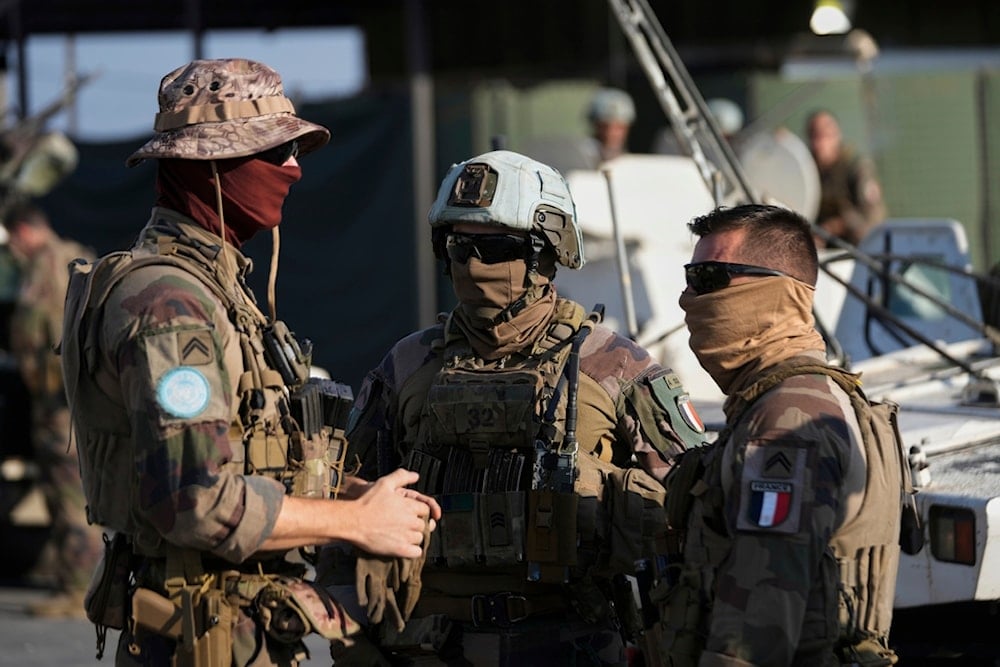
French UN peacekeepers prepare to leave their base to patrol along the Lebanese border in Deir Kifa, south Lebanon, Wednesday, August 20, 2025 (AP)
Lebanese President Joseph Aoun told UN Under-Secretary-General for Peace Operations Jean-Pierre Lacroix that Lebanon welcomes any country wishing to keep its forces in the south after the completion of the withdrawal of the UNIFIL at the end of 2027, provided an agreed framework is reached to assist the Lebanese Armed Forces in extending state authority to the internationally recognized southern border and implementing UN Security Council Resolution 1701.
During a meeting at Baabda Palace on Tuesday, Aoun praised the role played by UNIFIL in coordination with the Lebanese Army since its deployment in the south. He noted that the army’s strength has increased gradually and is set to exceed 10,000 personnel, including officers, non-commissioned officers, and soldiers.
Aoun said the army’s full deployment to the southern border has been hindered by the failure of the Israeli occupation to withdraw from the occupied hills and territories, as well as its continued violations of the November 2024 ceasefire framework. He also cited ongoing hostile operations against Lebanese territory and the continued detention of Lebanese prisoners, despite repeated appeals to the international community to compel compliance with the agreement and Resolution 1701.
Europe wants to maintain forces in South
The president added that several European countries have expressed interest in keeping units currently serving with UNIFIL in south Lebanon after the mission’s withdrawal in 2027. He said Lebanon has conveyed its welcome for such a step, describing it as an opportunity for the international community to continue monitoring developments in the south and to support the Lebanese Army after it completes its deployment to the border, ensuring coordination to maintain stability and security in the area.
Aoun stressed that Lebanon places great importance on the role of the United Nations in this context and said formulas for the operation of any such forces could be agreed with the concerned states.
He also reiterated that the Lebanese Army is fully carrying out its duties south of the Litani River in line with a cabinet decision, rejecting claims circulated by the Israeli occupation and some local voices alleging otherwise.
For his part, Lacroix briefed Aoun on the outcome of his visit to south Lebanon and his meetings with UNIFIL commanders, reaffirming continued UN support for the Lebanese Army and coordination on all current and future steps related to international forces. He confirmed the UN’s readiness to assist with any arrangements that ensure sustained security and stability in the south, particularly within the international operations area.
UNIFIL insists on Lebanon mandate
Spokesperson for the United Nations Interim Force in Lebanon (UNIFIL), Candice Ardiel, affirmed in December that the peacekeeping mission will do everything in its power to reduce any negative impact that global budget constraints may have on its operations in South Lebanon.
She explained that cuts affecting UN peacekeeping missions could lead to a reduction in personnel, yet UNIFIL remains committed to fully implementing its mandate under UN Security Council Resolution 1701 through the end of 2026, safeguarding the stability of the region and continuing its field duties.
In earlier remarks to Al Mayadeen, Ardiel stressed that the continued presence of Israeli occupation forces in South Lebanon represents “a serious violation” that prevents the Lebanese Army from deploying in the area, posing ongoing obstacles to movement and freedom of operations.
She underlined that cooperation with the Lebanese Army has always been strong and continues on a daily basis, noting that peacekeepers are fully aware of the risks and remain dedicated to their mission and responsibilities.
UNIFIL highlights ongoing cooperation with Lebanese Army
The spokesperson reiterated that UNIFIL sees its partnership with the Lebanese Army as essential to maintaining calm along the Blue Line and managing security challenges, particularly with increasing concerns over Israeli occupation activities affecting villages and civilian movement.
Despite the operational pressures linked to reduced budgets, the mission confirmed its determination to uphold stability, prevent escalation, and support local communities in line with international mandates.
The spokesperson revealed earlier that UNIFIL has documented “over 10,000 violations altogether” by air and land since last year. “And frankly, most of them are from the Israeli side.”
The spokesperson noted that even minor violations risk triggering escalation: “Any violation can lead to a misunderstanding and escalation that can cause a greater conflict that can lead us back to the conflict that we saw a year ago.”


