UNIFIL insists on mandate in Lebanon despite funding challenges
 4 Min Read
UNIFIL says it remains committed to Resolution 1701 and cooperation with the Lebanese Army in South Lebanon despite funding cuts and Israeli occupation violations.
-
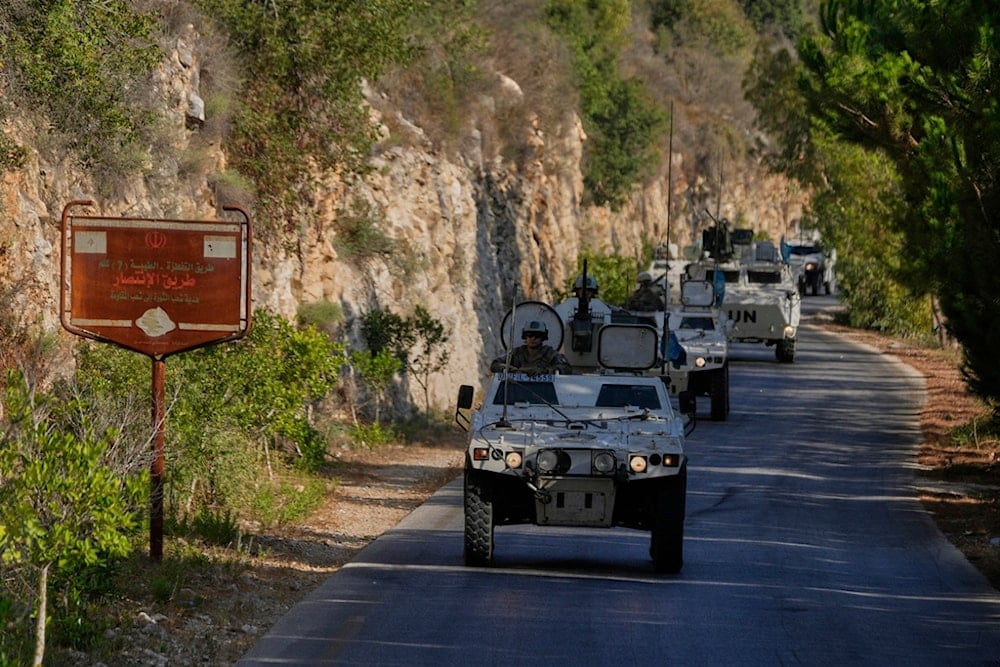
French UN peacekeepers patrol at the Sluki Valley, south Lebanon, Wednesday, August 20, 2025 (AP)
Spokesperson for the United Nations Interim Force in Lebanon (UNIFIL), Candice Ardiel, affirmed that the peacekeeping mission will do everything in its power to reduce any negative impact that global budget constraints may have on its operations in South Lebanon.
She explained that cuts affecting UN peacekeeping missions could lead to a reduction in personnel, yet UNIFIL remains committed to fully implementing its mandate under UN Security Council Resolution 1701 through the end of 2026, safeguarding the stability of the region and continuing its field duties.
In earlier remarks to Al Mayadeen, Ardiel stressed that the continued presence of Israeli occupation forces in South Lebanon represents “a serious violation” that prevents the Lebanese Army from deploying in the area, posing ongoing obstacles to movement and freedom of operations.
She underlined that cooperation with the Lebanese Army has always been strong and continues on a daily basis, noting that peacekeepers are fully aware of the risks and remain dedicated to their mission and responsibilities.
UNIFIL highlights ongoing cooperation with Lebanese Army
The spokesperson reiterated that UNIFIL sees its partnership with the Lebanese Army as essential to maintaining calm along the Blue Line and managing security challenges, particularly with increasing concerns over Israeli occupation activities affecting villages and civilian movement.
Despite the operational pressures linked to reduced budgets, the mission confirmed its determination to uphold stability, prevent escalation, and support local communities in line with international mandates.
The spokesperson revealed earlier that UNIFIL has documented “over 10,000 violations altogether” by air and land since last year. “And frankly, most of them are from the Israeli side.”
The spokesperson noted that even minor violations risk triggering escalation: “Any violation can lead to a misunderstanding and escalation that can cause a greater conflict that can lead us back to the conflict that we saw a year ago.”
Freedom of movement obstructed
According to UNIFIL, certain Israeli positions inside Lebanon are blocking access routes used by peacekeepers and the Lebanese Army: “The presence of Israeli soldiers in South Lebanon is obviously an impediment to movement throughout South Lebanon, including for the Lebanese army and for us… in some cases our access routes to our patrols and to our positions have been blocked.”
UNIFIL continues to urge the withdrawal of Israeli troops who have crossed into Lebanese territory, “This is a concern for us and it's a concern that we've expressed to the IDF and we continually urge them to withdraw from Lebanese territory to ensure that peacekeepers and the Lebanese army have freedom of movement but also in respect for Lebanon's territorial integrity and sovereignty.”
The spokesperson acknowledged the challenges facing the LAF amid economic strain and Israeli military activity obstructing its redeployment, “There are a number of challenges that the army has faced in the past due to economic issues, and now the redeployment to the South that is not able to be quite completed due to the presence of Israeli forces along the Blue Line in certain locations.”
UNIFIL reaffirmed its commitment to assisting Beirut in fulfilling its obligations: “Peacekeepers are here to help them, to support them… We are there because this is our role under Resolution 1701 to ensure that the Lebanese Army has the support and ability to be able to implement their tasks under Resolution 1701.”