
Less than 50% support the UK monarchy amid Andrew-Epstein scandal
 4 Min Read
Support for the UK monarchy has fallen to 45%, a new poll shows, amid fresh allegations linking Prince Andrew to convicted sex offender Jeffrey Epstein.
-
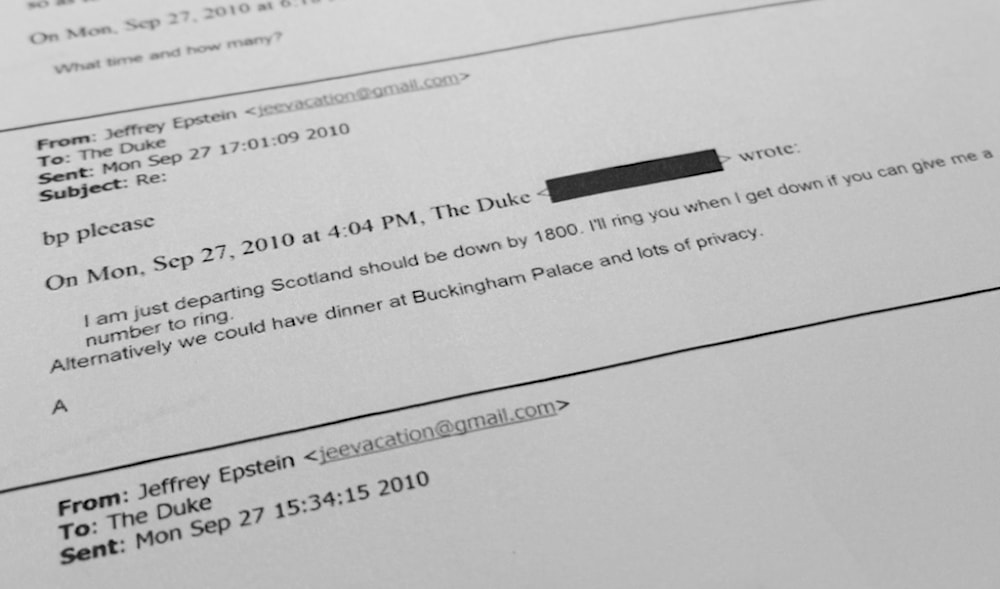
A document showing an email exchange between Jeffrey Epstein and Andrew Mountbatten-Windsor, who Epstein referred to as "The Duke," that was in a US Department of Justice release, Jan. 31, 2026. (AP)
Public support for the British monarchy has dropped to 45%, according to a new survey conducted by Savanta on behalf of the campaign group Republic. The poll reveals a significant fall in approval amid scrutiny of Andrew Mountbatten-Windsor’s documented ties to convicted sex offender Jeffrey Epstein.
When asked whether the UK should retain the monarchy or adopt an elected head of state, 32% of respondents expressed a preference for an elected system. The survey included 2,132 UK adults, conducted between February 6 and 9, 2026.
The decline in public support follows documentation that Andrew, while serving as the UK’s trade envoy, shared confidential government briefings with Jeffrey Epstein in 2010. Emails released by the US Department of Justice reveal that Andrew forwarded sensitive information regarding official visits to Hong Kong, Vietnam, and Singapore directly to Epstein.
He also included Epstein in a confidential report on investment opportunities in Helmand Province, Afghanistan, sent on Christmas Eve 2010. These communications were sent after Epstein’s 2008 conviction for soliciting a minor for prostitution.
Continued contact despite conviction
Despite widespread public claims that he had severed contact with Epstein in 2010, Andrew was still in direct communication in early 2011. In one message dated February 9, 2011, Andrew told Epstein that he had recently visited a private equity firm and “thought of you,” referencing Epstein’s known interest in capital flows.
Official UK government guidance states that trade envoys are obligated to safeguard sensitive state information, a responsibility that was clearly violated in Andrew's communications with the convicted sex offender.
Thames Valley Police confirmed on Monday that they are reviewing the matter. This comes after earlier reports that a woman had been sent to the UK by Epstein in 2010 for a sexual encounter with Andrew.
These details add to the growing body of evidence exposing the former duke’s long-standing ties to Epstein, despite public denials and distancing efforts.
Time for serious debate on abolishing the monarchy
Graham Smith, chief executive of Republic, said the monarchy is rapidly losing its last source of legitimacy: public opinion, noting that the exposure of Andrew’s actions and the inaction of other senior royals has severely impacted public confidence.
“Falling support is unsurprising given the gravity of accusations against Andrew, and increasing concern William and Charles have known about and covered up these issues for two decades.”
“The royals are trapped. Their silence only raises more questions about what they knew and when. Answering those questions will lead to more outrage and a deeper crisis about the monarchy’s future,” he said.
Smith concluded with a call to begin serious discussions about the UK's future. “Too many people are unsure of the alternative. Too many people still only see soft-focus royalist media coverage. But the monarchy cannot reverse this decline. Even the late queen’s legacy is now tainted by the scandal surrounding Andrew... It’s time the UK looked toward a future without the monarchy, one that offers democratic reform and genuine national renewal.”
UK in shambles
This also comes as British Prime Minister Keir Starmer is struggling to contain the fallout from the Epstein scandal, as key resignations within his inner circle add to growing political pressure over his controversial appointment of Peter Mandelson as US ambassador.
The crisis, now considered the most serious of Starmer’s premiership, escalated Monday with the resignation of communications chief Tim Allan, less than 24 hours after the departure of his chief of staff, Morgan McSweeney. Both had been closely tied to the decision to appoint Mandelson, despite known links to convicted sex offender Jeffrey Epstein.
The backlash centers on newly disclosed emails indicating Mandelson maintained a personal relationship with Epstein well after his 2008 conviction. Starmer, in office for just 19 months, has come under heavy criticism for overlooking these associations during Mandelson’s vetting.
In a further blow, documents released by the US government on January 30 appeared to show Mandelson had leaked confidential UK government information to Epstein while serving as a minister during the 2008 financial crisis. The UK police have opened an investigation into Mandelson, 72, for misconduct in public office and raided two of his properties. He has not been arrested.


