
Marandi: US has suffered strategic defeat in Iran war | Exclusive
 12 Min Read
Al Mayadeen's “Iran and the World” examines the Iran-US MOU, Hormuz talks, Gaza, and growing questions over US security guarantees in the region.
-
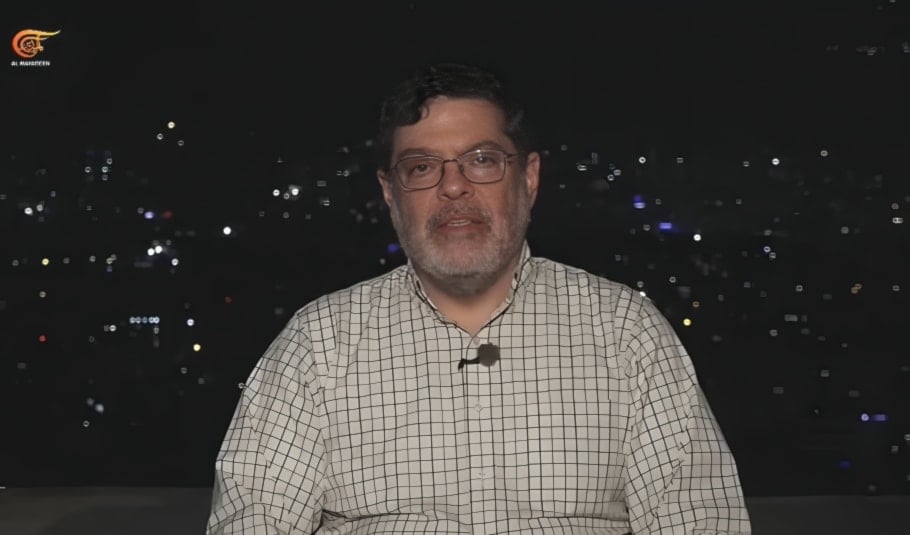
Professor Mohammad Marandi speaking to Al Mayadeen on the nightly program 'Iran and the World', broadcast on August 16, 2026 (Screengrab)
The outcome of the confrontation with the United States should be viewed as both a practical failure and a moral victory for Iran, Professor Mohammad Marandi, speaking to Al Mayadeen on the “Iran and the World” program, said, arguing that Washington's withdrawal from its commitments has strengthened Tehran's resolve.
Marandi said the fact that US President Donald Trump had signed an agreement before ultimately undermining it demonstrated, in his view, that Washington was unwilling to honor its own commitments.
He argued that this had reinforced confidence among Iran's allies and the broader international community outside the Western alliance, while showing that Tehran had pursued negotiations in an effort to achieve peace.
“We attempted to have peace, but our enemy failed to take its own signature and its own promise and its own commitment seriously,” Marandi said.
He acknowledged that the continuation of the war represented a practical failure, but maintained that Iran had achieved a strategic and moral victory. He further argued that Washington would not prevail in the confrontation and that continued escalation would ultimately worsen the situation for the United States and the wider world.
Speaking to Al Mayadeen on Sunday, Professor Mohammad Marandi described the Gaza ceasefire as a “fake", stressing that around 1,400 Palestinians have been killed since it was signed.
— Al Mayadeen English (@MayadeenEnglish) August 17, 2026
He said the ceasefire also brought an end to the growing global momentum against the genocide,… pic.twitter.com/5Yu0toCq6Q
Marandi dismisses Washington's claims on Iran
Marandi also rejected US statements about Iran's military and political position, arguing that Washington had repeatedly made claims that were later contradicted by developments on the ground.
He pointed to earlier US assertions that Iran's leadership structure had been disrupted, that Tehran was seeking a ceasefire, that Iranian forces had been severely weakened, and that the Strait of Hormuz was reopening.
“These narratives are worn out. They're tired narratives,” he said, arguing that repeated claims from Washington had made it difficult to take new statements from the White House seriously.
According to Marandi, the continuation of the confrontation has demonstrated that Iran remains capable of pursuing its objectives despite pressure from the United States.
New Hormuz agreement with Oman will not change situation
Addressing the possibility of a new agreement between Iran and Oman concerning the Strait of Hormuz, Marandi said he did not expect an announcement because, in his assessment, the issue was not currently the main point of contention.
He said Iran and Oman already had an understanding on managing the strait, but argued that signing a new agreement would not change the situation while Washington continued to refrain from implementing its own commitments.
“The Strait of Hormuz is closed. Lebanon is occupied. The genocide goes on in Gaza,” Marandi said, adding that Iranian assets had also not been handed over.
He argued that the memorandum of understanding signed by Trump remained central to the normalization of trade through the Strait of Hormuz and that a separate agreement between Iran and Oman would therefore have little practical effect under the current circumstances.
Future Hormuz agreements would only matter after US commitments are fulfilled
Marandi said any future agreement between Iran and Oman concerning the Strait of Hormuz would only become meaningful once the United States fulfills its commitments and normal maritime traffic through the strait resumes.
He described such an agreement as a framework for the future rather than an immediate solution, arguing that there would be little purpose in signing it while the current conditions surrounding the strait remain unchanged.
“Only then can an agreement between Iran and Oman have significance and importance, because only then will we have ships traveling through the Strait under normal circumstances,” he said.
Marandi also argued that the memorandum of understanding between Iran and the United States was intended from the outset to address the broader regional war, including Gaza, Yemen, Iraq, and Lebanon, rather than focusing exclusively on Lebanon.
He said Lebanon was specifically mentioned because fighting was taking place there when the MOU was negotiated, but argued that the reference to “Lebanon and all the fronts” encompassed the other regional theaters as well.
Gaza remains central to Iran-US MOU
Addressing developments in Gaza, Marandi argued that the Palestinian Resistance had faced pressure to accept a flawed ceasefire arrangement, claiming that regional governments had supported Trump's initiative.
He argued that the ceasefire had also reduced international pressure over the war in Gaza, stating that mass demonstrations in support of Palestinians had declined after regional leaders backed the initiative.
Marandi said the United States had presented the Gaza issue during negotiations with Iran as already resolved, arguing that Washington had claimed regional governments were satisfied with the arrangement.
He rejected that assessment, saying the situation in Gaza remained unacceptable and that the Israeli regime's military campaign had continued despite the ceasefire.
“The genocide has not stopped. The genocide continues,” Marandi said, arguing that Iran would therefore continue to insist that Gaza remain part of the commitments under the MOU.
He drew a parallel with Lebanon, saying Iran had rejected a separate agreement between the Lebanese government and the Israeli regime because, in his view, it conflicted with the terms of the Iran-US MOU.
Marandi said Iran's position remained that Israeli forces must withdraw from Lebanese territory and that the same principle applied to Gaza and other elements of the MOU.
He later described the US occupation of Afghanistan as a “strategic defeat,” extending his assessment of US military interventions in the region.
Iran's strategy has consistently opposed US influence
Marandi said that the US occupations of Afghanistan and Iraq were strategic defeats, arguing that Washington continues to exert significant influence over Iraq through control of its oil resources and financial mechanisms.
He said Iran's approach in Afghanistan and Syria reflected a consistent strategy of opposing US influence in the region. In Syria, he argued, Tehran opposed efforts backed by the United States and its regional allies to overthrow the Syrian government, rejecting claims that Iran's position was primarily motivated by sectarian considerations.
Regarding Afghanistan, Marandi acknowledged Iran's major differences with the Taliban but said Tehran ultimately supported efforts to end the US occupation. He noted that relations between Iran and a later generation of Taliban leaders developed through contacts involving the martyred Iranian commander General Qassem Soleimani.
Marandi argued that Iran's policy was based on the belief that US influence was a major source of instability in the region. He said Tehran viewed reducing that influence as a means of easing regional divisions and conflicts.
Marandi urges regional states to pursue independent policies
Marandi also criticized regional governments for their excessive dependence on the United States, arguing that their policies had contributed to significant damage within their own countries and across the wider region.
He said regional leaders should pursue their own interests rather than acting as “agents of empire,” while adding that Iran would cooperate with neighboring states if they chose a more independent regional approach.
Addressing a recent agreement involving Saudi Arabia, Pakistan, and Turkey, Marandi said Iran would welcome the initiative if it was genuinely intended to strengthen regional unity and reduce US influence.
However, he questioned the circumstances surrounding the agreement, saying the context in which the three countries reached it raised concerns about its underlying objectives.
Regional alignment questioned amid continued Israeli aggression
Marandi questioned the motives behind the recent agreement involving Saudi Arabia, Pakistan, and Turkey, arguing that the countries had not come together to address the war in Gaza, Israeli territorial expansion in Syria and Lebanon, or the US confrontation with Iran.
He said the agreement emerged after Saudi Arabia carried out attacks on Yemen and Yemeni forces responded, raising questions about the purpose of the new regional alignment. Marandi nevertheless said Iran would welcome and support any genuine effort by regional states to oppose US hegemony and Israeli aggression.
However, he expressed doubts that Turkish President Recep Tayyip Erdogan and Saudi Crown Prince Mohammed bin Salman were currently prepared to challenge either the United States or the Israeli regime.
Marandi pointed to continued energy ties involving Turkey, saying oil from Baku continues to reach the Israeli regime through Turkish territory despite the war in Gaza. He also criticized Saudi Arabia's regional military actions, arguing that Riyadh had targeted Yemen, Iraq, and Iran rather than confronting the Israeli regime.
Loewenstein: US responsible for MOU's failure
Journalist Jennifer Loewenstein, who also appeared on Al Mayadeen's “Iran and the World” program, said the United States was entirely responsible for the failure of the memorandum of understanding.
She argued that US President Donald Trump repeatedly violated the agreement while blaming Iran for its collapse, describing him as an impulsive leader who prioritizes messages aimed at his political base over careful consideration of developments.
Loewenstein also dismissed Trump's claims of a US victory in the war and accusations that Iran violated the MOU, arguing that such statements did not correspond with developments on the ground.
She questioned how Washington would respond if Iran were to impose measures affecting passage through the Strait of Hormuz after the MOU expires, particularly given what she described as the failure of previous military threats to alter Tehran's position.
Loewenstein also criticized US threats of unprecedented sanctions against Iran, describing the rhetoric as disproportionate to the situation on the ground and questioning Washington's ability to translate those threats into effective policy.
US has limited options as Iran confrontation continues
Loewenstein argued that the outcome of the war had already become increasingly clear, saying she believed the United States had suffered a defeat and would struggle to reverse the course of the confrontation.
She said some analysts expect Iran to wait until the end of Trump's presidency before seeking a broader resolution, although she acknowledged that the trajectory remains difficult to predict.
Addressing the Iran-Oman talks, Loewenstein said she did not expect their outcome to satisfy Washington, arguing that the negotiations were proceeding independently of US demands. She predicted that Tehran and Muscat could reach an agreement serving their respective interests regardless of Washington's reaction.
She identified the expiration of the MOU as a more significant issue, questioning what would follow once its provisions cease to apply.
Loewenstein also argued that Washington's options had narrowed, particularly after previous military measures failed to alter the situation. She said the Trump administration was instead turning toward economic pressure on Iran, but suggested that Tehran had extensive experience dealing with sanctions and other forms of economic pressure.
In her assessment, intensified pressure could ultimately backfire on Washington by creating broader disruptions to the global economy and potentially harming US political interests.
“The Americans have very few options available to them. The one option that should be available is real diplomacy,” Loewenstein said, adding that she did not view Trump's current diplomatic team as capable of pursuing such an approach.
Loewenstein backs Afghanistan withdrawal, links Gaza to MOU
Loewenstein also stated that the US withdrawal from Afghanistan was necessary, criticizing Washington's two-decade military intervention there as a failure.
“What the Americans were doing there was completely unclear. And they spent 20 years to replace the Taliban and 20 years later to replace the Taliban with the Taliban,” she said.
Returning to the discussion of Gaza, Loewenstein said she welcomed Marandi's assertion that Gaza and other regional fronts were covered by the MOU.
She pointed to recent comments by Hamas leader Khalil al-Hayya, saying he had discussed linking Gaza to Iran's demands during negotiations. Loewenstein said she viewed such a linkage positively, arguing that incorporating Gaza into the broader framework could clarify the relationship between the Palestinian issue and the MOU.
Loewenstein said Gaza was already linked to the broader MOU, but argued that the framework should more explicitly define the steps required to end the war there.
She suggested that Iran could seek specific US commitments regarding Gaza as part of any future negotiations, saying clearer provisions would make the framework more effective in addressing the war.
Returning to Afghanistan, Loewenstein described the prolonged US military presence as a mistake that resulted in extensive loss of life without achieving its stated objectives. She argued that Afghanistan reflected a broader pattern in US foreign policy of entering military interventions without a clear strategy for how they would end.
US security guarantees in region questioned
Loewenstein also argued that recent regional developments had undermined confidence in the US security umbrella, saying countries in the Gulf and wider West Asia were increasingly recognizing the need to develop independent security arrangements.
She pointed to the defensive pact between Pakistan, Turkey, and Saudi Arabia as an indication that regional powers were seeking alternatives to reliance on Washington.
According to Loewenstein, the agreement could encourage other countries to pursue similar arrangements, potentially including Iran.
She argued that regional states would increasingly need to establish their own strategic agreements and security frameworks rather than relying on US guarantees, which she described as unreliable.
“Their guarantees have proven to be worth nothing,” Loewenstein said.
Read more: 'Iran and the World': Al Mayadeen debunks Western Iran disinformation


