
Trump's 'maximum pressure' strengthened Iran’s leverage: LA Times
 3 Min Read
A Los Angeles Times analysis argues that Trump's Iran policies have strengthened Tehran's leverage while leaving Washington with limited strategic options.
-
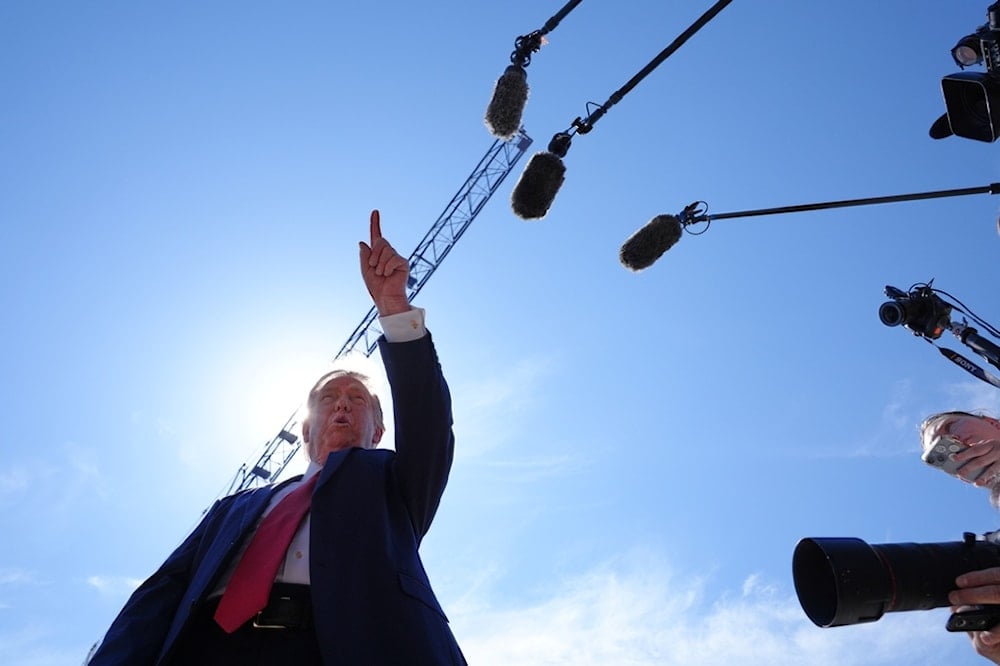
US President Donald Trump speaks as he tours Ballroom construction around the outside of the White House, Tuesday, May 19, 2026, in Washington (AP)
US President Donald Trump is confronting growing criticism over his Iran strategy as analysts increasingly argue that Washington’s current predicament is the direct consequence of abandoning diplomacy and pursuing confrontation with Tehran, according to an opinion article published by the Los Angeles Times.
In the article, foreign policy commentator Daniel R. DePetris argued that the United States weakened its own position after withdrawing from the Joint Comprehensive Plan of Action, the agreement that had placed restrictions on Iran’s nuclear activities in exchange for sanctions relief.
The analysis claimed that Washington’s “maximum pressure” campaign ultimately accelerated Iran’s uranium enrichment efforts while strengthening Tehran’s regional leverage rather than forcing surrender.
It described growing divisions inside Trump’s political camp, with some officials reportedly concerned that prolonged confrontation with Iran could damage the Republican Party politically and economically, while hardline figures such as Lindsey Graham continue calling for intensified military action.
Hormuz leverage
Despite repeated threats from Washington, Tehran has continued presenting itself as resistant to external pressure. Trump warned Iran over the weekend on Truth Social, declaring: “For Iran, the Clock is Ticking, and they better get moving, FAST, or there won’t be anything left of them.” Yet one day later, he announced that planned US attacks had been suspended to allow additional negotiations.
From Tehran’s perspective, such contradictory messaging is likely to reinforce the belief that Washington remains divided over how far it is prepared to escalate.
The article argued that Iran’s influence over regional energy routes has become one of Tehran’s strongest strategic tools since the war intensified. Attention has increasingly focused on the Strait of Hormuz, through which a substantial portion of the world’s oil exports pass.
Iranian officials have repeatedly framed control over Hormuz as part of the country’s sovereign security rights while warning that foreign military pressure could destabilize regional trade and energy markets.
Escalation risks
Quoting Adm. Brad Cooper, the top US commander in the Middle East, the article noted, “The Iranian capability to stop commerce has been dramatically depleted through the strait, but their voice is very loud. And those threats are clearly heard by the merchant industry and insurance industry.”
The commentary suggested that renewed US military operations could provoke wider retaliation across the Gulf region, including attacks on strategic infrastructure and energy facilities, while further disrupting global oil markets.
“Why would more bombing succeed where previous bombing failed?” the article asked, arguing that Tehran has become more entrenched after months of confrontation.
The analysis concluded that diplomacy remains the least costly option available to Washington, although Trump may face resistance from hawkish allies unwilling to accept any arrangement that falls short of fully dismantling Iran’s strategic capabilities.
Read more: UAE, 'Israel' establish joint fund to develop weapons, air defense


