
MBS urges Trump to avoid major Iran strikes: Axios
 3 Min Read
Saudi Prime Minister Mohammed bin Salman reportedly urged Trump to avoid major Iran strikes as Tehran warns of a decisive response and regional powers push for de-escalation.
-
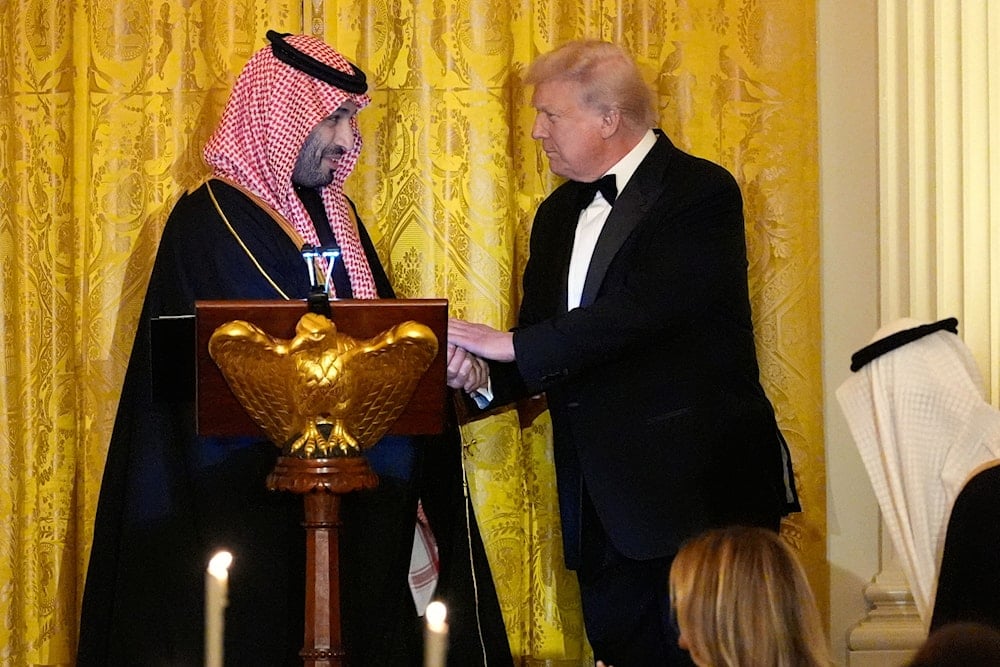
United States President Donald Trump shakes hands with Saudi Arabia's Crown Prince Mohammed bin Salman during a dinner in the East Room of the White House, on November 18, 2025, in Washington. (AP)
Saudi Prime Minister Mohammed bin Salman expressed concerns over United States President Donald Trump’s reported plans for major strikes against Iran during a phone call on Saturday, urging Washington to pursue de-escalation, according to Axios, citing two US officials and another source familiar with the discussion.
The report comes as Trump is reportedly considering attacks on Iranian civilian energy infrastructure, amid Iran's continued resistance to US pressure tactics and military aggression.
The US president has not issued final orders for the reported strikes, but the possibility of targeting Iran’s energy sector has raised concerns over a wider escalation of the five-month aggression.
Riyadh seeks clarity over Trump’s Iran plans
According to Axios, Saudi officials expressed concern over the potential operation and requested clarification from Trump regarding Washington’s next steps.
“The Saudis expressed concern and asked for clarity about the plan of action,” one US official told Axios.
A second source said bin Salman urged Trump to de-escalate and refrain from launching the reported strikes.
The White House and the Saudi Embassy in Washington did not comment on the report.
Iran warns of decisive response to any aggression
The reported diplomatic exchanges come as Iranian officials warn that any new US or Israeli attacks would trigger a strong response.
Iranian Foreign Minister Abbas Araghchi told his Saudi counterpart that Tehran is prepared to defend its sovereignty, territorial integrity, and national security, warning that any hostile action by the United States or the Israeli regime, or cooperation by regional countries in such actions, would face a “decisive and proportionate response” from Iran’s armed forces.
The statement was made during a phone call between the two foreign ministers amid growing concerns over possible US strikes.
Araghchi also held discussions with Turkish and Pakistani officials regarding efforts to prevent further escalation, including talks with Pakistani Army Chief Field Marshal Asim Munir, who has played a role in mediation efforts between Tehran and Washington.
Iran warns response would extend beyond Gulf region
Meanwhile, the spokesperson for the Iranian Parliament’s National Security and Foreign Policy Committee, Ebrahim Rezaei, warned that Tehran’s response to any attack would not be confined to the Gulf.
“Our response to any potential enemy attack will not be limited to the Persian Gulf region,” Rezaei said in a post on X, adding that Iran would respond to “all enemy bases and the origin of the attacks from anywhere.”
The warning follows reports that Washington and Tel Aviv are discussing potential strikes on Iranian energy infrastructure, including power plants and refineries.
CBS News reported that such an operation, if approved, would represent one of the most severe escalations of the war to date, with US officials reportedly discussing completing strikes before financial markets open due to concerns over economic fallout.
Read more: ‘Exasperated’ Trump lashes out at advisors over Iran war strategy


