
Merz warns US on tariffs, seeks strategic ties with China
 3 Min Read
German Chancellor Friedrich Merz warned the United States against escalating tariff measures, signaled Europe’s readiness to respond if necessary, and called for maintaining "strategic partnerships" with China despite ongoing geopolitical tensions.
-
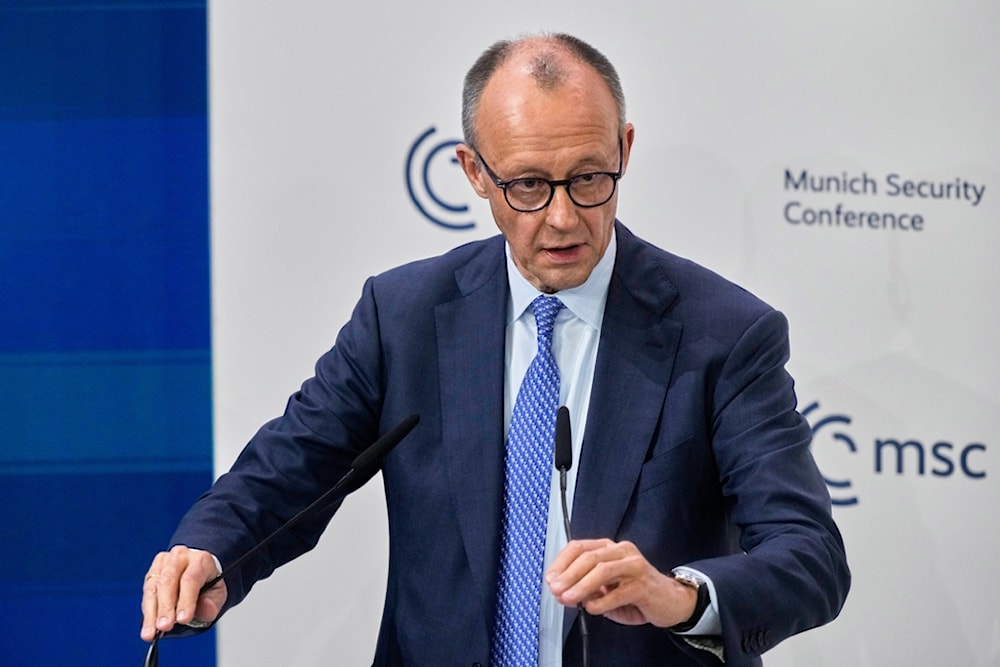
Germany's Chancellor Friedrich Merz prepares to address the audience during the Munich Security Conference in Munich, Germany, on February 13, 2026. (AP Photo/Michael Probst)
German Chancellor Friedrich Merz warned that Europe will not align with an escalating US tariff strategy, delivering the message at a politically symbolic moment amid mounting transatlantic trade friction and economic strain on Germany’s export-driven model.
Addressing a CDU gathering in Rhineland-Palatinate during the traditional Political Ash Wednesday events, Merz responded to renewed tariff measures and threats linked to the second presidency of Donald Trump.
"If Americans believe they should use their tariff policy to exert influence around the world … that is, of course, a decision Americans can make for themselves," Merz said. "But it is not our policy."
The German leader indicated he would repeat the same position during a planned visit to Washington next month. “You can do it, but we will not go along with it. And if it goes too far, we Europeans are certainly able to push back,” he added.
Closing with a personal note, the 70-year-old chancellor hinted at political continuity. “I usually don’t talk much about my family life,” Merz said. “But my father just turned 102. So I intend to stick around for quite some time.”
Why now?
Merz’s remarks come as trade tensions between Washington and Brussels intensify. The Trump administration’s use of tariffs as leverage in foreign policy has triggered concerns across the European Union, with member states preparing countermeasures under EU trade defense instruments if necessary.
At the same time, new trade data mark a decline in the European exports to the United States under tariff pressure, compounding economic challenges already facing Germany. The country’s powerful auto and manufacturing sectors are also grappling with weakening demand in China and increased competition from Chinese producers.
For Berlin, this convergence of pressures has raised alarms about long-term structural vulnerability. Germany’s economy depends heavily on exports of vehicles, machinery, and chemicals, meaning sustained trade confrontations with either Washington or Beijing carry significant domestic consequences.
The timing of the speech also follows recent high-level security gatherings, including the Munich Security Conference, where European leaders have increasingly spoken about the erosion of the post-Cold War order and the need for greater European strategic autonomy.
China: criticism and cooperation
While criticizing Beijing for “aggressively expanding military outposts in the South China Sea,” Merz made clear that Germany does not intend to sever economic engagement.
He said he plans to raise cooperation prospects with the Chinese leadership during an upcoming visit. “Ladies and gentlemen, the key term is strategic partnerships,” Merz said.
The formulation reflects Berlin’s attempt to strike a balance: resisting US tariff escalation while avoiding overdependence on China, even as German exporters seek to stabilize access to the Chinese market.
Read more: UK unable to defend itself without US support, Parliament report warns


