
Mohabi: US war on Iran was a technological confrontation
 4 Min Read
IRGC spokesperson Brig. Gen. Hossein Mohabi says its retaliatory effort against the US exposed strategic vulnerabilities and warns that disruptions to the Strait of Hormuz could affect global energy and supply chains.
-
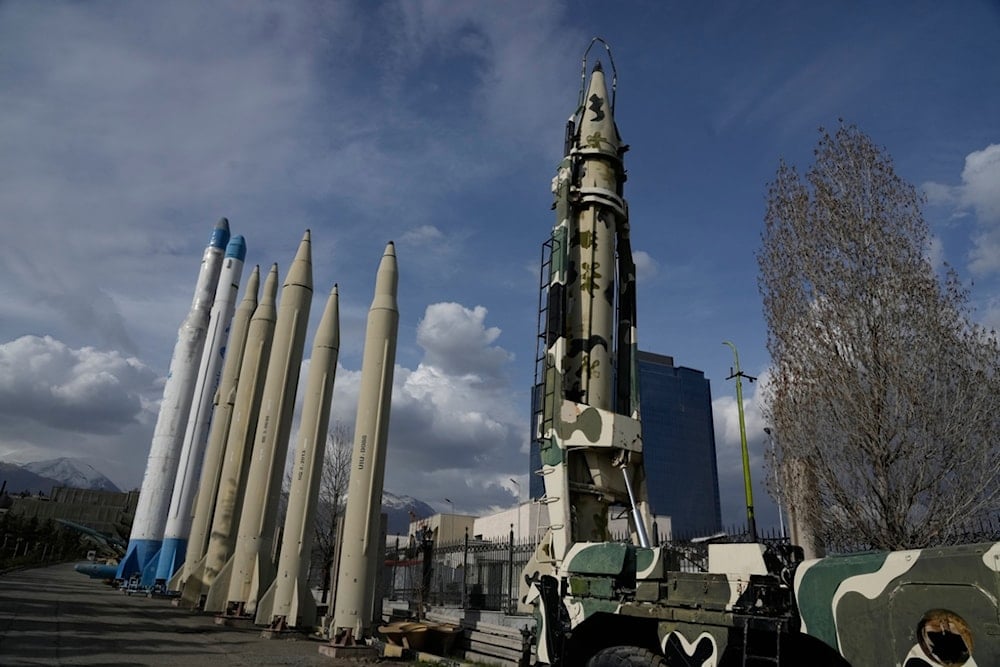
Iran's domestically built missiles and satellite carriers are displayed in a permanent exhibition in northern Tehran, Iran, Tuesday, March 24, 2026. (AP Photo/Vahid Salemi)
Iran's Islamic Revolution Guard Corps (IRGC) says that Iran's retaliatory war with the US was fought across multiple technological and military fronts, with some of the costs of the conflict extending to the opposing side.
Speaking at a conference organized by the IRGC leadership in Qazvin Province to honor journalists from the IRGC and Basij who were martyred during the US-Israeli aggression, IRGC spokesperson Brig. Gen. Hossein Mohabi said the conflict demonstrated the United States entering a state of “strategic vulnerability.”
Mohabi said the confrontation had different arenas and increasingly relied on advanced technologies, including artificial intelligence, software-based command systems, drones, multiple sensing systems, and rapid decision-making.
Read more: Iran has put US 'on its heels', Washington has no cards: Experts
Iran faced major power in technological war
Mohabi stated that the war was fundamentally different from conventional military confrontations, highlighting the development of Iran’s missile and drone capabilities, saying missiles are no longer simply launched from one location toward another predetermined point.
He added that Iran’s missiles have become capable of guidance technology and trajectory changes while confronting air defense systems, including the ability to modify their targets during flight.
The IRGC spokesperson stated that the war was built around artificial intelligence, software command systems, unmanned aerial vehicles, multiple sensors, and what he called “time pressure.”
He noted that the interval between identifying a target and making the decision to strike it is now measured in seconds.
Mohabi argued that Iran used technological warfare to disrupt the components of the opposing power system. He added that the threats and reciprocal responses witnessed during the latest war cannot be analyzed solely as a limited military confrontation.
He also said part of the costs and damage of the war had been transferred to the opposing side, contrasting this with previous US wars in which Washington sought to prevent the consequences of military campaigns from reaching US territory.
Mohabi further described the 12-day war in June 2025 as a conflict aimed at shaping perception while being supported by military measures.
He said the opposing side sought to disrupt the public’s perception of the battlefield in order to alter how people understood developments on the ground.
Read more: Washington defeated, failed to reap any gains in its war: IRGC
Hormuz disruption carries global economic risks
Turning to the Strait of Hormuz, Mohabi said threats surrounding the strategic waterway should not be viewed as merely regional because a significant portion of the energy required by the global economy passes through it.
He warned that disruption along the Strait of Hormuz could affect financial markets as well as food and industrial supply chains, arguing that the implications for the global economy and international energy security must be taken into account.
According to Mohabi, the number of vessels moving from the Gulf fell from between 125 and 140 ships before the war to three or four ships per day at present under Iranian authorization.
He said the reduction had contributed to shortages of energy and chemical fertilizers, with repercussions for global food supply chains.
Mohabi also pointed to damage to the aluminum industry following attacks targeting companies in Bahrain and the United Arab Emirates. He said annual production had fallen by approximately three million tons.
He further noted that the United States imports 60% of its aluminum requirements, arguing that the share originating from the Gulf should be calculated to assess the scale of the losses to the US economy.
Read more: Sen. Murphy: Trump has ‘lost this war’ while Iran grows stronger


