
Morales says protests due to anger towards US-aligned government
 3 Min Read
Former Bolivian president Evo Morales says Bolivia’s growing unrest reflects popular anger at a government he described as “submissive” to Washington amid escalating protests in La Paz.
-
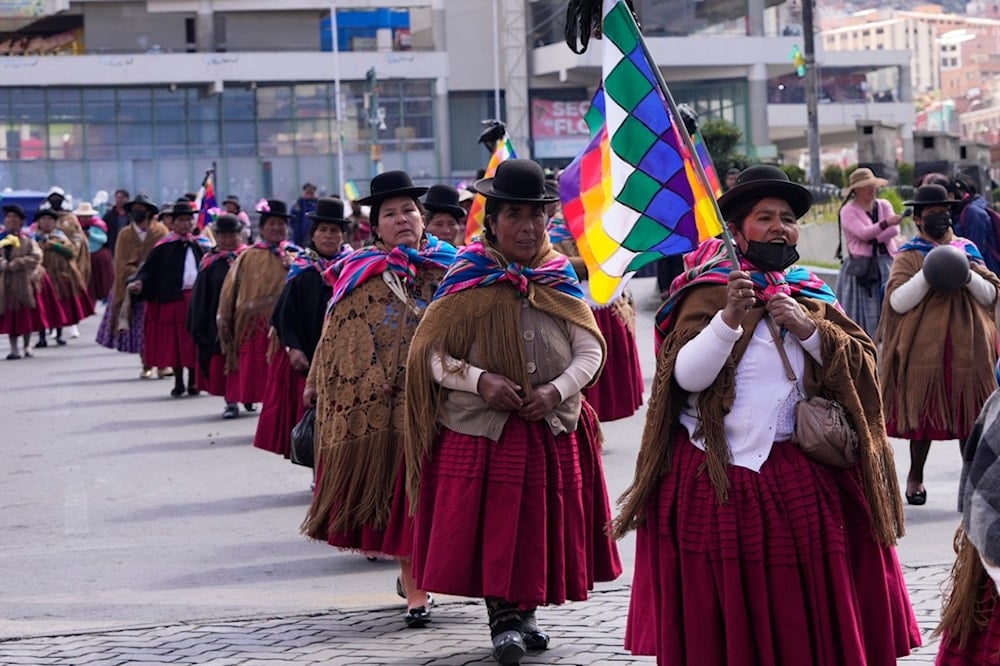
Demonstrators march during an anti-government protest in La Paz, Bolivia, Wednesday, May 27, 2026. (AP Photo/Juan Karita)
Bolivia's former president Evo Morales stated on Thursday that the nation's unrest is due to the people's anger towards La Paz's current alignment with US interests.
Speaking to AFP, Morales said that Bolivians were rebelling against “a government that is utterly submissive” to Washington.
“I am totally convinced this rebellion is against the neo-liberal model and the neo-colonial state,” Morales said from the Chapare region, where he remains amid legal charges against him.
The current administration has accused Morales of encouraging unrest and orchestrating elements of the protests, allegations his supporters outrightly reject.
Demonstration intensity increased following reports of plans between the United States and the Bolivian police to arrest and kidnap Morales and massacre the local indigenous population.
BREAKING: US armed forces & Bolivian police are preparing a joint operation to kidnap Evo Morales and massacre the indigenous communities in the vicinity.
— Ollie Vargas (@Ollie_Vargas_) May 16, 2026
Police officers opposed to the plan have leaked documents confirming the operation. pic.twitter.com/ZFvK7ggwMn
Paz warns of 'breaking point'
Bolivia's President Rodrigo Paz warned that the country is approaching a “breaking point” after nearly a month of anti-government demonstrations, which triggered severe shortages of fuel, food, and critical medical supplies.
Speaking at a public event in the nation's capital, Paz renewed calls for dialogue while warning that authorities could resort to emergency constitutional measures if unrest continues.
“The country needs order, and is reaching breaking point,” Paz said.
The center-right president, who assumed office six months ago during Bolivia’s worst economic crisis in decades, has faced mounting anger over austerity measures, economic hardship, and policies widely viewed as being aligned with US-backed neoliberal reforms.
Indigenous-led demonstrations intensify in capital
Thousands of demonstrators, including Indigenous groups, labor unions, and low-income workers, continued mobilizing in the Bolivian capital this week, demanding Paz’s resignation and broader economic reforms.
On Bolivia’s Mother’s Day, large crowds of Indigenous women wearing traditional pollera skirts marched through the capital in solidarity with transport workers participating in nationwide strikes and road blockades.
“We are not afraid to die. We have already told him to pack his bags and leave,” protester Marta Poma Luque told AFP.
The protests initially erupted in early May over demands for wage increases, stable fuel supplies, and opposition to controversial agrarian reforms. Despite partial concessions by the government, demonstrations rapidly evolved into a broader anti-government uprising.
Read more: Former Iranian envoy says Bolivia protests signal US strategic setback
Congress clears path for possible state of emergency
On Tuesday, Bolivia’s Congress removed restrictions limiting the president’s authority to impose a state of emergency, a move that could pave the way for military deployment to dismantle blockades surrounding the capital.
Paz has so far emphasized dialogue but increasingly signaled readiness to use force if negotiations fail.
“Anyone who wants to destroy the nation will have to deal with this president and the full force of the Constitution,” he said, while publicly backing the police and military.
Critics warned the move could intensify repression against protesters and further escalate tensions nationwide.


