
More than 350 tankers halted as Iran controls Hormuz passage
 2 Min Read
More than 350 oil and gas carriers are stalled near the Strait of Hormuz awaiting Iranian approval.
-
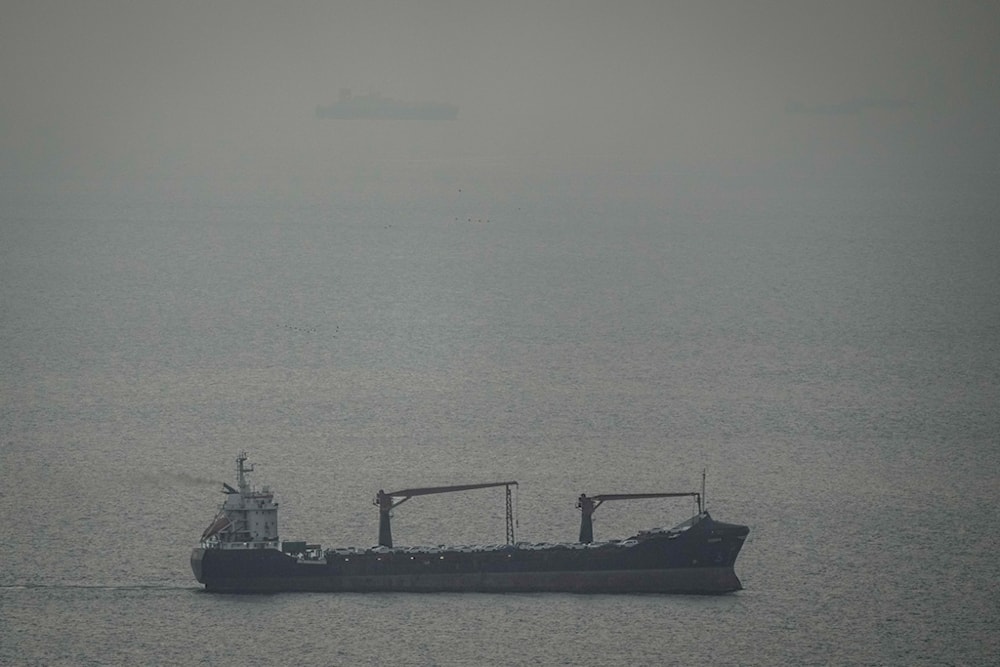
A cargo ship carrying vehicles sails through the Arabian Gulf toward the Strait of Hormuz in the United Arab Emirates, Sunday, March 22, 2026 (AP Photo)
Fars news agency on Thursday reported that more than 350 oil tankers are stationed across the Sea of Oman and the Gulf, awaiting Iranian authorization to transit the Strait of Hormuz.
According to the report, the strategic waterway remains closed to the United States, "Israel," and their allies, with passage strictly conditioned on Iranian approval. Iranian forces are maintaining full operational control over maritime routes, regulating movement through one of the world’s most critical energy corridors.
Ships gathered near the strait have reportedly been ordered to halt movement and disable identification systems, leaving them unable to proceed or dock without clearance. The backlog includes 25 supertankers, 200 conventional oil tankers, and 70 carriers transporting liquefied natural gas (LNG) and compressed natural gas (CNG).
The measures align with Iran’s broader strategy of managing access to the strait in accordance with its security priorities, particularly following the US-Israeli aggression that began on February 28. Tehran has repeatedly stated that only “non-hostile” vessels are permitted to transit safely.
Data cited by Iranian media indicates a sharp decline in traffic through the strait, with vessel movement dropping by as much as 95%. Fewer than five ships per day are currently authorized to pass.
Iran rebuts Trump
The remarks come after an Iranian source told Al Mayadeen earlier Thursday that US President Donald Trump has been advancing a “theatrical claim” that Iran offered a “gift” by allowing limited ship passage, rejecting the characterization as political rhetoric disconnected from realities on the ground.
The source stressed that transit through the Strait of Hormuz is conducted exclusively via a secure route established by Iran, adding that vessels belonging to the United States or parties involved in the aggression have not been able to pass.
It further noted that only ships from countries that coordinate directly with Tehran through formal diplomatic and technical channels are granted passage.
Read more: Iran sets conditions for vessel passage through Strait of Hormuz


