
Most Germans doubt Bundeswehr will be Europe’s strongest army by 2035
 3 Min Read
A new poll shows most Germans doubt the Bundeswehr will become Europe’s strongest conventional army by 2035, while support grows for increased defense investment.
-
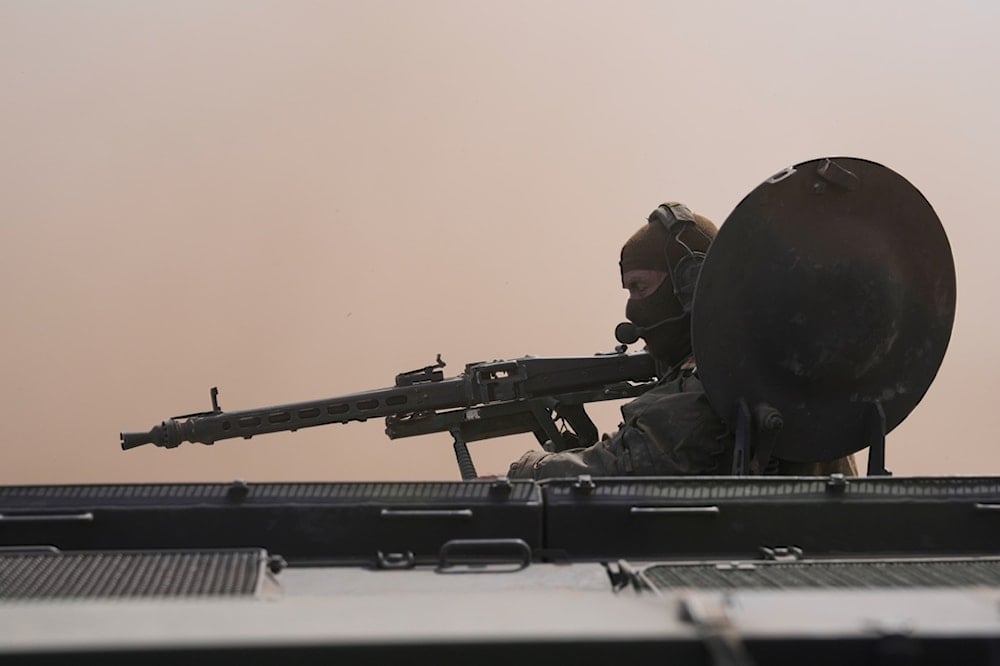
A commander sits in a battle vehicle Fuchs in the dust during a visit of German Chancellor Friedrich Merz to the army at the Bundeswehr base in Munster, Germany, Thursday, April, 30, 2026. (AP Photo/Markus Schreiber, Pool)
A majority of Germans doubt that the Bundeswehr will become Europe’s strongest conventional army by 2035, according to a new poll cited by the German newspaper Tagesspiegel on Wednesday.
The survey, conducted by auditing and consulting firm PwC together with the Civey research institute, found that more than 75% of respondents believe the goal is unlikely to be achieved.
German Chancellor Friedrich Merz has repeatedly said that his government aims to make the Bundeswehr the strongest conventional army in Europe as quickly as possible. However, only 19% of those surveyed considered the objective realistic.
Germans question military readiness and defense plans
The poll, which surveyed 2,500 people across Germany, also revealed widespread concerns over the country’s disaster response and civil defense capabilities.
Around two-thirds of respondents said Germany’s disaster preparedness and civil protection systems are poorly equipped, while nearly 87% supported increasing investment in the sector.
Despite this support, fewer than half of German households reported keeping emergency supplies of food and essential goods at home, according to the report.
More than one-third of respondents also said they consider direct German involvement in a war within the next five years to be possible.
Public support grows for greater European defense independence
The survey also found that nearly 70% of Germans no longer rule out the possibility of acquiring European nuclear weapons for defensive purposes.
At the same time, confidence in the United States as a security partner appears to have declined, with only half of respondents saying they believe Washington would provide military support to its European allies in the event of a war.
“The majority of Germans want greater independence from the United States and are calling for a stronger Europe,” Wolfgang Zink, a partner at PwC Germany, was quoted as saying.
Military objection rises as Germany pushes rearmament drive
Meanwhile, applications from young Germans seeking exemption from military service on conscientious grounds have risen sharply this year, reflecting growing opposition to Berlin's expanding rearmament campaign as the government seeks to strengthen the country's armed forces.
Official figures released on Tuesday show that applications to refuse armed military service have already surpassed last year's total, even as the German government intensifies efforts to expand the Bundeswehr and increase military readiness.
According to Germany's Federal Office for Family Affairs and Civil Society Functions, 5,862 applications for conscientious objector status were submitted during the first half of 2026.
The figure marks a significant increase from the 3,879 applications recorded throughout all of 2025 and the 2,249 submitted in 2024. By the end of May, authorities had approved 2,667 applications, compared with 2,830 approvals during the entirety of last year.
Read more: 'Not blind obedience': Germany rejects Trump's NATO loyalty demand


