
Pistorius says Germany may need conscription for Lithuania brigade
 5 Min Read
German Defence Minister Boris Pistorius said conscription may be needed to fill personnel gaps in a planned brigade deployment in Lithuania.
-
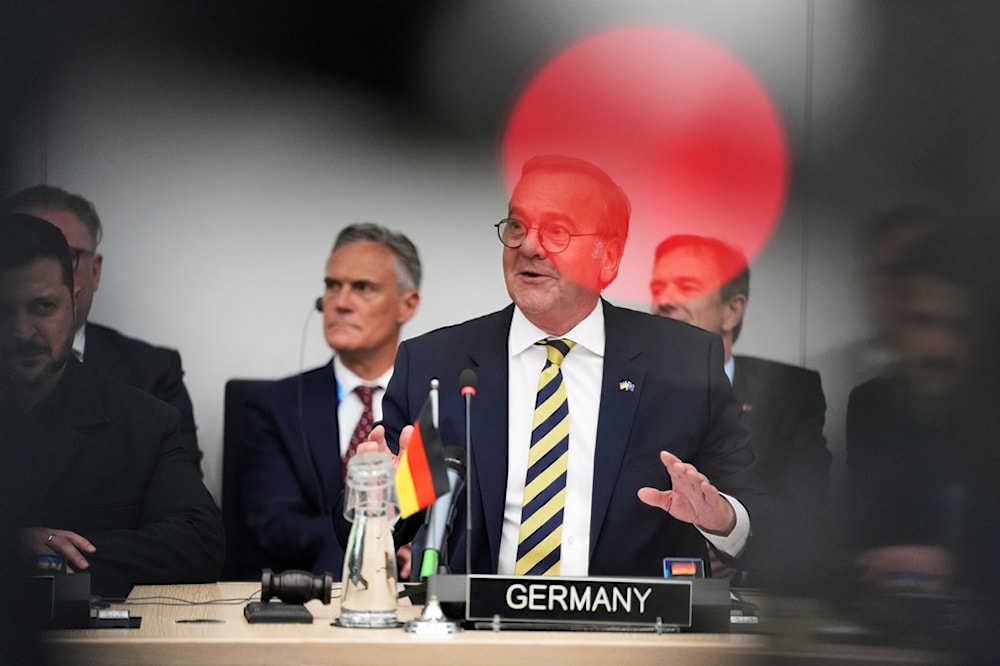
Germany's Defense Minister Boris Pistorius speaks during a meeting of the Ukraine Defense Contact Group at NATO headquarters in Brussels, Thursday, June 18, 2026 (AP Photo/Virginia Mayo)
German Defense Minister Boris Pistorius has indicated that mandatory military conscription could become a necessary option to help address personnel shortages in Germany’s planned brigade deployment in Lithuania, as the country seeks to expand its NATO commitments.
Speaking in an interview with the German newspaper Bild, Pistorius said the Bundeswehr is currently facing challenges in recruiting sufficient enlisted personnel and specialists for the planned force.
“We are facing difficulties with enlisted personnel and specialists. In these cases, a call-up for military service may be ultimately required,” he said, suggesting that compulsory service could be considered to fill remaining gaps.
Germany plans to station approximately 4,800 troops in Lithuania by the end of 2027. According to Pistorius, most positions have so far been filled through voluntary enlistment, though around 1,000 posts remain unfilled.
The planned deployment forms part of wider NATO activity in Eastern Europe, which has significantly expanded in recent years following heightened tensions with Russia.
Moscow has repeatedly voiced concern over NATO’s military build-up near its western borders. Russian officials maintain that Russia does not pose a threat to other countries, while warning that it will respond to what it considers potentially hostile military developments affecting its security interests.
NATO summit in Ankara set for large-scale gathering
The developments in Germany over possible mandatory conscription come as NATO prepares for a major annual summit in Ankara, which is expected to highlight both internal alliance tensions and shifting geopolitical dynamics across Europe and West Asia.
The annual NATO summit opens in Ankara on Tuesday, bringing together 52 heads of state and representatives from all 32 member states, alongside nine invited countries, according to Israel Hayom.
The event is expected to draw around 3,000 journalists and will be secured by approximately 56,000 personnel, reflecting the scale of the gathering and Turkey’s effort to project its growing diplomatic and security role within the alliance.
US–Europe divisions shape alliance dynamics
According to Israel Hayom, the summit is taking place amid deepening tensions between the United States and European NATO members, particularly over defense spending, strategic priorities, and burden-sharing within the alliance.
Disputes over military commitments have persisted in recent years, with Washington consistently urging European allies to increase defense expenditure. Previous negotiations reportedly led to an agreement at the Hague summit to raise spending targets from 2% to 5% of GDP by 2035.
However, relations have remained strained, including disagreements over the US military presence in Europe and broader questions over NATO’s long-term strategic direction.
Tensions were further exposed during the recent war on Iran, when the United States reportedly sought greater European participation, including support for securing key maritime routes.
Several European governments resisted deeper involvement, describing the campaign as outside their core strategic interests, while still providing limited logistical support such as intelligence sharing and access to military infrastructure.
European leaders have also expressed reluctance to be drawn into US-led military operations, with some officials questioning the strategic and political outcomes of recent US actions.
US military presence and European strategic autonomy
Despite political frictions, US military infrastructure in Europe continues to play a central role in NATO operations, particularly Ramstein Air Base in Germany, which functions as a key logistics, coordination, and medical evacuation hub.
Israel Hayom noted that European hesitation to fully support certain US operations has highlighted ongoing structural dependence on American military capabilities, even as European governments increasingly advocate for greater strategic autonomy.
The summit is also expected to underscore Turkey’s growing influence within NATO, driven by its expanding defense industry and its positioning between Western allies.
President Recep Tayyip Erdogan’s relationship with US President Donald Trump is notably close, with discussions reportedly including potential re-entry into the F-35 program and cooperation on Turkey’s KAAN fighter jet project.
Turkey’s defense exports have also expanded significantly, reaching an estimated $10.5 billion last year, according to figures cited by the report.
Ahead of the summit, Turkish authorities carried out arrests targeting opposition figures and imposed restrictions on demonstrations in Ankara, amid ongoing domestic political tensions.
Regional implications and tensions involving 'Israel'
The summit also carries regional implications involving “Israel,” particularly amid escalating rhetoric from Turkish officials.
President Erdogan recently warned against allowing “Israel” to “once again plunge the region into the smell of gunpowder and blood,” while reiterating Ankara’s support for diplomatic de-escalation.
Earlier remarks attributed to Erdogan said that the “Zionist ideology based on genocide, occupation, and expansionism” as affecting broader segments of Turkish society.
Israeli media have also reported claims that Prime Minister Benjamin Netanyahu assured US President Donald Trump that “Israel” would not hesitate to confront Turkey militarily if necessary, though without seeking confrontation.
At the same time, symbolic diplomatic gestures in the region, including “Israel’s” recognition of the Armenian genocide, are being interpreted by observers as part of wider political signaling ahead of the summit.
Read more: 'Not blind obedience': Germany rejects Trump's NATO loyalty demand


